
Emergency Roofing Services for Active Leaks and Storm Damage
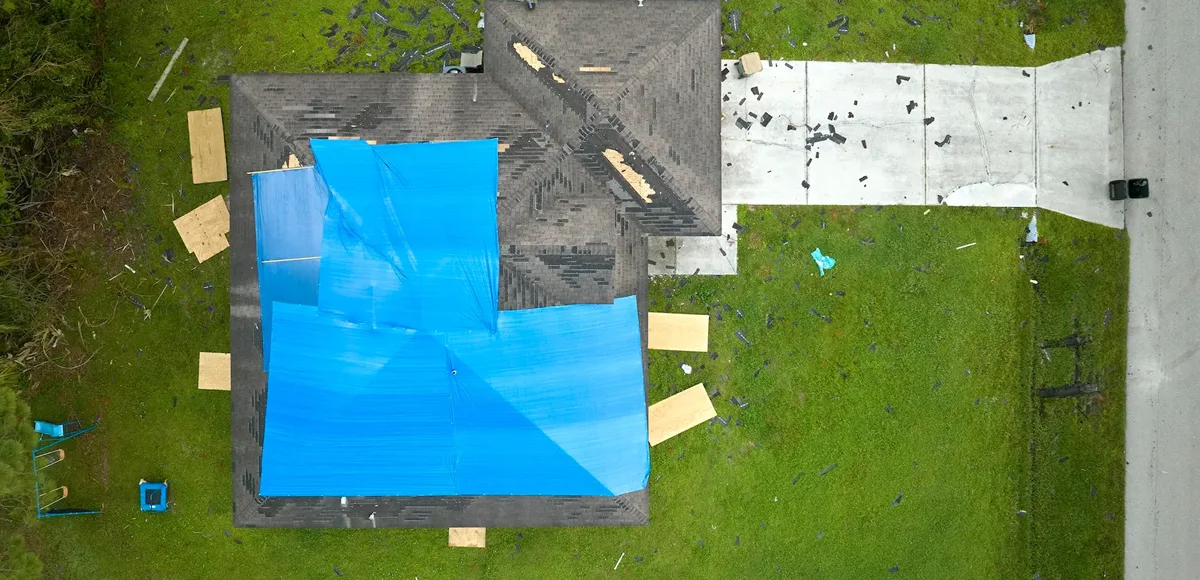
When your roof starts leaking during a storm, or you discover sudden damage after high winds, emergency roofing services help you protect your home right now while you plan the permanent repair. The Roof Guys respond with practical next steps: stop active water intrusion, stabilize the damaged area, document what we find, and guide you toward the right solution (repair, storm restoration, or replacement planning).
If you need urgent help, start with emergency roofing services. If you want a fast starting point for diagnosis and documentation, request a free inspection.
When to Call for Emergency Roofing Services
Roof problems don’t always look dramatic, until they are. Call for emergency roofing services when protecting the interior of your home becomes the priority.
Common “call now” situations include:
- Water actively dripping or running inside the home
- A ceiling stain that spreads quickly during rain
- Missing shingles, exposed underlayment, or visible holes after a storm
- Tree or debris impact that damages the roof surface
- Loose or lifted flashing around chimneys, vents, or walls
- Wind damage that creates open seams along edges or ridges
- A leak you can’t locate (or a leak that returns after a patch)
If you suspect the source is unclear or the leak is intermittent, pair emergency stabilization with roof leak detection so the final fix targets the true entry point.







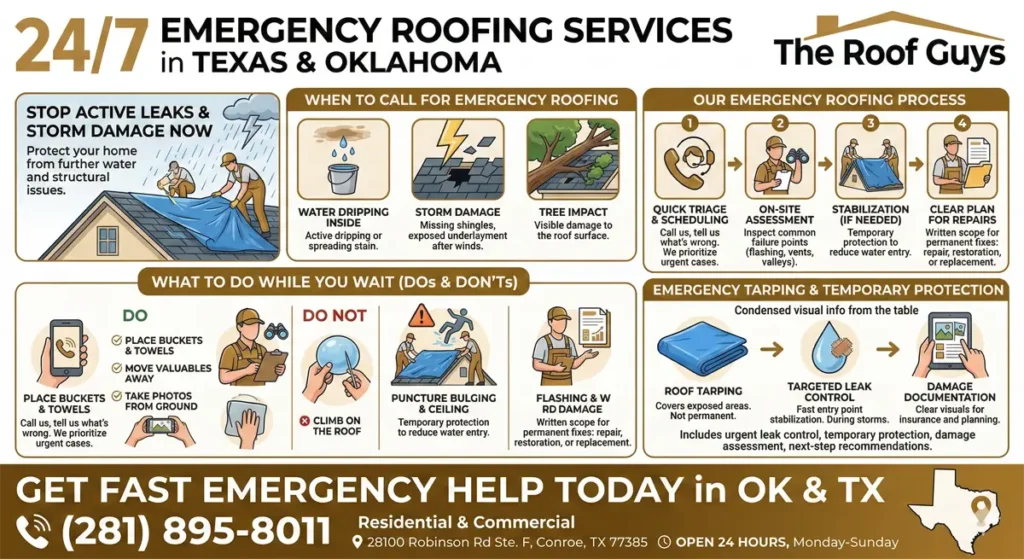
Our Emergency Roofing Process
You tell us what you’re seeing (active leak, missing shingles, storm impact). We’ll prioritize urgent cases and guide you on immediate steps to reduce damage.
We inspect the most common failure points first: flashing and transitions, vents/pipe boots, valleys, edges/ridges, and any visible storm impact zones.
When conditions require it, we stabilize the roof with temporary protection to reduce further water intrusion.
Once the immediate issue is controlled, we outline the right long-term fix, often a targeted repair, sometimes storm restoration across multiple areas, and occasionally replacement if problems are widespread.
What to Do Immediately While You Wait
A few smart actions can reduce damage before help arrives. If it’s safe to do so (and only from inside the home), focus on water control and documentation.
Do this first:
- Place buckets/towels under active drips and move valuables away from wet areas
- If you have ceiling bulging from trapped water, do not puncture it unless advised by a professional (collapse risk)
- Take photos/video of interior damage and any visible exterior damage from the ground
- Note when the leak started and what weather conditions were present (wind-driven rain matters)
- Avoid climbing on the roof, wet surfaces and storm conditions create serious fall hazards
For longer-term prevention after repairs, visit roof maintenance and roofing tips.
What’s Included in Our Emergency Roofing Service
Emergency roofing should deliver more than “we stopped the leak.” It should give you clarity and a path forward.
Depending on your roof’s condition, emergency roofing services may include:
- Urgent leak control: Focused work to reduce or stop active water entry
- Temporary protection: Tarping or covering vulnerable areas when needed
- Damage assessment: Identifying likely entry points (flashing, penetrations, valleys, edges)
- Photo documentation: Clear visuals of damaged areas for planning and records
- Next-step recommendations: Whether you need roof repair, storm restoration, or replacement planning
- Estimate support: A written scope for the next phase via a roofing estimate
Emergency Roofing Damage Types We Commonly Handle
Storms in Texas and Oklahoma can damage roofs in several ways. The table below outlines the most common emergency roofing problems our team responds to and the typical solutions used to stabilize the roof.
Roof Emergency Type | Common Cause in Texas & Oklahoma | Visible Signs | Immediate Solution |
Active Roof Leak | Heavy rain, flashing failure, damaged shingles | Water dripping from ceiling, wet attic insulation | Leak control and emergency roof repair |
Wind Damage | High winds and severe thunderstorms | Missing shingles, lifted roof edges | Temporary stabilization and shingle repair |
Hail Damage | Hailstorms common across Texas & Oklahoma | Granule loss, cracked shingles, dented flashing | Inspection and targeted roof repairs |
Tree or Debris Impact | Storm debris or falling tree limbs | Punctured roof deck, exposed underlayment | Emergency tarping and structural repair |
Flashing Failure | Age, storm movement, poor installation | Leaks near chimneys, skylights, or vents | Flashing repair or replacement |
Emergency Tarping and Temporary Protection Options
Temporary protection is about limiting water intrusion until permanent repairs can be completed. This table explains common stabilization approaches homeowners hear about and when emergency tarping is typically the right call.
Temporary measure | What it’s for | When it’s most useful | What it’s not |
Roof tarping | Covers exposed areas to reduce water entry | Missing shingles, exposed underlayment, storm impact | Not a permanent repair |
Targeted leak control | Addresses the most likely entry point quickly | Active leaks during storms or heavy rain | Not a full system rebuild |
Short-term interior protection | Reduces damage inside while roof is stabilized | Active dripping, ceiling stains | Doesn’t stop roof intrusion |
Emergency Roofing After Storms
Storm events can create both obvious and hidden damage. Even if you don’t see a leak right away, wind uplift or hail impacts can weaken seals and flashing details that fail later during the next heavy rain.
If storm damage is suspected, start with:
- storm damage services for overall assessment and documentation
- hail damage repair for impact-related issues
- wind damage repair for uplift, missing shingles, and broken seals
- hurricane roof damage repair when tropical systems are involved
If you’re navigating a declared disaster situation, official resources can help: disaster assistance.
Why Choose The Roof Guys
Roof emergencies require calm, competent action, and a plan you can trust after the immediate leak is under control.
Homeowners choose The Roof Guys because:
- Fast, practical next steps: We prioritize stopping water intrusion and protecting interiors.
- Clear documentation: You get photo-backed findings and a straightforward explanation of what failed.
- Right-sized recommendations: If a targeted fix solves it, we’ll recommend a focused repair, not an oversized scope.
- Built-in next steps: From emergency tarping to roof repair, you’re not left wondering what to do next.
- Proof of work: View completed projects in our project gallery and read testimonials.
Areas We Serve
Licensed Commercial & Residential Roofing Contractor
The Roof Guys – quality materials, expert service, and lasting protection guaranteed.
Emergency Roofing vs. Standard Roof Repair
Not every roof problem is an emergency. The difference comes down to whether your home’s interior is currently at risk.
Emergency roofing is typically needed when:
- Water is actively entering the structure
- The roof surface is open/exposed after storm impact
- Temporary protection is required to prevent further damage
Standard roof repair may be appropriate when:
- Damage is localized and not currently leaking
- The issue can be scheduled without risking interior damage
- You’re addressing early-stage wear before it becomes urgent
If you’re unsure, start with roof inspections or request leak detection.
Planning Repairs After the Emergency
Once the roof is stabilized, the goal is a permanent fix that restores water-shedding performance. The next step is typically a repair scope and timeline.
Helpful next actions include:
- Request a written roofing estimate
- Review related services like roof repair and roof maintenance
- If your roof system has recurring issues, consider whether roof replacement is a better long-term investment
For general homeowner guidance on mold and moisture, see the EPA’s mold basics.
What Our Clients Are Saying
We believe the best proof of our service comes directly from the homeowners, businesses, and property managers we proudly serve.
Get Fast Emergency Roofing Help in Oklahoma & Texas Today
A roofing emergency can quickly lead to severe water damage and costly structural issues if it’s not handled immediately. Our experienced roofing contractors provide 24/7 emergency roofing services, including emergency roof repair, storm damage repair, roof leak repair, and emergency roof tarping for homes and businesses across Oklahoma and Texas. We respond quickly to secure your property, stop active leaks, and prevent further damage.
Call now at (281) 895-8011 to speak with our emergency roofing team or request a free emergency roof inspection today.
The Roof Guys
Business Hours
Monday: Open 24 hours
Tuesday: Open 24 hours
Wednesday: Open 24 hours
Thursday: Open 24 hours
Friday: Open 24 hours
Saturday: Open 24 hours
Sunday: Open 24 hours
Frequently Asked Questions
In Texas and Oklahoma, roofing emergencies often occur after severe thunderstorms, hail, tornadoes, or high winds that damage shingles or expose the roof structure. If your roof has active leaks, missing shingles, punctures, or storm damage that allows water into your home, it should be addressed immediately to prevent interior and structural damage.
Yes. We provide emergency roof tarping services throughout Texas and Oklahoma to quickly protect homes and businesses after storms. Tarping helps minimize water intrusion and interior damage while you arrange for permanent roof repair or replacement.
Response times depend on current demand and weather conditions, especially after major storms common in Texas and Oklahoma. Call (281) 895-8011 and our team will assess the urgency of your situation and schedule the fastest available emergency roofing response.
Yes. Strong winds, hailstorms, and severe weather are common in Texas and Oklahoma and can cause missing shingles, roof punctures, and sudden leaks that require emergency roofing services.
Emergency roofing services usually focus on stopping active leaks and stabilizing the roof to prevent further damage. Permanent solutions are typically completed through full roof repair or replacement once the extent of the damage is fully inspected.
Yes. Our team performs roof leak detection for homes across Texas and Oklahoma to locate the true entry point of water. This ensures the problem is fixed correctly rather than relying on temporary or guess-based repairs.
Yes. Storms in Texas and Oklahoma often cause hail damage, wind damage, and debris impact on roofs. We can document visible damage with photos and inspection notes to help support your conversations with your home insurance provider. Claim approval depends on your specific policy and carrier.
Yes. We provide emergency roofing services for homes, commercial buildings, and multi-family properties, helping quickly secure the roof and prevent further damage.
Costs vary depending on the damage and roof type. In most cases, emergency roof tarping ranges from $200–$800, while minor emergency roof repairs typically range from $300–$1,500+. A full inspection will determine the exact repair cost.
Yes. After stabilizing the roof, we can perform a complete roof inspection to identify hidden storm damage and recommend the best long-term repair or replacement solution.
How Can We Help?



Our Roofing Services
Why Choose The Roof Guys
Roof emergencies require calm, competent action, and a plan you can trust after the immediate leak is under control.
Homeowners choose The Roof Guys because:
- Fast, practical next steps: We prioritize stopping water intrusion and protecting interiors.
- Clear documentation: You get photo-backed findings and a straightforward explanation of what failed.
- Right-sized recommendations: If a targeted fix solves it, we’ll recommend a focused repair, not an oversized scope.
- Built-in next steps: From emergency tarping to roof repair, you’re not left wondering what to do next.
- Proof of work: View completed projects in our project gallery and read testimonials.
The Roof Guys
Business Hours
Monday: Open 24 hours
Tuesday: Open 24 hours
Wednesday: Open 24 hours
Thursday: Open 24 hours
Friday: Open 24 hours
Saturday: Open 24 hours
Sunday: Open 24 hours

Get Started
Have questions about your roof? Ready to start your next roofing project? Whether you’re dealing with storm damage, a leaky roof, or planning a complete roof replacement, our team is here to help.
How Can We Help?