
Emergency Tarping Services
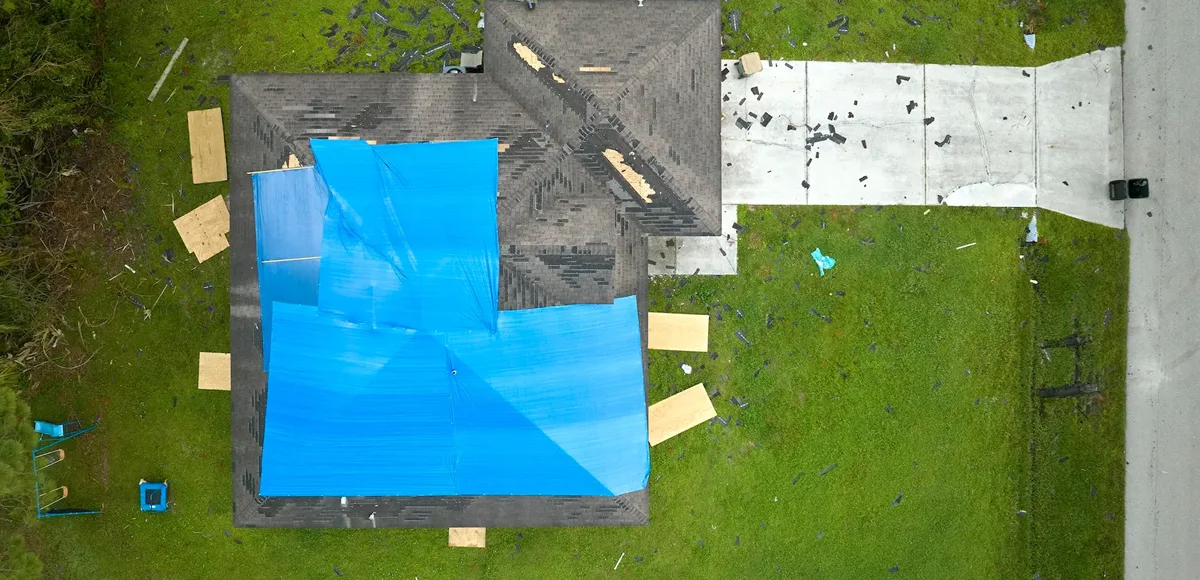
When your roof is damaged, emergency tarping services can help limit water intrusion and protect interiors while you plan permanent repairs. The Roof Guys provides professional roof tarping for storm-related damage, fallen limbs, and sudden leaks, so you can stabilize the situation and move forward with a clear plan.
If you’re dealing with an active leak or exposed roof area, start here: request a free roof inspection or get a roofing estimate.
What Emergency Tarping Does (and What It Doesn’t)
Emergency tarping is a temporary protection step. It’s designed to cover exposed areas and help reduce additional water damage until repairs or replacement can be scheduled.
- What it does: Helps shed water away from vulnerable openings, reduces interior damage risk, and buys time after a storm.
- What it doesn’t do: It doesn’t restore the roof system or replace damaged materials. A tarp is a short-term safeguard, not a permanent fix.
If you also need broader storm recovery help, visit our storm damage services page.








When to Call for Emergency Tarping Services
Some roof problems can wait for a standard appointment, others can’t. Emergency tarping is typically recommended when there’s a clear path for water to enter or when another storm is expected.
Common Situations that Call for Tarping
- Active leaking during rain: Water moving through the roof can quickly affect drywall, insulation, and electrical areas.
- Missing or lifted shingles: Wind can strip protection and expose the underlayment or decking.
- Tree limb impact or punctures: Even small openings can funnel water into attic spaces.
- Damaged flashing around vents or chimneys: These “transition points” are common leak sources after wind-driven rain.
- Storm conditions nearby: If the roof is compromised and more rain is forecast, temporary protection can reduce compounding damage.
If you’re unsure where the water is entering, start with roof leak detection.
Why Acting Quickly Matters After Roof Damage
After a leak begins, time matters. Moisture can spread beyond the visible stain line and create conditions that are harder (and more expensive) to fix.
EPA guidance notes that in most cases, mold will not grow if wet or damp items are dried within 24–48 hours, which is why reducing water intrusion early is so important.
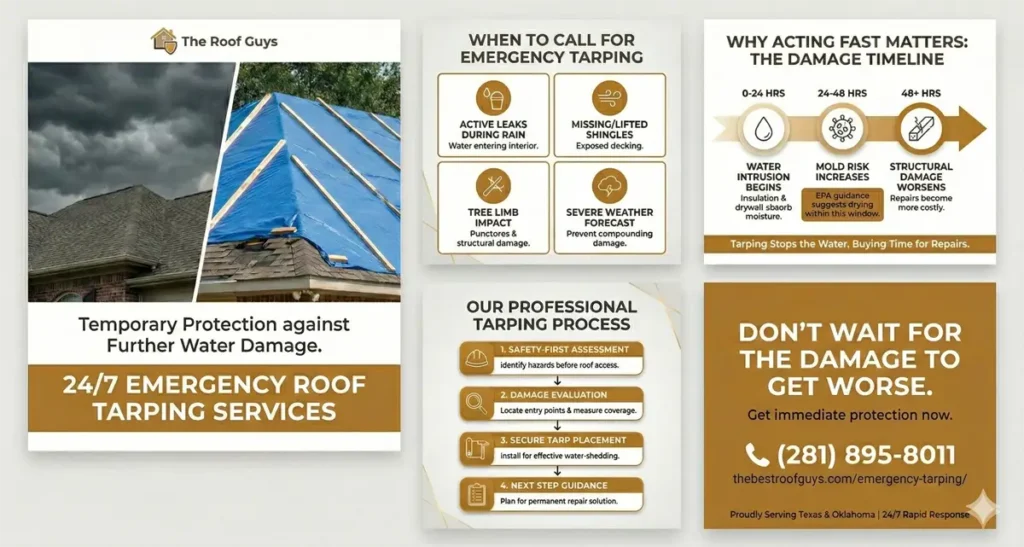
Emergency Tarping Services: Our Step-by-Step Process
Our approach is built around safety, documentation, and practical next steps, so you get protection now and a plan for permanent repairs.
1) Safety-First Assessment
Before anyone accesses the roof, we look for hazards like slick surfaces, unstable debris, or downed power lines. We’ll recommend the safest path for access and protection.
2) Damage Evaluation and Measurement
We identify the vulnerable area(s), assess how water may be entering, and measure coverage needs. This helps ensure the tarp extends beyond the damaged zone rather than just “covering the hole.”
3) Debris Clearing (as Appropriate)
Loose debris can prevent proper tarp placement and create new punctures. Where safe, we clear what’s needed to prep the area for secure coverage.
4) Secure Tarp Placement and Water-Shedding Setup
The goal is to route water away from the compromised zone. We install the tarp to reduce billowing, lift, and edge infiltration as much as possible, based on roof conditions and weather exposure.
5) Next-Step Guidance for Permanent Repairs
Once the roof is stabilized, we help you move from “temporary protection” to “permanent solution,” including repair scope and timeline planning.
For follow-up work, explore roof repair or roof replacement.
Post-Tarping Next Steps Timeline Table
Emergency tarping helps stabilize your roof, but the goal is to move from “temporary protection” to a permanent fix quickly. The EPA recommends drying water-damaged areas and items within 24–48 hours to help prevent mold growth, so early action matters.
Timeframe | What to do | Why it matters | Best next step |
0–24 hours | Contain interior water and move valuables | Limits secondary damage while protection is arranged | Request emergency tarping |
24–48 hours | Start drying wet materials and monitor for new leaks | Reduces moisture risk; helps prevent mold growth (US EPA) | Schedule a roof inspection |
2–7 days | Confirm leak source and define repair scope | Prevents repeat leaks and “patchwork” fixes | Start roof leak detection |
1–4 weeks | Complete permanent repairs or replacement planning | Converts temporary protection into long-term performance | Compare roof repair vs. roof replacement |
Ongoing | Consider seasonal checkups | Helps catch small issues early | Explore roof maintenance |
What to Do After Roof Damage (Before We Arrive)
These steps help protect your property and keep the situation from getting worse, without putting you at risk.
- Stay off the roof: Post-storm surfaces can be slick, damaged, and unsafe.
- Limit interior damage: Use buckets and plastic sheeting where dripping occurs; move valuables away from wet areas.
- Document visible damage safely: Take ground-level photos of missing shingles, fallen limbs, dented vents, or ceiling stains.
- Start drying wet areas quickly: Drying within 24–48 hours is commonly recommended to reduce mold risk. (EPA mold guidance)
- Schedule an inspection: A documented assessment helps you choose the right permanent fix.
You can book a roof inspection anytime or use our contact page for help.
Why Choose The Roof Guys
Emergency situations call for calm, practical service and clear documentation.
- System-focused inspections: We look beyond the obvious so the permanent fix solves the real problem.
- Clear next steps: You’ll understand what happened, what’s at risk, and what to do next.
- Local accountability: A real team you can reach, with a local address and contact information.
See recent work in our project gallery and customer feedback on testimonials or on our Google Business Profile.
Areas We Serve
Licensed Commercial & Residential Roofing Contractor
The Roof Guys – quality materials, expert service, and lasting protection guaranteed.
What Not to Do After Roof Damage
Quick fixes can backfire, especially when water is involved.
- Don’t climb up with a small tarp and a few nails: Improper installation can fail in wind and increases fall risk.
- Don’t “seal everything” with random caulk: It can trap moisture, hide damage, and complicate proper repairs later.
- Don’t ignore minor leaks: Wind-driven rain can exploit small openings and expand the problem over time.
Storm Context that Often Leads to Urgent Roof Openings
Many emergency tarping calls happen after severe thunderstorms and high-wind events. The National Weather Service defines a severe thunderstorm as producing hail 1 inch or larger and/or winds of 58 mph or greater—conditions that can stress roof edges, flashing, and shingle seals.
If you experienced storm-related damage, you may also want to review targeted repair options like wind damage roof repair or hail damage roof repair.
Can You Get a Free Tarp After a Major Disaster?
In federally declared disaster areas, some homeowners may qualify for Operation Blue Roof, a temporary roofing program managed by the U.S. Army Corps of Engineers for FEMA. It can provide fiber-reinforced sheeting to cover damaged roofs until permanent repairs can be made (availability depends on declared events and eligibility).
Even when programs exist, many properties still need immediate local support, especially outside program areas or eligibility windows.
What Our Clients Are Saying
We believe the best proof of our service comes directly from the homeowners, businesses, and property managers we proudly serve.
Get 24/7 Emergency Roof Tarping in Texas & Oklahoma – Protect Your Property Now
When storms, hail, high winds, or fallen debris damage your roof, every minute matters. Our rapid-response team provides fast, professional emergency roof tarping in Texas and Oklahoma to stop active leaks, prevent further water intrusion, and secure your home or commercial building immediately. We arrive quickly, document the damage for insurance purposes, and stabilize your roof until permanent repairs can be completed.
Don’t wait for the damage to get worse. Call now at (281) 895-8011 for immediate emergency tarping service and protect your property today.
The Roof Guys
Business Hours
Monday: Open 24 hours
Tuesday: Open 24 hours
Wednesday: Open 24 hours
Thursday: Open 24 hours
Friday: Open 24 hours
Saturday: Open 24 hours
Sunday: Open 24 hours
Frequently Asked Questions
In Texas and Oklahoma, emergency roof tarping typically ranges from $300 to $1,200 or more, depending on factors like roof height, slope, damaged area size, accessibility, and storm conditions (e.g., high winds or fallen debris). Major storm events in Houston, Conroe, or across Oklahoma may also impact pricing. For a precise cost, request a professional on-site roofing assessment.
Many homeowners insurance policies in Texas and Oklahoma cover emergency tarping if the damage was caused by hail, wind, or falling debris. Coverage depends on your policy, so document the damage and keep all receipts for your claim.
After major hurricanes or tornadoes, programs like FEMA or Operation Blue Roof may offer temporary assistance in declared disaster areas. Availability depends on official activation and local emergency announcements.
A roof tarp is temporary. Strong winds, heavy rain, hail, and heat in Texas and Oklahoma can shorten its lifespan, so permanent repairs should be scheduled as soon as possible.
DIY tarping is risky due to slippery surfaces, hidden damage, and steep roof slopes. It’s safer to document the damage and call a professional emergency tarping service.
When installed properly, a tarp prevents further water damage. Poor installation, however, can create new issues, which is why professional installation is recommended.
After stabilization, a full inspection is performed to determine whether roof repairs or a replacement is needed to fully restore your Texas or Oklahoma property.
How Can We Help?



Our Roofing Services
Why Choose The Roof Guys
Emergency situations call for calm, practical service and clear documentation.
- System-focused inspections: We look beyond the obvious so the permanent fix solves the real problem.
- Clear next steps: You’ll understand what happened, what’s at risk, and what to do next.
- Local accountability: A real team you can reach, with a local address and contact information.
See recent work in our project gallery and customer feedback on testimonials or on our Google Business Profile.
The Roof Guys
Business Hours
Monday: Open 24 hours
Tuesday: Open 24 hours
Wednesday: Open 24 hours
Thursday: Open 24 hours
Friday: Open 24 hours
Saturday: Open 24 hours
Sunday: Open 24 hours

Get Started
Have questions about your roof? Ready to start your next roofing project? Whether you’re dealing with storm damage, a leaky roof, or planning a complete roof replacement, our team is here to help.
How Can We Help?