
When Your Roof Can’t Wait: Getting Emergency Help Fast
Searching for 24 hour emergency roof repair near me at 2 AM means something has gone seriously wrong. Wind, hail, or a fallen tree has breached your roof, and water is pouring into your home. Every minute of delay increases the damage to insulation, ceilings, flooring, and electrical systems. The single most important action you can take right now is to call a qualified emergency roofer and begin mitigation immediately. Homeowners across Texas and Oklahoma turn to The Roof Guys for rapid storm response because our crews dispatch within 60–90 minutes, day or night. Below is exactly what to do while you wait for help.
- Call a 24/7 emergency roofer — look for one that guarantees dispatch within 60–90 minutes
- Contain the water — place buckets under active leaks and move valuables away from wet areas
- Stay off the roof — wet surfaces and storm conditions make climbing extremely dangerous
- Document the damage — take photos and video from the ground for your insurance claim
- Call your insurance company — report the damage and ask about emergency mitigation coverage
Roofing damage rarely happens at a convenient time. A storm doesn’t care that it’s 2 AM on a holiday weekend. Waiting even 24–48 hours to address a compromised roof can turn a $1,000 problem into a $25,000 one — water intrusion escalates fast, threatening your structure, insulation, drywall, and even your electrical system.
That’s exactly why emergency roof repair services exist: to stop the damage before it spirals.
This guide walks you through everything — from identifying a true roofing emergency, to what professionals do when they arrive, to how insurance claims work and what permanent repairs look like.
I’m Cash Walker, a leadership team member at The Roof Guys, a Greater Houston roofing company with 30+ years of industry experience helping Texas homeowners navigate emergency roof crises after hail, wind, and hurricane events. In this guide, I’ll share exactly what to do — and what to avoid — so you can protect your home and your claim from the moment damage happens.
Identifying a True Roofing Emergency
A roofing emergency is any situation where the structural integrity of your roof is compromised, posing an immediate threat to your property or safety. A small, slow drip during a light rain is a standard repair; the scenarios below demand an immediate, 24-hour response to prevent catastrophic loss.
According to Harvard research on extreme weather impacts, regions like Houston face increasing threats from hurricanes and severe thunderstorms that cause sudden, massive roof failures. If you are experiencing any of the following, you are in a true emergency state:
- Active, Uncontrollable Leaks: Water streaming into your living space can quickly lead to ceiling collapses and electrical fires.
- Structural Compromise: Sagging rooflines or visible cracks in rafters indicate the roof may no longer support its own weight.
- Fallen Trees or Large Debris: A heavy branch or tree trunk can puncture the decking, leaving your home’s interior completely exposed.
- Missing Shingle Sections: High winds can strip away large patches of shingles, leaving underlayment and decking vulnerable to rapid rot.
- Fire Damage: Even after the fire is out, charred structural remains are highly susceptible to water damage and collapse.
- Exposed Decking or Punctures: Hail larger than 1.5 inches can punch holes straight through older shingles, creating thousands of entry points for water.
An emergency roofer’s primary goal is “mitigation” — stopping the immediate flow of water — rather than a final, aesthetic fix.
How to Find 24 Hour Emergency Roof Repair Near Me During Storm Season
During peak storm season in Texas and Oklahoma, demand for emergency roofing services skyrockets. In areas like Houston, Katy, and Tulsa, severe weather can impact hundreds of thousands of homeowners simultaneously. The National Weather Service Storm Prediction Center has recorded dozens of severe wind and tornado events in recent years that leave entire neighborhoods in need of help at once.
To find a reliable provider when everyone is busy, look for these three things:
- Local Availability: Choose a company with physical offices in your area, such as The Woodlands or Oklahoma City, to ensure they can actually reach you through storm debris.
- 24/7 Dispatch: Ensure a live person answers the phone. If you get a voicemail at 3 AM during a hurricane, that company may not have the infrastructure to handle a true emergency.
- Response Guarantees: While major disasters can push wait times to 48 hours, top-tier contractors aim for a 60–90 minute response time for initial assessment and stabilization.
Immediate Steps to Take Before Professionals Arrive
While you wait for the crew to arrive, your priority is minimizing interior damage. Safety is paramount: never attempt to climb onto a wet or damaged roof yourself. The risk of falling or stepping through a weakened section of decking is too high.
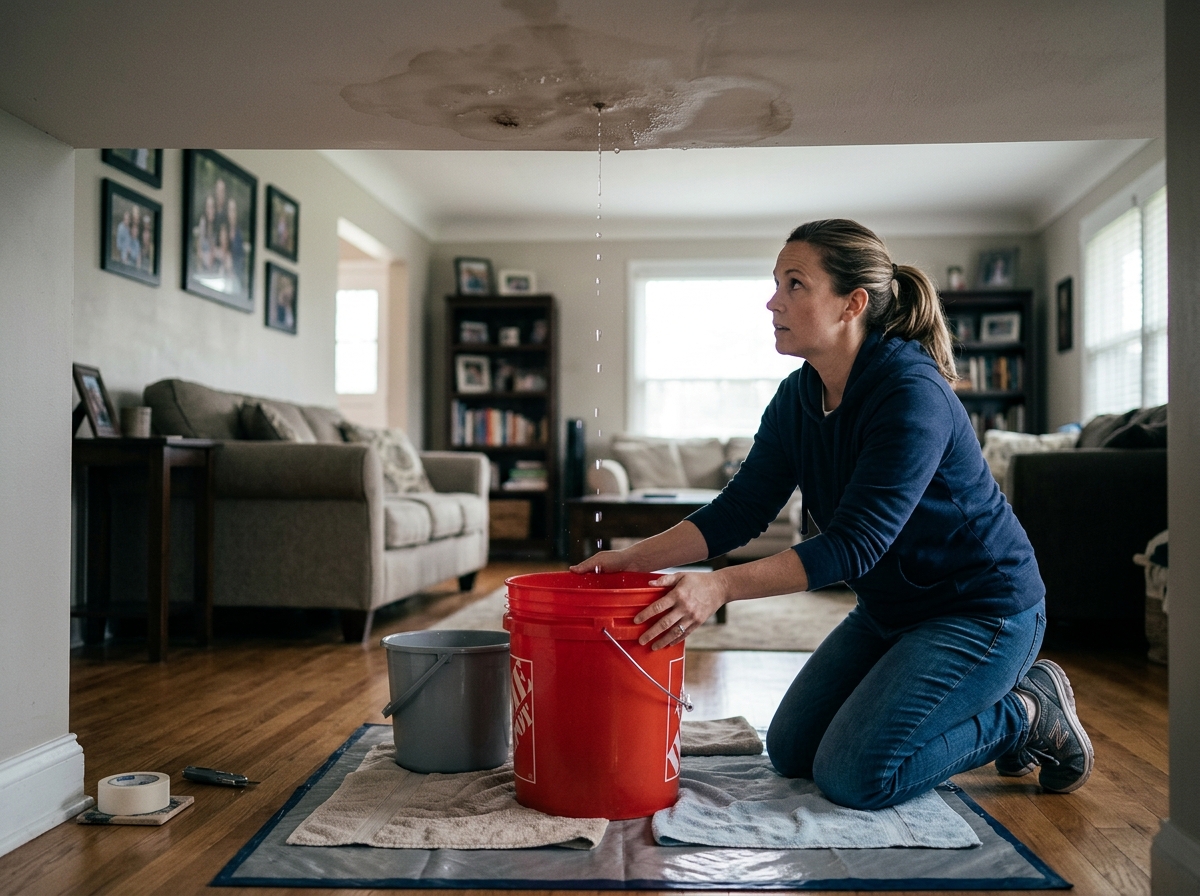
Focus on these internal mitigation steps:
- Water Containment: Place buckets or bins under active drips. If you see a bulge in your ceiling drywall where water is pooling, use a small screwdriver to poke a relief hole in the center. This allows the water to drain into a bucket in a controlled way rather than causing the entire ceiling to collapse under the weight.
- Furniture Relocation: Move electronics, heirlooms, and furniture to dry rooms. If items are too heavy to move, cover them with plastic sheeting or heavy-duty trash bags.
- Electrical Safety: If water is leaking near light fixtures, outlets, or your electrical panel, turn off the power to those zones at the breaker box immediately.
- Damage Documentation: From the safety of the ground, take clear photos and videos of the roof damage. Inside, document every wet carpet, stained ceiling, and damaged piece of furniture. This evidence is vital for your storm damage claim and your insurance adjuster.
What to Expect from 24 Hour Emergency Roof Repair Near Me Services
When our team arrives for a 24 hour emergency roof repair near me call, we follow a strict protocol to stabilize your home. This process is called a “dry-in.”
The first step is a rapid assessment to find the entry point. Once identified, we perform professional emergency tarping. This is not simply throwing a blue sheet over your house; professional tarping involves:
- Debris Removal: Clearing away broken branches or loose shingles so the tarp can sit flush against the roof surface.
- Secure Anchoring: Using wooden furring strips to nail the tarp edges down, ensuring high winds cannot catch the plastic and rip it away.
- Leak Mitigation: Applying temporary sealants or mastic to small punctures or flashing gaps that a tarp might not fully cover.
A professionally installed emergency tarp is designed to last 2–4 weeks, giving you enough time to coordinate with your insurance company for a permanent repair.
The Cost of 24 Hour Emergency Roof Repair Near Me
Homeowners are often hesitant to call for emergency service because they fear the price tag. However, the cost of a professional “dry-in” is a fraction of the cost of structural restoration.
| Service Type | Estimated Cost | Potential Risk if Delayed |
|---|---|---|
| Emergency Tarping | $800 – $2,500 | $5,000 – $25,000+ (Drywall, Flooring, Mold) |
| Minimum Service Fee | $350 – $750 | Escalating structural rot |
| Permanent Repair | $2,000 – $12,000 | Total Roof Replacement ($15k – $40k) |
Several factors influence the final bill for emergency services:
- Minimum Fees: Most companies charge a flat minimum (often $350-$750) based on the square footage of the area being protected.
- Surcharges: Expect a 20% surcharge for “steep” roofs (high pitch) or multi-story homes, as these require specialized safety equipment and more labor.
- After-Hours Rates: Calling on a Sunday or a major holiday like Thanksgiving may incur additional dispatch fees.
- Material and Labor: During regional disasters, the cost of plywood and industrial-grade tarps can fluctuate based on supply.
Most insurance policies require you to take “reasonable steps” to prevent further damage. This means they often cover the full cost of emergency tarping as part of the mitigation phase of your claim.
Navigating Insurance Claims and Permanent Repairs
Once the rain stops and the tarp is secure, the transition to permanent restoration begins. Professional documentation becomes your most valuable asset during this phase.
A qualified roofing contractor should provide a comprehensive packet for your insurance adjuster, including:
- High-Resolution Photos: Before and after the tarping, with timestamps.
- Measurements: Detailed EagleView or satellite reports showing the exact dimensions of the damage.
- Moisture Readings: Evidence of water intrusion in the attic or walls using calibrated meters.
Temporary vs. Permanent Fixes: A tarp is a band-aid. A permanent fix involves removing the damaged shingles and underlayment, inspecting the wooden decking for rot, and installing new materials that match your existing roof. If the damage covers more than 25–30% of the roof surface, your insurance company may approve a full roof replacement.
Always look for contractors who hold manufacturer certifications from Owens Corning or GAF. This ensures that your permanent repair is backed by a real warranty and meets local building codes in cities like Houston or Tulsa. For a deeper look at how to evaluate roofing contractors after storm damage, the Insurance Information Institute offers helpful guidance on working with adjusters and avoiding fraud.
Frequently Asked Questions about Emergency Roof Repair
What qualifies as a roofing emergency?
A roofing emergency is any situation where the roof’s integrity is compromised, posing an immediate threat to the structure or interior. This includes active water leaks, large holes from fallen trees, or significant sections of shingles being stripped away by high winds. If water is entering the home or the structure is at risk of collapse, it is an emergency.
How quickly can an emergency roofer respond?
Most professional emergency services aim for a response time of 60 to 90 minutes. However, during major regional storm events—like a hurricane in the Gulf Coast or a tornado outbreak in Oklahoma—wait times can extend to 48 hours. The best companies use GPS tracking and 24/7 dispatch to reach homeowners as fast as safely possible.
Will my homeowners insurance cover the cost of emergency tarping?
Yes, most homeowners insurance policies cover emergency mitigation services like tarping. In fact, insurance companies prefer that you call a professional immediately. By spending $1,500 on a tarp today, you are preventing $20,000 in mold remediation and drywall replacement tomorrow, which saves the insurance company money in the long run.
Conclusion
When a storm hits, time is your greatest enemy. A 24 hour emergency roof repair near me response is not just a service — it is a lifeline for your home. By acting quickly to contain water, documenting the damage thoroughly, and hiring a professional for emergency tarping, you can save your property from thousands of dollars in unnecessary interior damage.
At The Roof Guys, we are a family-owned contractor serving Texas and Oklahoma with one goal: protecting your family. Whether you are in Conroe, Pasadena, or Katy, our team provides ultra-fast turnaround, expert storm response, and a 10-year warranty on our workmanship.
Don’t let a leak turn into a catastrophe. If you’re facing a roofing crisis, reach out to the experts who know the local weather and the insurance process inside and out.
Request a Free Roof Inspection
Call for immediate assistance: 888-479-8303
For more information on long-term solutions, visit our Emergency Roofing page to see how we can restore your home to better-than-new condition.