Navigating Regulations for New Residential Roofing
New residential roofing is one of the most regulated and consequential investments a homeowner can make — and in Texas and Oklahoma, getting it right means understanding both material performance and legal compliance. Before you sign a contract or choose a shingle, here is what you need to know:
Quick Answer: Key Facts About New Residential Roofing
| Topic | Key Info |
|---|---|
| Average cost | $5,867 – $13,211 (national average: $9,513) |
| Most common material | Asphalt shingles |
| When to replace | Roof over 20 years old, persistent leaks, granule loss, sagging |
| Typical project timeline | 1 – 3 days for most homes |
| Labor as % of total cost | 50 – 60% of total project cost |
| Permits required | Yes — costs vary by municipality |
| Contractor endorsement | Required in Oklahoma under House Bill 1628 |
Your roof is not just a cosmetic feature. It is a precision-engineered system that shields your home from hail, wind, and water intrusion. In states like Texas and Oklahoma — where severe weather events are a near-annual reality — a non-compliant or poorly installed roof can void your homeowner’s insurance, reduce your property value, and leave your family exposed. Whether you are dealing with storm damage or simply replacing an aging roof, working with expert roofers in Texas and Oklahoma ensures your project meets every current requirement from the ground up.
As of April 2026, building codes, contractor licensing requirements, and material standards have all tightened. Homeowners now face more regulatory checkpoints than ever before. Working with a trusted residential roofing contractor ensures your project meets every current requirement from the ground up.
The average home roof needs repair or attention approximately every 10 years — and full replacement becomes necessary when age, weather damage, or structural deterioration make repairs no longer cost-effective.
I’m Cash Walker, a leadership team member at The Roof Guys — a Greater Houston roofing company with over 30 years of experience in new residential roofing across Texas and Oklahoma. In that time, our team has seen how the gap between a compliant roof and a non-compliant one can cost homeowners thousands of dollars in insurance disputes and structural repairs — and this guide is built to close that gap for you.
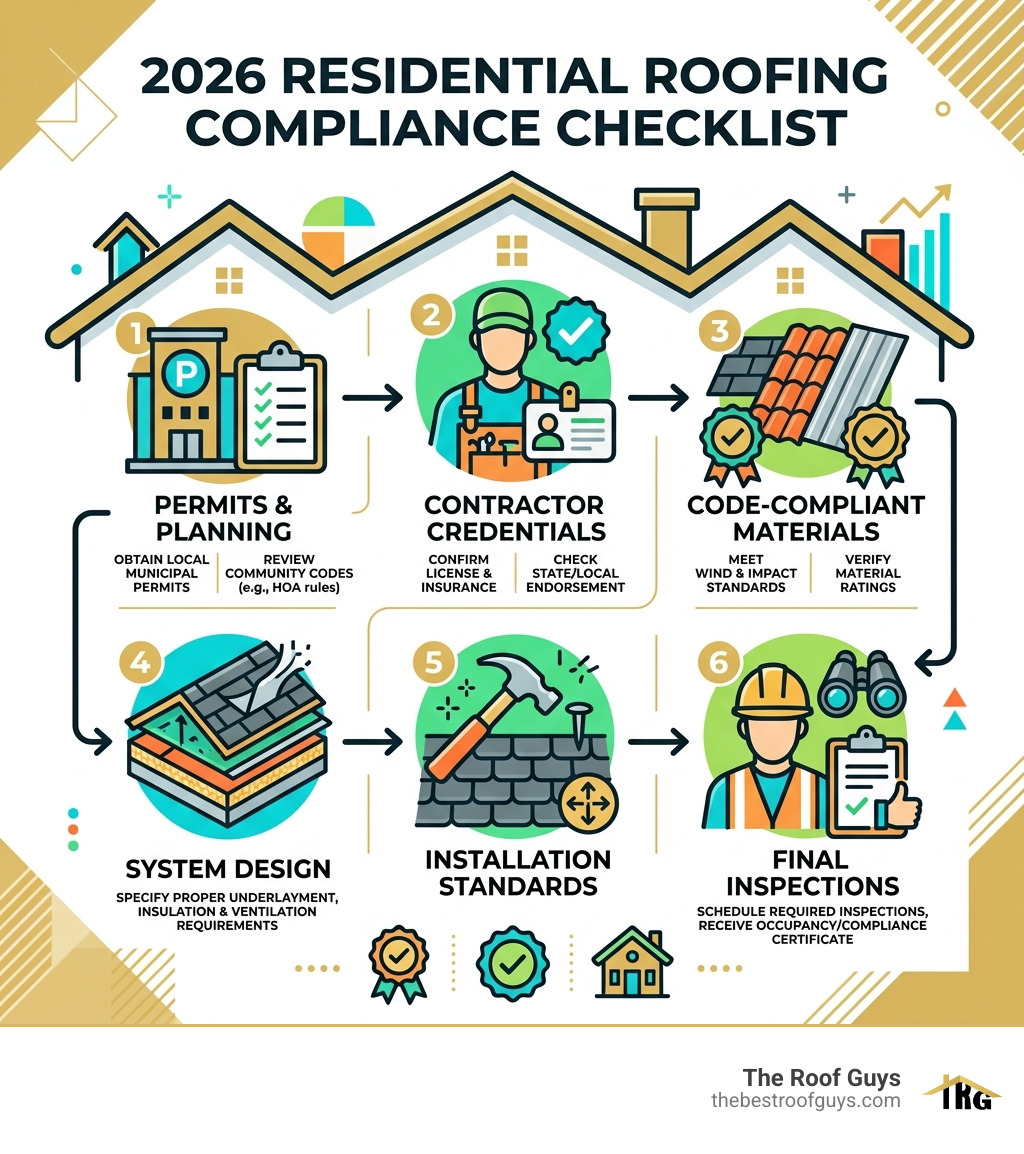

When we talk about new residential roofing, we aren’t just talking about hammering down shingles. We are talking about adhering to a strict set of legal and safety standards. In the South-Central U.S., these regulations are designed to ensure that every home can withstand the unique pressures of our climate, from 100-degree summer days to sudden, violent hailstorms.
Legislative Requirements in 2026
One of the most significant changes for homeowners in our region is the New Residential Roofing Endorsement required by House Bill 1628 in Oklahoma. This legislation was enacted to provide a higher level of consumer protection. It requires contractors to hold specific endorsements, ensuring they meet state-mandated registration and insurance standards. This prevents “storm chasers” from performing substandard work that leaves homeowners high and dry when the next rain cloud rolls in.
Local Permitting and Code Enforcement
In Texas cities like Conroe or Pasadena, municipal codes often dictate exactly how a roof must be installed.
- Permit Costs: Depending on your city, a permit for a new residential roofing project can cost anywhere from $100 to $500.
- ICC-National Standard: Most modern codes follow the International Residential Code (IRC). This ensures that the quality roof installation specialists you hire are following scientifically backed safety protocols.
- Inspection Protocols: A compliant project usually requires at least two inspections: one after the old roof is torn off to check the decking, and a final inspection once the new materials are in place.
Essential Components of a Compliant Roofing System
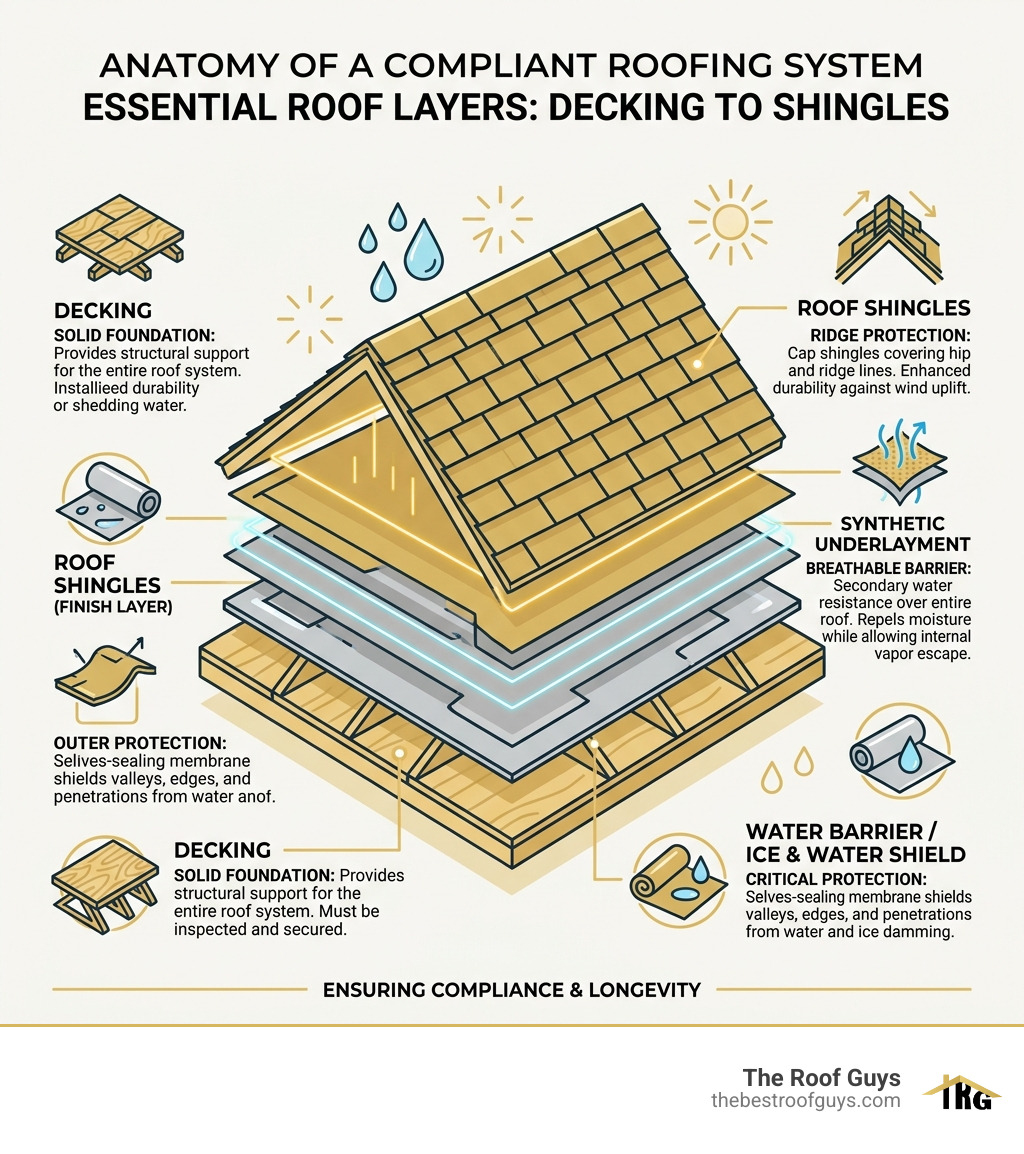
A compliant roof is like an onion—it has layers, and every single one has to be right. If a contractor skips a layer to save a buck, the whole system can fail. We follow the complete guide to residential roofing installation to ensure every component works in harmony.
The Role of Roof Ventilation and Underlayment
Proper ventilation is arguably the most ignored part of a roof, yet it’s the most critical for longevity.
- Airflow Dynamics: Without proper intake and exhaust vents, heat builds up in your attic. This “cooks” your shingles from the inside out, potentially voiding your warranty.
- Synthetic Underlayment: Gone are the days of simple felt paper. Modern compliance often requires high-performance synthetic underlayment that acts as a secondary waterproof barrier. This is vital for residential roofing in humid areas like Houston or Katy.
Structural Integrity and Decking Inspections
Before we lay a single shingle, we must inspect the “bones” of your roof—the decking (or sheathing).
- Sheathing Thickness: Codes specify the minimum thickness for plywood or OSB decking to ensure it can support the weight of the roofing material and any snow or wind loads.
- Sagging Deck Repair: If we find soft spots or sagging, these must be replaced. Installing a new roof over a compromised deck is a recipe for disaster and a major code violation.
Selecting Materials for Longevity and Performance
Choosing the right material is a balance of aesthetics, budget, and local climate needs. In Texas and Oklahoma, we have to account for extreme UV exposure and high-velocity winds.
| Material Type | Typical Lifespan | Best For |
|---|---|---|
| Asphalt Shingles | 15 – 25 Years | Affordability & Versatility |
| Standing Seam Metal | 40 – 70 Years | Maximum Durability & Energy Savings |
| Cedar Shakes | 25 – 30 Years | Historic/Rustic Aesthetics |
| Tile/Slate | 50 – 100+ Years | Luxury Homes & Extreme Longevity |
Material Standards for New Residential Roofing
When selecting residential roofing options, look for these ratings:
- Class 4 Impact Resistance: This is the “gold standard” for hail resistance. In many parts of Oklahoma and North Texas, installing Class 4 shingles can actually lower your insurance premiums.
- Class A Fire Rating: This is the highest fire resistance rating available, essential for safety in suburban and rural areas alike.
- Wind Uplift Scores: For homes in coastal or high-wind areas, materials must be rated to withstand gusts up to 130-150 MPH.
Energy-Efficient and Eco-Friendly Options
Modern new residential roofing can actually pay you back through energy savings. Cool roof technology uses specially designed granules that reflect sunlight rather than absorbing it. This can reduce attic temperatures by up to 30°F and slash your cooling bills by 15-20%.
Additionally, exploring eco-friendly roof installation options like recycled rubber or metal (which is 100% recyclable) can contribute to a more sustainable home. Some homeowners even opt for photovoltaic (solar) shingles, which integrate power generation directly into the roofline.
Financial and Warranty Compliance Factors

A new residential roofing project is a major financial undertaking. Nationally, the average cost sits around $9,513, but in Texas and Oklahoma, larger homes or premium materials can push that range from $15,000 to over $30,000.
Budgeting for New Residential Roofing Projects
It is important to understand where your money is going. Typically, labor accounts for 50% to 60% of the total job cost. This covers the dangerous work of tearing off the old roof, disposing of the heavy waste, and the precision labor of the new install.
- Square Footage: Roofing is measured in “squares” (a 10×10 area). A 2,000-square-foot home typically needs about 22-25 squares of material once waste and overlapping are factored in.
- Tear-off Fees: Expect to pay $1–$3 per square foot just for the removal and disposal of your old shingles.
For those looking for affordable roof installation options, asphalt shingles remain the most cost-effective. However, if you plan on staying in your home for 20+ years, a standing seam metal roof often provides a better return on investment due to its 50-year lifespan.
Understanding Warranty Limitations
Don’t be fooled by the term “Lifetime Warranty.” In the roofing world, this usually means a “Limited Lifetime Warranty.”
- Manufacturing Defects: Most warranties cover defects in the shingle itself for 10 years at 100% value, after which the coverage is prorated (decreases over time).
- Workmanship: This is provided by the contractor, not the manufacturer. At The Roof Guys, we provide a 10-year workmanship warranty because we stand by our install.
- Transferability: If you sell your home, check if your warranty can be transferred to the new owner. This is a huge selling point for buyers!
Frequently Asked Questions about Roof Compliance
What are the common signs that indicate a residential roof needs replacement?
A roof requires replacement if it is over 20 years old, exhibits widespread granule loss (which looks like sand in your gutters), shows visible sagging in the roofline, or has persistent leaks that have compromised the internal decking. If you see “bald spots” on your shingles or curled edges, the protective layer is gone.
Can you install a new roof over an existing one?
While some local codes allow for a second layer of shingles to save on tear-off costs, we strongly advise against it. A “layover” prevents us from inspecting the decking for rot and adds immense weight to your home’s structure. Furthermore, most manufacturer warranties for new residential roofing are voided or severely limited if installed over an old layer.
What is the typical timeline for a residential roof replacement?
Most standard residential roof replacements are completed within 1 to 3 days. Day one is usually the “tear-off” and “dry-in” (making it waterproof), and day two or three involves the final shingle or metal installation and a meticulous cleanup of the yard.
How does the local climate in Texas and Oklahoma affect my choices?
Our region deals with “The Big Three”: extreme heat, high winds, and hail. For The Woodlands or Houston, humidity and algae resistance are key. For Oklahoma City or North Texas, impact resistance (Class 4) is the priority to protect against hail.
Conclusion
Achieving full compliance with new residential roofing standards requires a combination of high-quality materials and certified professional installation. It isn’t just about passing an inspection; it’s about the peace of mind that comes from knowing your home is ready for whatever the Texas or Oklahoma sky throws at it.
At The Roof Guys, we take the guesswork out of compliance. As a family-owned business serving communities from Huntsville to Tulsa, we understand the local codes and the local weather. We offer:
- Ultra-fast turnaround: Most roofs are done in 48 hours.
- 10-year labor warranty: We back our craftsmanship for a decade.
- Expert storm response: We help you navigate the insurance maze after hail or wind damage.
Your roof is your home’s first line of defense. Don’t leave it to chance. Whether you are in Conroe, Katy, or Oklahoma City, we are here to help.
Schedule your compliant roof replacement today. Let’s get your home covered properly.