Understanding Black Metal Roofing Panel Types and Profiles
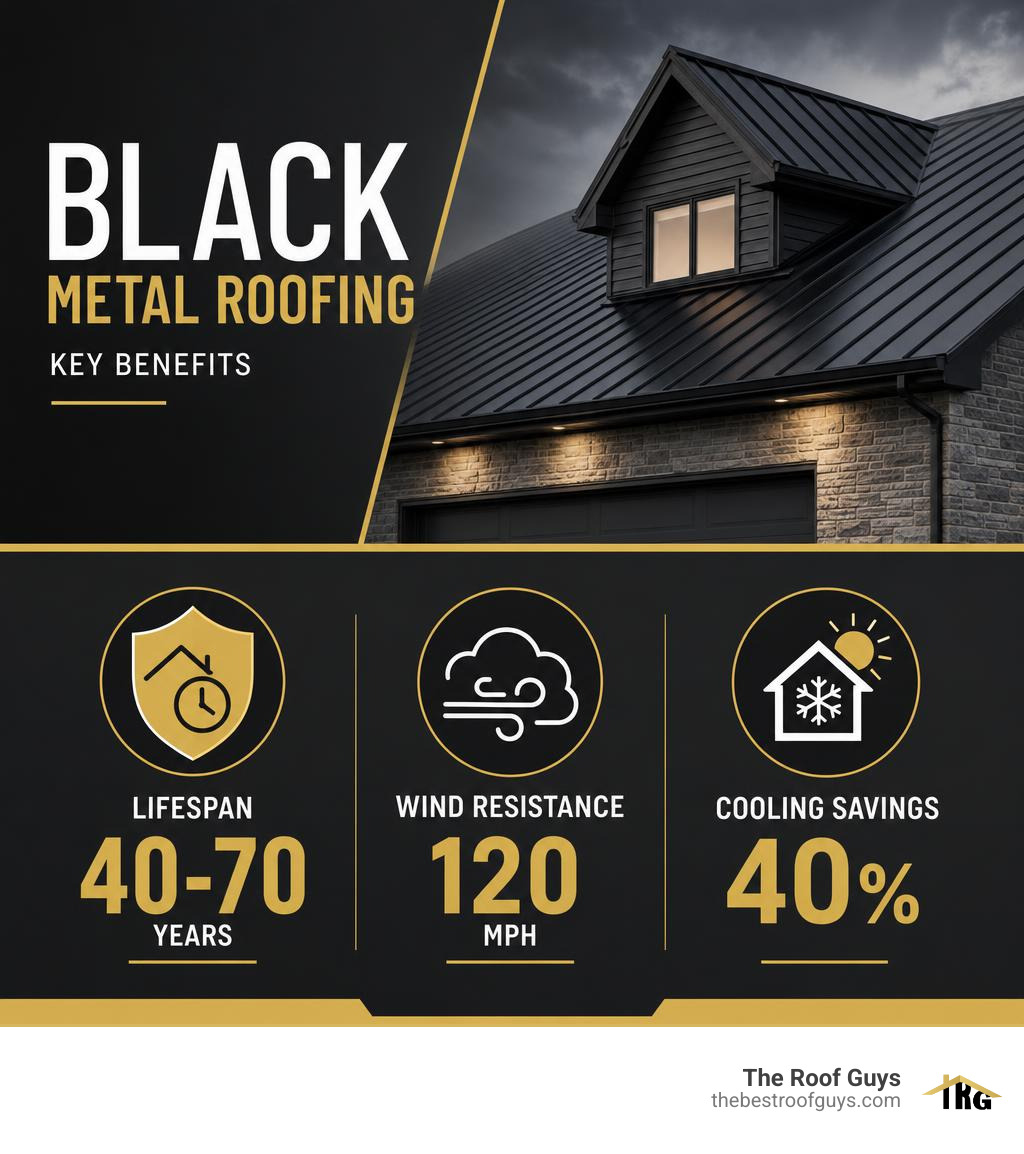
Black metal roofing delivers a rare combination of striking visual impact and proven storm-tested durability, making it one of the fastest-growing roofing choices in Texas and Oklahoma. Homeowners replacing aging or storm-damaged roofs are choosing black metal panels for their 40-to-70-year lifespan, wind resistance up to 120 mph, and cooling cost savings of up to 40%. If you are weighing your options, The Roof Guys can help you make the right choice with over 30 years of industry experience. Here is what you need to know at a glance:
Quick Answer: Why Choose Black Metal Roofing?
- Lifespan: 40 to 70 years — two to three times longer than asphalt shingles
- Weather resistance: Withstands hail up to 2.5 inches, wind uplift up to 120 mph, and driven rain up to 110 mph
- Energy efficiency: Can reduce cooling costs by up to 40%
- Curb appeal: High-contrast look that works with modern, farmhouse, and traditional home styles
- Property value: Can increase home value by up to 6%
- Sustainability: Made from recyclable materials with minimal landfill waste
As architectural trends shift toward bold, high-contrast aesthetics, more Texas and Oklahoma homeowners are choosing black metal roofing to replace aging, storm-damaged roofs. And it is not just about looks. This material delivers real, measurable protection against the hail, wind, and severe weather that hammers homes across the region every year. When you are ready to make the upgrade, working with an experienced metal roofing contractor ensures the job is done right the first time.
The appeal is easy to understand. A sleek black roofline dramatically changes how a home looks from the street. But beyond aesthetics, black metal panels offer a level of durability and weather resistance that traditional asphalt shingles simply cannot match, especially in climates where storms are a fact of life, not an exception.
This guide covers everything you need to make a confident decision: panel types, gauge thicknesses, finishes, warranties, cost comparisons, installation tips, and climate performance. Whether you are replacing a storm-damaged roof or planning a full home renovation, you will find the answers here.
I am Cash Walker, a leadership team member at The Roof Guys, a Greater Houston roofing company with over 30 years of industry experience helping homeowners navigate everything from routine replacements to emergency storm repairs involving black metal roofing. With that background, I will walk you through exactly what to look for so you can choose with confidence.
Black metal roofing word roundup:
When selecting a black metal roof, the profile you choose dictates both the visual style of your home and how the roof performs under severe weather conditions. Metal roofing is not a one-size-fits-all product; it is divided into distinct systems defined by how they are fastened and shaped.

Standing Seam: The Premium Concealed Fastener Choice
Standing seam metal roofing is the gold standard for many residential applications. This system features vertical panels joined by raised seams that conceal the fasteners beneath the metal surface.
- How it works: Panels are attached to the roof deck using clips and concealed fasteners. A snap-lock system or a mechanically seamed tool locks the panels together.
- Why it reigns supreme: Because the fasteners are completely protected from the elements, there are zero exposed screws. This virtually eliminates the risk of leaks caused by backed-out screws or degraded neoprene washers over time.
- Visual appeal: It offers clean, continuous lines that look highly architectural, especially when finished in a modern matte black coating.
- Performance: Mechanically seamed panels offer exceptional wind uplift resistance, making them ideal for storm-prone areas like Houston, Pasadena, and the Gulf Coast.
Corrugated and Ribbed Panels: Versatile and Cost-Effective
If you want the durability of metal on a more flexible budget, exposed-fastener panels are an excellent alternative. Unlike standing seam, these panels are screwed directly through the face of the metal into the roof decking or purlins.
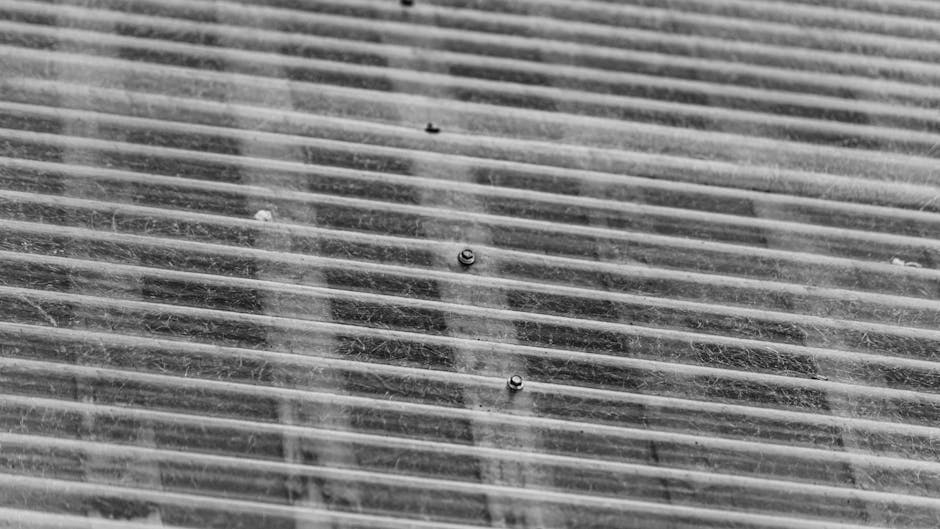
- Corrugated Panels: Known for their classic wavy pattern, corrugated black metal panels offer a durable, dimensional look that works well on homes, additions, patios, and outbuildings. The continuous waves are strong and help disguise minor imperfections or oil canning, the slight waviness sometimes visible in flat metal sheets.
- R-Panels and PBR Panels: These feature raised, trapezoidal ribs with flat spaces in between. They are highly popular for barndominiums and modern industrial designs. A heavy-duty 26-gauge matte black R-panel provides a bold, structured look with a typical 1.25-inch rib height.
- Classic Rib: This low-profile choice features 3/4-inch ribs spaced 9 inches apart. It is lightweight, cost-effective, and highly popular for residential retrofits and agricultural outbuildings.
The Technical Specs: Gauges, Finishes, and Warranties
Investing in black metal roofing requires a basic understanding of the technical specifications. The steel’s thickness, the paint chemistry, and the manufacturer’s warranty will determine whether your roof lasts 40 years or begins to chalk and rust after just a decade.
Choosing the Right Steel Gauge for Durability
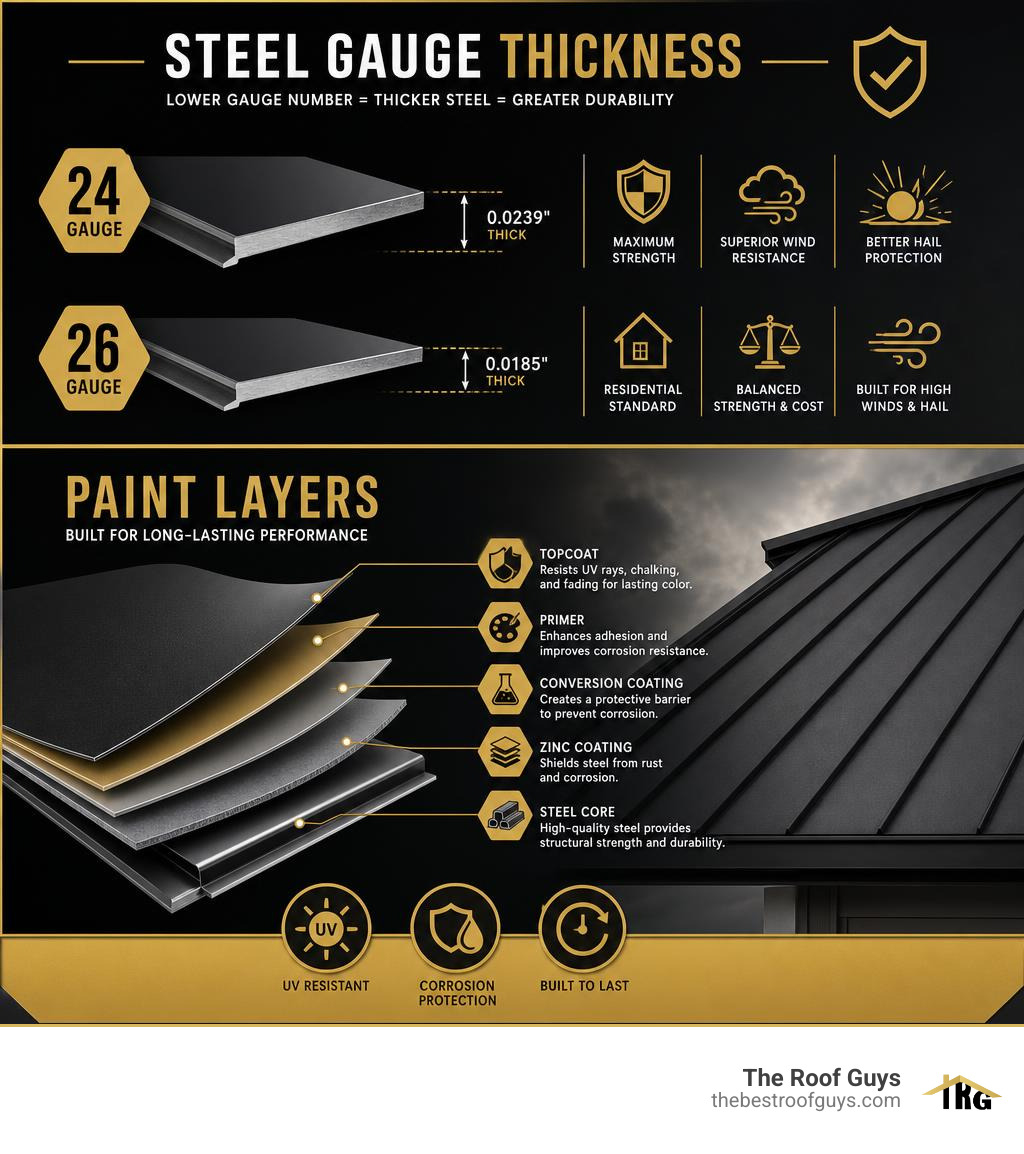
In the metal roofing world, lower gauge numbers mean thicker steel. Choosing the right thickness is critical for surviving the heavy hail of Oklahoma City and Tulsa, or the high winds of coastal Texas.
- 24-Gauge (Approx. 0.0239″ thick): This is the heavy-duty, commercial-grade standard. It offers maximum structural integrity, minimizes oil canning, and is highly recommended for standing seam systems on high-end homes.
- 26-Gauge (Approx. 0.0185″ thick): The residential contractor standard for Texas and Oklahoma. It provides the perfect balance of cost and strength. It is the absolute “floor” thickness we recommend to withstand Gulf Coast winds and hail.
- 29-Gauge (Approx. 0.0142″ thick): Thinner steel typically used for budget-conscious agricultural buildings or retail utility panels. We advise against using 29-gauge for primary residential dwellings, as it is far more susceptible to denting from hail and wind damage.
Matte vs. Glossy Finishes and Heat Absorption
A common concern with black roofs is heat. However, modern paint technology has solved this issue. The choice between a matte or glossy finish is primarily aesthetic, but it also impacts how light—and heat—reacts with your home.
- Matte Black: This finish scatters reflected light rather than reflecting it in a single direction. It eliminates harsh glare, hides minor surface imperfections, and reads as highly modern and architectural. Matte black panels typically feature a Solar Reflectance (SR) of around 0.25 and a Solar Reflectance Index (SRI) of 25, meeting standard steep-slope cool roof guidelines.
- Glossy Black: Offers a high-shine, traditional metal look. While it can look striking, glossy finishes are more prone to showing “oil canning” under direct sunlight and can create intense glare for neighbors.
Understanding Paint and Substrate Warranties
The longevity of your roof’s color depends entirely on the chemical formulation of its protective coating.
- PVDF (Kynar 500 / Hylar 5000): The premium resin-based coating. PVDF offers outstanding resistance to ultraviolet (UV) radiation, chalking, and fading. If you want your black roof to stay deep, rich black for decades, PVDF is the gold standard.
- SMP (Silicone Modified Polyester): A highly durable, mid-tier option like Sherwin-Williams WeatherXL. It resists scratching during installation better than PVDF and comes at a lower price point, making it incredibly popular for R-panels and corrugated sheets.
- Galvalume Substrate: Beneath the paint lies the steel substrate. Ensure your panels feature a minimum of an AZ50 Galvalume (aluminum-zinc alloy) coating. This substrate protects the raw steel from moisture and edge rust, typically backed by a 25-year manufacturer warranty.
The Pros and Cons of Choosing Black Metal Roofing
Like any major architectural decision, choosing a black metal roof comes with trade-offs. Understanding these pros and cons will help you decide if this striking style fits your lifestyle and your local climate.

Aesthetic Versatility and Curb Appeal
The visual impact of a black roof is undeniable. It acts as a dramatic frame for your home’s exterior design.
- High Contrast: Black provides a stunning contrast against white board-and-batten siding (the classic modern farmhouse look), natural stone, red brick, or warm wood accents.
- Fewer Tonal Variations: Unlike grays or browns, which can have blue, green, or red undertones that clash with your paint, black is a true neutral. It coordinates seamlessly with almost any exterior color palette.
- Increased Property Value: According to Remodeling Magazine’s Cost vs. Value Report, a modern, high-end metal roof can increase your home’s resale value by up to 6%, making it a highly attractive feature for future buyers.
Key Performance Factors of Black Metal Roofing in Extreme Climates
For homeowners in Texas and Oklahoma, a roof is your first line of defense against severe weather. Black metal roofs excel in harsh conditions:
- Hail Resistance: Metal roofing can handle hailstones up to 2.5 inches across without puncturing, protecting your home’s interior from water damage during severe spring storms. Homeowners in areas like The Woodlands can connect with experienced roofers in The Woodlands for storm damage assessments.
- Wind Resistance: When properly anchored, metal roofing panels resist wind uplift at hurricane-force speeds of up to 120 mph and provide protection from driven rain in wind speeds up to 110 mph.
- Snow and Ice Shedding: In Oklahoma and North Texas, winter storms can pile heavy snow on roofs. Black metal absorbs solar heat quickly, causing snow and ice to melt and slide off safely, preventing dangerous ice dams.
Black Metal Roofs vs. Traditional Asphalt Shingles
To truly understand the value of black metal roofing, it helps to compare it directly to traditional asphalt shingles, which are the most common roofing material in Montgomery County and across the region.
| Feature | Black Metal Roofing | Asphalt Shingles (e.g., Onyx Black) |
|---|---|---|
| Lifespan | 40 to 70 Years | 15 to 20 Years |
| Maintenance | Extremely Low (Clear debris occasionally) | Moderate (Algae growth, loose granules) |
| Wind Resistance | Up to 120 MPH | 60 to 110 MPH |
| Hail Resistance | Excellent (Up to 2.5″ hail) | Poor to Moderate (Bruising, granule loss) |
| Cooling Cost Savings | Up to 40% | Minimal (Heat retention in attic) |
| Recyclability | 100% Recyclable | Landfill-bound (Hard to recycle) |
| Fire Rating | Class A (Non-combustible) | Class A (But can melt/burn under direct flame) |
Lifespan, Maintenance, and Weather Resistance
A black metal roof lasts 40 to 70 years with minimal maintenance, while traditional asphalt shingles typically last only 15 to 20 years before storm damage, algae, or UV degradation forces a replacement. Options like Supreme Onyx Black 3-Tab Roofing Shingles (33.3 sq. ft. per Bundle) offer a lower upfront cost, but asphalt shingles easily lose granules during severe hail and are prone to wind uplift during heavy storms.
In contrast, a metal roof is a “once-in-a-lifetime” investment. It requires very little upkeep — just clearing leaves from valleys and checking gutters periodically. If you are weighing these options for your home, our detailed comparison of asphalt shingles vs. metal roofing in Montgomery County, TX provides an in-depth breakdown of regional performance and long-term costs.
Energy Efficiency and Environmental Sustainability
A common myth is that black metal roofs turn homes into giant ovens. In reality, metal does not store heat the way asphalt does.
- Solar Radiation Re-Emission: Stone-coated metal roofs and panels finished with cool-roof infrared pigments can re-emit up to 90% of solar radiation back into the atmosphere. The Oak Ridge National Laboratory has published research confirming that metal roofing with infrared-reflective pigments significantly reduces roof surface temperatures compared to conventional dark-colored materials.
- Cooling Savings: By preventing heat from radiating down into your attic, a black metal roof can lower your summer cooling costs by as much as 40%.
- Eco-Friendly: Asphalt shingles account for billions of pounds of landfill waste annually. Metal roofing is 100% recyclable at the end of its long life, making it a champion of modern green building.
Sourcing and Installing Your Black Metal Roof
The success of your roofing project depends heavily on where you source your materials and who installs them.
Big-Box Retailers vs. Specialty Metal Suppliers
When sourcing panels, you have two primary routes:
- Big-Box Retailers: Options like Black – Roof Panels – The Home Depot are convenient for small DIY projects, sheds, or patio covers. However, they typically stock limited lengths and standard gauges, often thinner 29-gauge panels.
- Specialty Metal Suppliers: Local specialty fabricators and metal yards serving Conroe, Greater Houston, and nearby Texas markets can provide commercial-grade 24 and 26-gauge steel. They often offer custom roll-forming to cut panels to exact project specifications, minimizing waste and unnecessary seams. Buying the full order from a single coil run also helps maintain color consistency and reduces the risk of batch-to-batch shading differences.
Essential Installation Considerations for Black Metal Roofing
Installing a black metal roof requires specialized techniques that differ significantly from shingle installation:
- High-Temp Synthetic Underlayment: Because black metal absorbs heat, standard felt paper can melt or stick to the underside of the panels. We always use a high-temperature, self-adhering synthetic underlayment to provide a secondary water barrier.
- Thermal Expansion: Metal expands and contracts as temperatures change. Standing seam clips allow the panels to float and slide slightly, preventing buckling or warped panels.
- Color-Matched Fasteners: For exposed fastener systems, using high-quality screws with UV-resistant EPDM washers is non-negotiable. The screws must be driven perfectly straight to ensure a tight, leak-free seal.
- Adequate Ventilation: Proper intake and exhaust ventilation are essential to keep attic temperatures cool and prevent condensation buildup under the metal panels.
Frequently Asked Questions About Black Metal Roofs
Are black metal roofs hotter than lighter colors?
No, not significantly. While a light gray or white roof will reflect more initial light, modern black metal roofs formulated with cool roof pigments reflect a surprising amount of solar energy. Because metal has a low thermal mass, it cools down almost instantly once the sun goes down, unlike thick asphalt shingles which trap and radiate heat long into the night. Proper attic insulation and ridge ventilation completely negate any minor temperature differences.
How long does a black metal roof last compared to shingles?
A black metal roof will last between 40 and 70 years. Traditional asphalt shingles typically last 15 to 20 years in Texas and Oklahoma before storm damage, algae, or UV degradation forces a replacement. This means a metal roof lasts up to three times longer, offering a far superior long-term return on investment.
Does a black metal roof fade over time?
All outdoor materials experience some UV exposure, but high-quality PVDF (Kynar 500) paint finishes are specifically engineered to resist fading and chalking. When you invest in a premium paint system, it is backed by a 30-to-40-year fade and chalk warranty, ensuring your roof retains its deep, rich black color for decades.
Conclusion
A black metal roofing system is the ultimate marriage of bold, modern style and rugged, storm-tested durability. It protects your home from hail, wind, and rain while elevating its curb appeal and lowering your monthly energy bills.
At The Roof Guys, we specialize in installing high-performance residential and commercial metal roofing systems across Texas and Oklahoma. Whether you are in Conroe, Houston, Pasadena, The Woodlands, Huntsville, Spring, Katy, Tulsa, or Oklahoma City, our expert teams are ready to deliver ultra-fast turnarounds, industry-leading storm response, and our signature 10-year workmanship warranty.
Ready to transform your home with the strength and sophistication of black metal? Schedule your free consultation today with our team of experts or call us now at (281) 895-8011