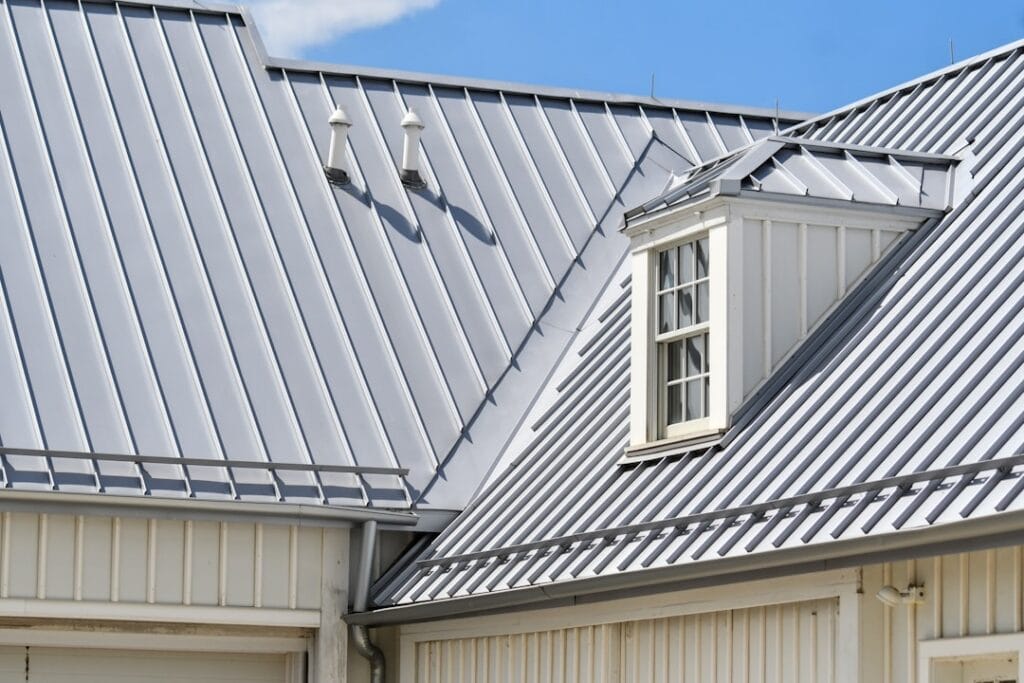
Key Benefits of Metal Roofing
Metal roofing is one of the smartest long-term investments a homeowner can make — especially in Texas and Oklahoma, where hail, high winds, and brutal summer heat put every roof to the test. If you’re exploring your roofing options after storm damage, rising repair bills, or an aging roof, here’s a quick snapshot of what you need to know:
What is metal roofing?
- A roofing system made from steel, aluminum, copper, or zinc panels
- Available in styles including standing seam, corrugated, ribbed, and stone-coated
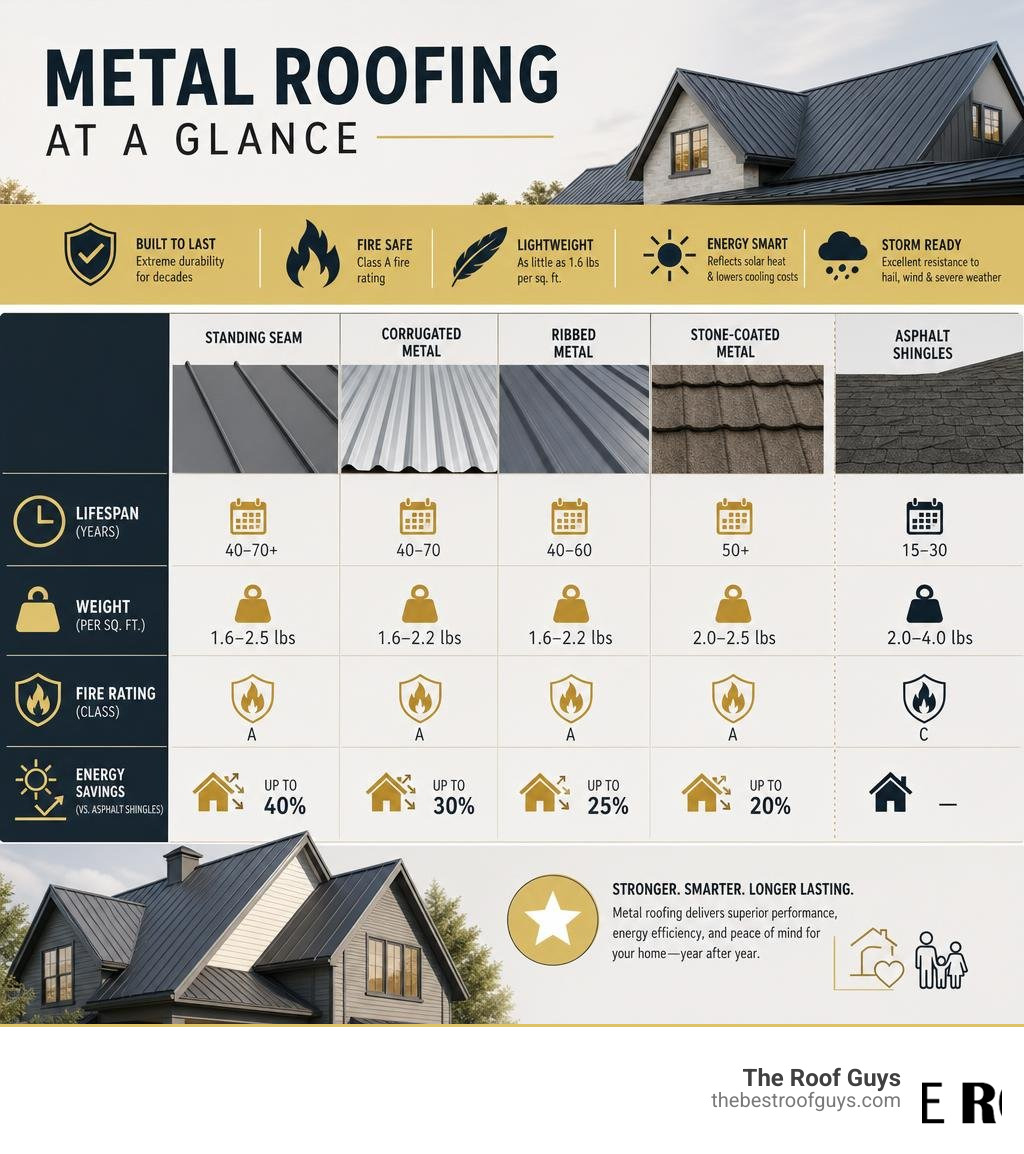
- Lasts 40–70 years (copper and zinc can exceed 100 years)
- Carries a Class A fire rating and typically a Class 4 hail impact rating
- Reduces cooling costs by up to 40% through solar heat reflection
- Weighs as little as 1.6 lbs per square foot — far lighter than tile or shakes
- Currently the second most popular roofing material in the United States
If you want expert help choosing the right system, learn more about professional metal roofing services.
Homeowners across the country are catching on. According to the Metal Roofing Alliance’s annual market research, residential re-roofing demand for metal jumped to a record-high 18 percent in 2022 — a six-point increase in just three years. That growth isn’t a coincidence. Metal roofs simply outperform traditional materials in almost every category that matters: durability, weather resistance, energy efficiency, and long-term cost.
For homeowners in storm-prone regions like Greater Houston and surrounding areas of Texas and Oklahoma, the stakes are especially high. A roof that fails during a hurricane or hailstorm isn’t just a repair bill — it’s a major disruption to your home and family. That’s exactly why more local homeowners are making the switch.
I’m Cash Walker, a leadership team member at The Roof Guys, a Greater Houston roofing company with over 30 years of industry experience in metal roofing and all major roofing systems. In this guide, I’ll walk you through everything you need to know — from materials and panel styles to costs and performance — so you can make a confident, informed decision.
Metal roofing further reading:
When you invest in a new roof, you want to know exactly what you are getting for your money. While the upfront cost of a metal roof is higher than traditional asphalt shingles, the long-term benefits easily justify the initial expense. By understanding the core advantages, you can see why so many homeowners in Texas and Oklahoma are upgrading their properties.
Exceptional Lifespan and Durability
A standard asphalt shingle roof typically needs to be replaced every 12 to 20 years, especially under the intense southern sun. In contrast, a high-quality metal roof is designed to last 40 to 70 years or more with minimal upkeep. This means a metal roof is often the last roof you will ever have to buy for your home. For a deeper dive into how this translates to long-term property value, explore The Benefits Of Metal Roof Installation For Longevity And Aesthetic Appeal.
Outstanding Energy Efficiency
Unlike asphalt shingles, which absorb solar radiation and transfer heat directly into your attic, metal reflects solar heat away from your home. Energy-efficient metal roofs can reduce cooling costs by up to 40%. In places like Conroe, Houston, and Pasadena, where summer utility bills can skyrocket, this thermal performance provides massive, direct financial relief month after month.
Superior Weather Resistance
From Gulf Coast hurricanes to Oklahoma tornadoes and severe hailstorms, our service areas face some of the most extreme weather in the country. Metal roofs are non-combustible, earning a Class A fire rating (the highest possible safety rating). They also routinely achieve a UL 2218 Class 4 impact rating, meaning they can withstand two-inch hailstones dropped from 20 feet without cracking or fracturing. Furthermore, interlocking metal panel systems are engineered to withstand wind speeds up to 120–140 mph, keeping your home dry and secure when storms strike.
Ultra-Low Maintenance
Tired of dealing with missing shingles, mold growth, and algae stains? Metal is naturally resistant to pests, rot, mildew, and fire. Maintenance is incredibly simple: clear off heavy debris like leaves or branches once or twice a year, inspect the sealants and fasteners periodically, and rinse the panels occasionally.
Types of Metal Roofing Materials
Not all metal roofs are made of the same material. The metal you choose will dictate your roof’s price point, overall aesthetic, weight, and lifespan. Let’s break down the four primary metal roofing materials available for residential homes.
Steel and Stone-Coated Steel
Steel is the most popular material for residential metal roofing due to its incredible strength and cost-effectiveness. It is typically coated with either a zinc-aluminum alloy (known as Galvalume) or pure zinc (Galvanized steel) to prevent rust and corrosion.
For homeowners who want the structural benefits of steel but prefer a traditional residential look, stone-coated steel is an incredible option. Developed originally from a World War II camouflage innovation, stone-coated steel combines multi-layered steel sheets with adhered natural stone granules. This allows you to replicate the exact look of asphalt shingles, clay tiles, or rustic wood shakes while maintaining a Class A fire rating and Class 4 impact resistance. If you are looking for premium stone-coated options, check out #1 Stone-Coated Steel Metal Roofing | DECRA Metal Roofing.
If you are interested in a bold, modern look, steel also comes in incredibly stylish painted finishes. For example, many modern farmhouse designs utilize dark tones. Read more in our guide on The Dark Side Of Style A Guide To Black Metal Roofing Sheets.
Aluminum: The Lightweight Coastal Choice
If you live in a coastal area like Houston, Pasadena, or Katy, salt spray and high humidity can accelerate rust on standard metals. Aluminum is the ultimate solution for these environments because it is naturally rustproof and highly resistant to corrosion.
Aluminum is incredibly lightweight (weighing as little as 5 pounds per square foot) and highly eco-friendly, typically composed of approximately 95% recycled material. To understand why this material is rapidly gaining market share, read our article on Why Aluminium Roof Cladding Is The Future.
Premium Metals: Copper and Zinc
For those seeking the absolute peak of luxury, durability, and architectural beauty, premium metals like copper and zinc are unmatched.
- Copper: Boasting a documented lifespan exceeding 100 to 200 years, copper is a “living material” that never rusts. Over time, it undergoes a stunning patina evolution, transitioning from a bright salmon-pink to a rich bronze, and finally to a historic verdigris green. Copper also has natural antimicrobial properties that prevent moss and algae growth.
- Zinc: Zinc is highly prized for its self-healing properties—it naturally repairs minor scratches over time through its chemical weathering process. It requires only one-quarter of the energy to process compared to steel or copper, making it an incredibly green choice.
If you want a historic or highly customized look using premium metals, systems like the Standing Seam Shingle offer a gorgeous, traditional shingle aesthetic backed by the multi-century durability of pure copper or aluminum.
Panel Styles and Profiles
Once you choose your material, you must select the structural profile of the panels. The profile determines how the roof is installed, how it handles water and snow, and how much it costs.
Standing Seam Metal Roofing
Standing seam is the gold standard for residential metal roofing. This system features vertical metal panels with raised interlocking seams.
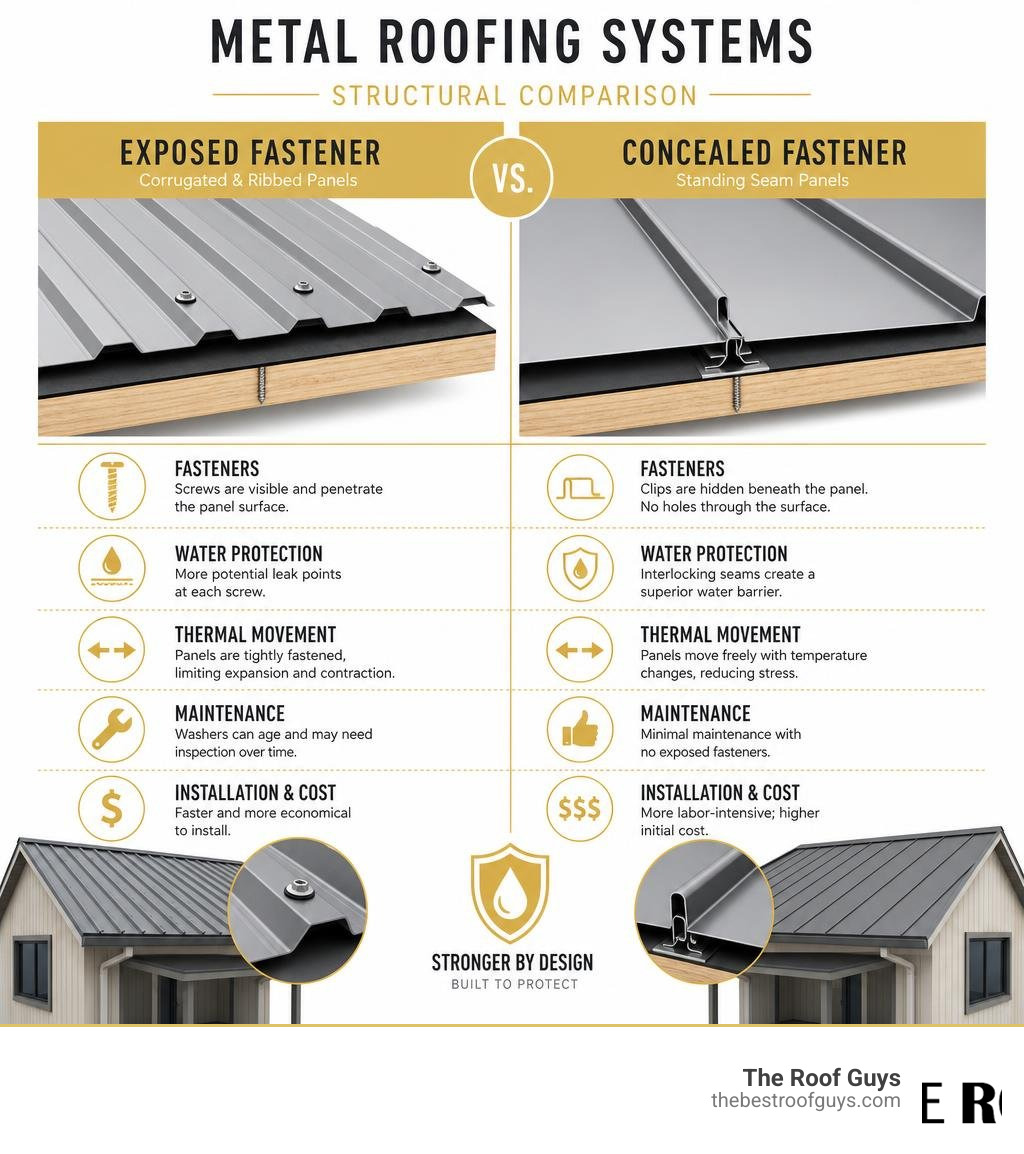
- Concealed Fasteners: The defining characteristic of standing seam is that all fasteners are hidden beneath the metal surface. The panels are secured to the roof deck using clips, meaning there are zero exposed screws penetrating the exterior. This virtually eliminates the risk of leaks over time.
- Thermal Movement: Because the panels are secured with clips rather than tight, rigid screws, the metal can freely expand and contract as temperatures change without backing out fasteners.
- Solar and Snow Compatibility: The clean, flat surface of standing seam makes it the perfect substrate for solar panels. Racking hardware can clamp directly onto the raised seams without penetrating the roof, preserving your weathertight warranty.
For high-performance steel standing seam products engineered to withstand the toughest weather, we highly recommend looking into Standing Seam Metal Roofing Systems – Standing Seam Steel Roofing | McElroy Metal.
Corrugated and Ribbed Metal Roofing
If you are looking for a highly durable metal roof on a budget, corrugated and ribbed panels are excellent, time-tested options.
- Exposed Fasteners: Unlike standing seam, these panels are overlapped and screwed directly down into the roof decking from the outside. This means thousands of screws penetrate the metal surface. While this makes the system faster and less expensive to install, the rubber washers on the screws will need to be inspected and replaced eventually (typically every 10 to 15 years) to prevent leaks.
- PBR Panels: Purline Bearing Rib (PBR) panels are incredibly popular for residential, agricultural, and commercial buildings. They feature high, sturdy ribs spaced 12 inches apart to provide maximum structural strength and can be installed on roof slopes as low as 1:12. To view detailed specifications, check out PBR – Exposed Fastener Panel — Metroll.
For more details on how these wavy, industrial-style panels have made a massive comeback in modern residential architecture, read Corrugated Metal Cladding Is Making Waves.
Comparing Metal vs. Asphalt Shingles
If you are trying to decide whether to stick with traditional asphalt shingles or upgrade to a metal roof, it helps to compare them side-by-side.
| Feature | Metal Roofing | Asphalt Shingles |
|---|---|---|
| Lifespan | 40 to 70+ Years | 12 to 20 Years |
| Initial Cost | $5 to $12+ per sq. ft. | $3 to $5 per sq. ft. |
| Maintenance | Very Low | Moderate (repairing blow-offs, algae) |
| Energy Savings | Up to 40% reduction in cooling costs | Minimal (absorbs and traps heat) |
| Wind Resistance | Up to 120–140 mph (Interlocking) | 60 to 110 mph (Vulnerable to blow-offs) |
| Weight | Extremely Lightweight (~1.6 lbs/sq. ft.) | Heavy (~4.3 lbs/sq. ft.) |
| Recyclability | 100% Recyclable | Landfill-bound (millions of tons annually) |
While asphalt shingles are cheaper upfront, they are a short-term fix. When you factor in the cost of multiple replacements, ongoing repairs, and higher energy bills, a metal roof is actually much cheaper in the long run.
For homeowners in Montgomery County, TX, including Conroe and Spring, we have created a localized comparison guide to help you navigate this decision: Choosing Between Asphalt Shingle And Metal Roof Installation A Guide For Homeowners In Montgomery County TX.
If you live in Houston or The Woodlands and want to explore how stone-coated metal shingles can give you the best of both worlds—the traditional look of shingles with the lifetime durability of steel—visit The Woodlands & Houston Stone Coated Metal Shingles.
Frequently Asked Questions About Metal Roofs
Is a metal roof noisy during rain or hail?
No. This is one of the most common myths about metal roofing. When installed on a residential home, metal panels are laid over a solid plywood roof deck, a thick synthetic underlayment, and a fully insulated attic space. These layers act as highly effective acoustic dampeners. In fact, professional sound testing shows that rain on a properly installed residential metal roof is within 1 to 3 decibels of a standard asphalt shingle roof—making the sound difference virtually unnoticeable from inside your living room.
Does a metal roof attract lightning?
No. Lightning is attracted to the tallest point in an area, not the material of the structure. A metal roof does not make your home any more likely to be struck by lightning than an asphalt or wood shake roof. In the rare event that your home is struck, a metal roof is actually the safest option because metal is non-combustible. It safely dissipates the electrical charge throughout the structure and will not catch fire.
Can a metal roof be installed over existing shingles?
Yes, in many cases. This is known as a “roof-over” or “retrofit” installation. Because metal is incredibly lightweight (up to 60% lighter than asphalt shingles), installing it over your existing roof will not overload your home’s structural framing. However, you must always verify local building codes in your specific city (such as Pasadena or Oklahoma City) to ensure a roof-over is permitted. It is also critical to have a professional inspect the existing roof deck first to ensure there is no hidden rot or water damage that needs to be repaired before the metal is installed.
Conclusion
Upgrading to a metal roof is one of the most reliable ways to protect your home, slash your energy bills, and permanently eliminate the cycle of constant roof repairs. Whether you prefer the sleek, modern lines of a standing seam system, the cost-effective durability of corrugated panels, or the classic look of stone-coated steel, there is a metal roofing option designed to fit your home’s style and structural needs.
At The Roof Guys, we are proud to be a family-owned roofing contractor serving homeowners across Texas and Oklahoma. We specialize in high-quality residential and commercial installations, storm damage restoration, replacements, gutters, and siding.
When you work with us, you benefit from:
- Expert Storm Response: We know how to navigate insurance claims and repair storm damage fast.
- Ultra-Fast Turnaround: We respect your time and complete projects efficiently without sacrificing quality.
- 10-Year Workmanship Warranty: We stand behind our craftsmanship for a full decade, giving you total peace of mind.
We proudly serve homeowners in Houston, Conroe TX, Pasadena Tx, The Woodlands, Huntsville, Spring, Katy, Tulsa, Oklahoma City, and surrounding areas.
Ready to make the switch to a roof that lasts a lifetime?
Schedule a metal roofing consultation with our expert team today, or call us directly at (972) 900-4591 to get a free estimate!