
Why Residential Gutter Installation Is Your Home’s First Line of Defense Against Water Damage
Quick Answer: What to Know About Residential Gutter Installation
| Factor | Key Details |
|---|---|
| Best system type | Seamless gutters (50% fewer leaks than sectional) |
| Most popular material | Aluminum (rust-proof, 20–30 year lifespan) |
| Correct slope | 1/4 inch drop per 10 feet toward downspout |
| Downspout spacing | One downspout per 20–40 feet of gutter |
| DIY cost | $3–$8 per linear foot (materials + labor) |
| Professional cost | $6–$14 per linear foot installed |
| Typical project total | $1,200–$2,800 for most homes |
| Cleaning schedule | At least twice a year (spring and fall) |
Residential gutter installation is one of the most important — and most overlooked — investments a homeowner can make. A properly installed gutter system moves thousands of gallons of rainwater away from your roof, siding, and foundation every year. When you work with trusted roofing contractors in Texas and Oklahoma, you ensure that your home’s exterior remains protected from rot, erosion, and costly structural damage.
Here’s the problem most homeowners don’t know: approximately 80% of gutter leaks start at seam joints, not along the gutter body itself. That means older sectional systems fail at the very points where sections connect — making seamless gutters the standard for modern expert gutter installation.
Whether you’re a Texas homeowner dealing with storm damage or an Oklahoma property owner looking to upgrade an aging system, this guide breaks down everything you need to evaluate the costs and process involved — from a weekend DIY project to hiring a professional crew.
I’m Cash Walker, a leadership team member at The Roof Guys with over 30 years of combined industry experience in residential gutter installation and roofing. Our team has helped thousands of Greater Houston homeowners protect their properties, and this guide reflects the real-world standards we apply on every job.
Residential gutter installation terms to remember:
Choosing the Right System for Residential Gutter Installation
When you begin planning your residential gutter installation, the first decision is the most critical: do you go with a seamless system or a traditional sectional one? While both serve the same basic purpose, their performance over a 20-year period is vastly different.

Seamless vs. Sectional Systems
Sectional gutters are sold in pre-cut lengths (usually 10 to 20 feet) at big-box stores. You connect these pieces using joiners and sealant. However, because these continuous runs are interrupted by mid-span seams, they are prone to splitting, clogging, and corroding over time.
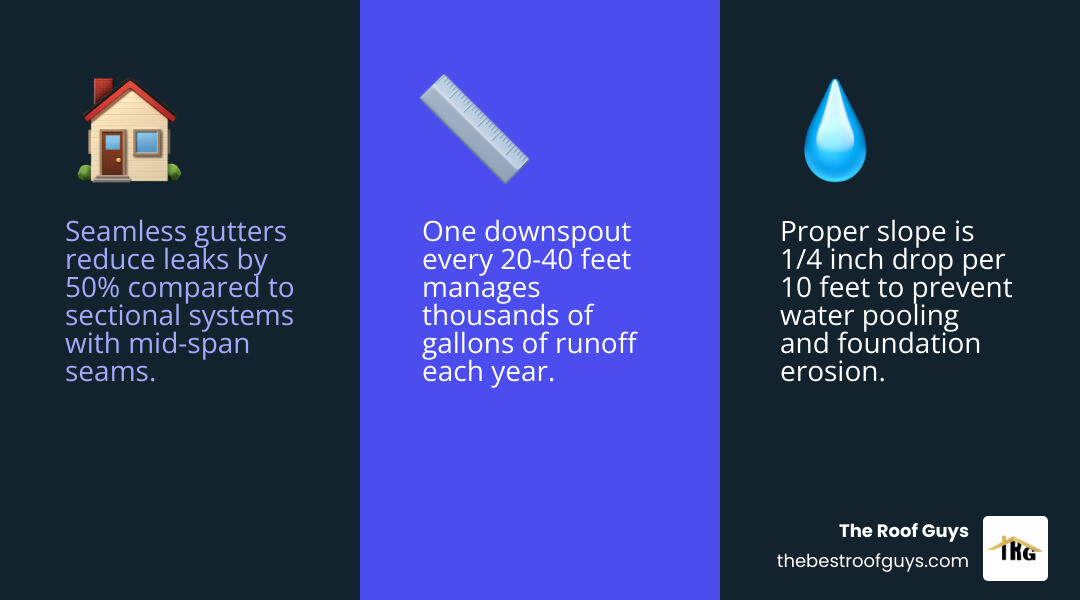
In contrast, seamless gutters improve your home’s water management system by eliminating these weak points. We fabricate these on-site using a roll-forming machine that extrudes a single, continuous piece of metal to the exact length of your roofline. Because there are no seams between corners, seamless gutters are 50% less prone to leaking than sectional systems. For most homeowners, seamless gutter installation services provide the best long-term ROI.
Sizing and Downspout Placement
Size matters when it comes to volume. Most residential homes use 5-inch K-style gutters, which can handle roof areas up to 5,500 square feet. However, if you live in an area with high rainfall intensity—common in Houston or Oklahoma City—you may benefit from 6-inch gutters. These larger systems handle approximately 40% more water volume than the 5-inch standard.
Downspout placement is the “engine” of the system. To prevent sagging and overflow, we recommend placing one downspout for every 20 to 40 linear feet of gutter. For roofs longer than 40 feet, it is best practice to “peak” the gutter in the middle and slope it down toward downspouts at both ends. Using precision gutter installation systems ensures that these calculations account for your specific roof pitch and surface area.
Comparing Gutter Materials: Cost, Lifespan, and Performance
Selecting the right material is a balance of budget, aesthetics, and the local climate. In May 2026, aluminum remains the industry leader, but other options like copper and steel offer unique benefits for specific home styles.

Aluminum, Copper, and Steel Options
- Aluminum: This is the “gold standard” for 95% of residential applications. It is rust-proof, lightweight, and comes in over 30 custom colors. An aluminum gutter installation typically lasts 20 to 30 years and offers the best durability-to-cost ratio.
- Copper: If you want a “lifetime” gutter, copper is the answer. It can last 50 to 100 years and develops a beautiful green patina over time. While it is the most expensive option, it adds significant resale value to historic or luxury homes.
- Galvanized Steel: These are incredibly strong and resistant to damage from falling branches or heavy ladders. However, they are prone to eventual rusting, even with protective coatings, and typically last about 20 years.
The best materials to use for gutter installation are those that can withstand the specific weather patterns of your region.
Climate Suitability for Texas and Oklahoma
Homeowners in our service areas—from The Woodlands and Pasadena to Tulsa and Oklahoma City—face unique challenges.
- Extreme Heat: High UV exposure in Texas can cause cheap vinyl gutters to become brittle and crack. Metal systems are far superior for heat resistance.
- Hail Durability: Oklahoma’s “Tornado Alley” and North Texas are notorious for hail. While aluminum is durable, thicker gauge aluminum (.032 inch) or steel is better at resisting dents during severe storms.
- Expansion and Contraction: The rapid temperature swings in the Plains require high-quality sealants. We use polyurethane-based sealants rather than standard silicone, as they maintain a better bond during the freeze-thaw cycles.
Following expert tips for choosing the right gutter system will help you avoid materials that fail prematurely in the Southern climate.
The Technical Process of Gutter Setup
Whether you are attempting a DIY project or watching a pro, the technical setup is what determines if the water actually goes where it’s supposed to.

Step-by-Step Guide to DIY Residential Gutter Installation
If you are comfortable on a ladder and have a helper, you can install sectional gutters yourself. Here is the high-level process:
- Inspect the Fascia: Before installing, check for wood rot. If the wood is soft, the screws won’t hold.
- Measure and Plan: Measure the total length of the roofline and add 10% for overlaps and waste.
- Mark the Slope: Mark the high point of the run, then use a chalk line to create a downward slope toward the downspout location.
- Assemble on the Ground: It is much easier to attach end caps and cut downspout holes while the gutter is on the grass.
- Install Brackets: Space your hidden hangers every 18 to 24 inches. In areas with heavy rain, closer spacing provides more support.
- Mount the Gutters: Secure the gutters to the fascia using stainless steel screws.
For a deeper dive into these steps, you can reference the This Old House guide or explore our gutter installation secrets every homeowner should know.
Proper Sloping and Drainage Calculations
The most common mistake in residential gutter installation is an incorrect slope. A gutter that looks perfectly level is actually a failure—it will trap standing water, leading to mosquito breeding and rusted-out metal.
The industry standard is a 1/4 inch drop for every 10 feet of horizontal run. For example, a 40-foot run needs a 1-inch total drop from the high point to the downspout. Proper sloping is essential for keeping your home safe from water runoff. If the slope is too steep, the water may overshoot the downspout during heavy rain; if it’s too shallow, the water will pool. For more on these technical requirements, see the House Method guide to gutter replacement.
Professional vs. DIY: Making the Right Choice
Deciding between DIY and professional hire usually comes down to the complexity of your home and your comfort with heights.
When to Hire a Professional for Residential Gutter Installation
While a single-story ranch home is a manageable DIY project, you should almost always hire professional gutter installation experts if:
- You have a two-story home: Working on a ladder at 20+ feet is dangerous without professional fall-protection gear.
- You want seamless gutters: DIYers are limited to sectional gutters. Only professionals have the truck-mounted extrusion machines required for seamless runs.
- Your roof is steep: Steep pitches (over 6:12) cause water to move faster, requiring precise “splash guard” installations and 6-inch gutter upgrades.
Understanding why professional installation is critical for roof longevity can save you thousands in future repairs.
Cost Factors and Labor Warranties
In 2026, professional residential gutter installation costs between $6 and $14 per linear foot for aluminum. For a standard 1,500–2,000 sq. ft. home, you can expect to pay between $1,200 and $2,800.
DIY installation is cheaper upfront, costing roughly $450 to $1,200 for materials, but it lacks a labor warranty. At The Roof Guys, we provide a 10-year labor warranty, ensuring that if a hanger looses or a seal fails, we fix it at no cost to you. When you are finding the right pro, always ask about their warranty and insurance coverage.
Maintenance and Accessories for Long-Term Durability
Once your residential gutter installation is complete, the goal is to make it last as long as possible.
Gutter Guards and Cleaning Schedules
Even the best gutters will fail if they are full of leaves. You should clean your gutters at least twice a year—once in early spring and once in late fall.
To reduce this maintenance, many homeowners install gutter guards. High-quality micro-mesh guards prevent debris from entering the trough while still allowing heavy rain to pass through. Avoiding common gutter installation mistakes like skipping guards in wooded areas can prevent the “damming” effect that leads to roof rot.
Protecting Your Foundation
The gutter’s job isn’t finished until the water is far away from your house. Gutter installation protects your home from water damage most effectively when downspouts include extensions.
We recommend discharging water at least 4 to 6 feet away from the foundation. If the water dumps right at the base of the wall, it can saturate the soil, causing the foundation to shift or crack. This is why professional installation is crucial for your home’s foundation—we ensure the entire drainage path is clear and directed toward a safe exit point.
Frequently Asked Questions about Gutter Installation
How much does professional seamless gutter installation cost in 2026?
Most homeowners spend between $1,200 and $2,800 for a complete aluminum system. Pricing is typically $6–$14 per linear foot, depending on the number of stories, the complexity of the roofline, and the chosen material.
How long do aluminum gutters typically last?
Aluminum gutters have an average lifespan of 20 to 30 years. Their longevity is largely due to the fact that aluminum does not rust, though the finish may fade or chalk over several decades of UV exposure.
What is the correct slope for a residential gutter system?
The standard slope is 1/4 inch of drop for every 10 feet of horizontal gutter run. This ensures that gravity pulls water toward the downspouts without allowing it to pool in the center of the run.
Conclusion
Residential gutter installation is a vital investment that safeguards your home’s structural integrity by directing water away from the foundation and fascia. While DIY installation is possible for simple, single-story homes, the precision and leak-resistance of professional seamless systems offer superior long-term value. For homeowners in Texas and Oklahoma, The Roof Guys provide expert seamless gutter solutions with ultra-fast turnaround times and a 10-year warranty to ensure your home stands up to the toughest storms. To protect your property with a precision-engineered drainage system, visit our Gutters page for a free estimate.