Why Flat Roof Repair in Tulsa, OK Is More Urgent Than You Think
If you need flat roof repair in Tulsa, OK, here’s what you need to know right away:
| What You Need to Know | Quick Answer |
|---|---|
| Most common cause of damage | Ponding water and severe storm impacts |
| Average repair cost | $500 – $2,500 depending on size and materials |
| Best repair materials | EPDM, TPO, or modified bitumen |
| When to repair vs. replace | Repair if damage is under 25% of roof area |
| Best time to schedule repairs | Spring or early fall, before storm season peaks |
Tulsa gets hit hard. With over 40 inches of rain per year and an average of 60 severe thunderstorm warnings annually, securing reliable flat roof repair in Tulsa, OK from a premier roofing company isn’t a “someday” problem — it’s an urgent one. Flat roofs are especially vulnerable here because they rely entirely on proper drainage to survive. When that drainage fails, water sits. And sitting water is the number one enemy of any flat roof system.
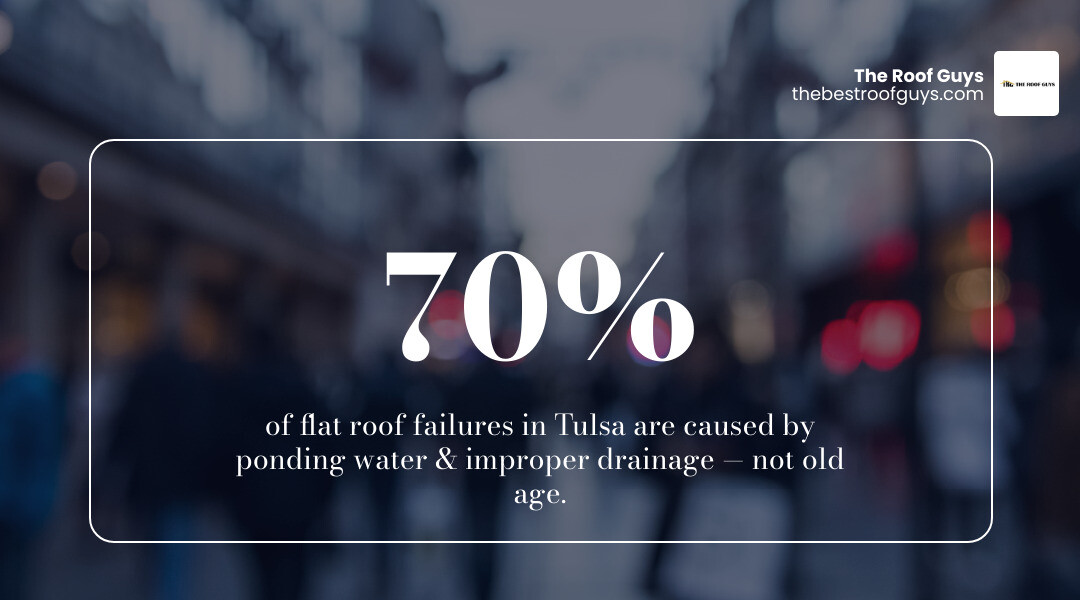
Local Tulsa roofing professionals report that approximately 70% of flat roof failures in the area trace back to improper drainage or ponding water. That’s not bad luck — that’s a design and maintenance problem that can be fixed before it turns into a costly replacement.
The good news? Most flat roof damage is caught early enough to repair — if you know what to look for and act fast.
I’m Cash Walker, a leadership team member at The Roof Guys, a roofing company with 30+ years of industry experience serving homeowners dealing with exactly the kind of storm-driven flat roof repair in Tulsa, OK challenges this climate creates. In this guide, I’ll walk you through everything you need to know — from spotting early warning signs to choosing the right materials and finding a contractor you can trust.
Why Flat Roof Repair Tulsa OK is Essential for Local Weather Challenges
To understand why flat roofs in Green Country require specialized care, we have to look closely at the climate of oklahoma. Tulsa sits in a unique geographic zone where warm, moist air from the Gulf of Mexico collides with cold, dry air from Canada. This atmospheric battleground creates extreme weather fluctuations that put immense stress on low-slope and flat roofing systems.
The Problem of Ponding Water
Unlike pitched roofs that shed water instantly using gravity, flat roofs rely on a subtle slope (often as little as 1/4 inch per foot) to direct water to drains, scuppers, or gutters. When Tulsa experiences its signature heavy downpours — contributing to an average of 40 inches of rainfall annually — any slight depression in the roof surface leads to ponding water.
Ponding water is defined as standing water that remains on a roof for longer than 48 hours after precipitation stops. According to the National Roofing Contractors Association, ponding water accelerates the degradation of the roof membrane, weakens adhesives, and adds immense weight load to the structure. This standing water eventually finds the smallest microscopic pathway into your home, resulting in costly interior damage.
Severe Storms and High Winds
Tulsa averages around 60 severe thunderstorm warnings every year. These storm systems bring high winds, large hail, and flying debris. Strong gusts can easily get under the edges of a compromised flat roof membrane, causing wind uplift that tears the material away from the substrate. If your home has suffered wind damage, seeking professional wind damage roof repair quickly is critical to prevent total roof failure. Furthermore, hail impacts can puncture thin membranes, creating immediate entry points for water that require specialized hail damage roof repair services.
Thermal Shock and UV Degradation
Oklahoma summers are scorching, with temperatures frequently climbing past 100°F. In the winter, temperatures regularly drop below freezing. This extreme temperature swing causes flat roof materials to expand and contract rapidly — a phenomenon known as thermal shock. Over time, this constant movement splits seams, pulls flashing away from walls, and cracks older membranes.
When your flat roof is subjected to these harsh conditions, utilizing expert storm damage services is the best way to ensure the structural integrity of your home remains intact.
How to Identify Early Signs of Flat Roof Damage
Waiting for water to drip from your living room ceiling is the most expensive way to discover a roof leak. By performing regular visual checks, you can spot the warning signs of flat roof deterioration early and address them before they escalate into an emergency.
Here are the primary warning signs every Tulsa homeowner should watch out for:
- Ponding Water: If you notice large pools of water sitting on your roof two days after a rainstorm, your drainage system is failing or the roof deck has sagged.
- Blistering and Bubbling: When moisture gets trapped beneath the roof membrane, solar heating causes it to expand, creating raised pockets or “blisters.” If walked on, these blisters can easily pop and create major leaks.
- Cracking and Alligatoring: This occurs when UV rays dry out the asphalt or bitumen coating on a roof, causing it to crack and resemble the skin of an alligator. This is a clear sign that the membrane has reached the end of its useful life.
- Separating Seams: Flat roofs are installed in large sheets or rolls. The seams where these sheets overlap are the most common failure points. Check for peeling, lifting, or gaps along these seams.
- Damaged Flashing: Flashing is the metal or membrane material used to seal the edges of the roof and areas around chimneys, vents, and skylights. Cracked, rusted, or lifting flashing is a primary source of flat roof leaks.
To keep your roof in optimal shape, we highly recommend scheduling professional roof inspections at least twice a year — once in the spring and once in the fall.
Step-by-Step Guide to Flat Roof Repair
When it comes to flat roof repair in Tulsa, OK, the approach must be highly systematic. Because flat roofs rely on a continuous, unbroken barrier to keep water out, any repair must be executed with precision.
Choosing the Right Materials for Flat Roof Repair Tulsa OK
Before starting any repair, you must match the repair material to your existing flat roof systems. Using the wrong adhesive or patching compound can cause chemical reactions that degrade the roof further.
| Material Type | Best Suited For | Key Advantages | Lifespan |
|---|---|---|---|
| TPO (Thermoplastic Polyolefin) | Modern residential & commercial roofing | Highly reflective, energy-efficient, heat-welded seams | 15–20 Years |
| EPDM (Rubber) | Residential flat roofs & additions | Extremely durable, handles thermal shock well, easy to patch | 20–25 Years |
| Modified Bitumen | Traditional flat roofs with high traffic | Multi-layer protection, highly puncture-resistant | 15–20 Years |
Step-by-Step Process for Flat Roof Repair Tulsa OK
If you are dealing with a minor leak, here is the professional process used to ensure a watertight seal:
Step 1: Surface Preparation and Cleaning
A patch will not adhere to a dirty, wet, or dusty roof. The area around the damage must be scrubbed clean using a stiff brush and a specialized cleaner to remove all dirt, algae, and loose gravel. The area must then be allowed to dry completely.
Step 2: Membrane Patching
For rubber (EPDM) roofs, a primer is applied to the cleaned area. Once the primer is tacky, a self-adhesive EPDM patch is applied over the puncture or tear. The patch must extend at least 3 inches beyond the damaged area in all directions. A steel roller is used to press the patch firmly into place, eliminating air bubbles.
Step 3: Seam Sealing
For TPO systems, professional roofing contractors use a hot-air welder to fuse the patch directly to the existing membrane. This creates a physical bond that is stronger than the material itself. For modified bitumen, a torch-applied or cold-process adhesive is used to secure the patch.
Step 4: Edge Sealing
To prevent water from migrating under the edges of the new patch, a bead of specialized lap sealant is applied around the entire perimeter of the patch and feathered smooth.
If your flat roof suffers sudden, severe damage during a storm, you may need immediate emergency roofing assistance or professional emergency tarping to protect your home’s interior until permanent repairs can be completed.
Repair vs. Replacement: Making the Right Choice
As a homeowner, one of the toughest decisions is determining whether to keep patching your roof or invest in a full roof replacement.
Consider these key factors when making your decision:
- Age of the Roof: Most flat roof systems have a lifespan of 20 to 25 years. If your roof is past the 15-year mark and experiencing recurring leaks, continuing to pay for repairs is often a waste of money.
- Extent of the Damage: If the damaged area covers more than 25% of the total roof surface, a replacement is generally more cost-effective than multiple extensive repairs.
- Saturated Insulation: If water has bypassed the membrane and saturated the insulation boards beneath, the moisture will remain trapped. This leads to wood rot, mold growth, and structural weakness, making a full tear-off and replacement necessary.
- Frequency of Leaks: If you find yourself calling for repairs after every major Tulsa rainstorm, the structural integrity of the membrane has likely failed.
Frequently Asked Questions about Flat Roofs in Tulsa
How much does flat roof repair cost in Tulsa?
The cost of flat roof repair in Tulsa typically ranges from $500 to $2,500. The final price depends on the size of the damaged area, the roof material (TPO, EPDM, or modified bitumen), and whether the underlying wood decking or insulation has rotted and needs replacement. To get an accurate picture of your specific needs, you can request a professional roofing estimate or request a free roof inspection.
How long does a flat roof typically last in Oklahoma?
With proper roof maintenance, a high-quality flat roof can last 20 to 25 years. However, due to Tulsa’s severe weather fluctuations, hail, and high winds, most flat roofs will require minor repairs or maintenance every 5 to 10 years to reach their full lifespan.
Can I repair a flat roof leak myself?
While minor DIY patches on small areas are possible with retail repair kits, we highly discourage it. Flat roofs are incredibly unforgiving. A single pinhole leak or improperly sealed seam can allow water to seep underneath the membrane unnoticed, rotting your roof deck for months before a visible leak appears inside your home. Hiring certified roofing contractors near me ensures the repair is done using commercial-grade materials and backed by a warranty.
Conclusion
Your flat roof is your home’s primary shield against Tulsa’s unpredictable and often severe weather. Ignoring minor wear today can easily lead to major structural damage tomorrow.
At The Roof Guys, we are proud to be a family-owned roofing contractor specializing in flat roof systems across Oklahoma and Texas. We bring ultra-fast turnaround times, expert storm response, and an industry-leading 10-year warranty on our workmanship to every job we do.
Don’t wait for the next severe storm warning to find out if your roof is ready. Contact us today to schedule your professional roof repair service.