Why Cement Tile Roof Maintenance Is the Key to a 75-Year Roof
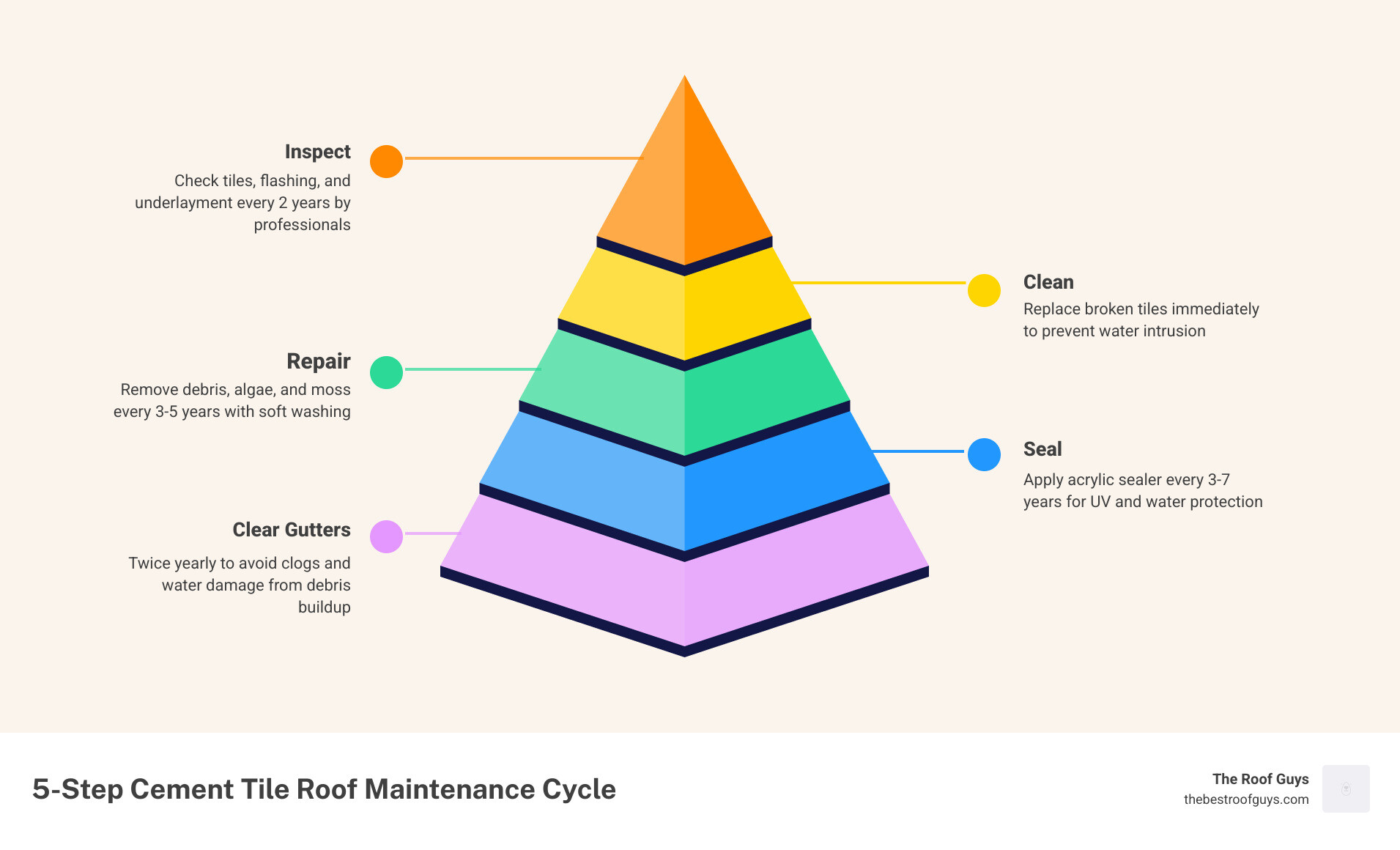
Cement tile roof maintenance is the definitive set of practices—including biennial inspections, soft washing, and immediate tile replacement—required to preserve a concrete roof for 50 to 75 years. Securing expert roofing solutions ensures that your home remains protected against the severe weather common in Texas and Oklahoma. Proper maintenance prevents water intrusion, preserves structural integrity, and maximizes the return on your roofing investment.
| Task | Frequency |
|---|---|
| Professional roof inspection | Every 2 years (plus after major storms) |
| Visual inspection from the ground | Quarterly |
| Debris and gutter cleaning | Twice per year |
| Professional roof cleaning | Every 3-5 years |
| Sealer or recoat application | Every 3-7 years |
| Broken tile replacement | Immediately when found |
Neglecting a cement tile roof leads to cracked tiles, failed flashing, and compromised underlayment. In regions like Houston and Tulsa, where hail and high winds are frequent, professional roofing services are necessary to identify minor issues before they escalate into costly structural repairs. Concrete tiles require less frequent intervention than asphalt shingles, but consistent care is the only way to guarantee long-term performance.
I’m Cash Walker, part of the leadership team at The Roof Guys. With over 30 years of experience in cement tile roof maintenance, I have seen firsthand how proactive care extends roof life in demanding climates. Below, I outline the specific steps needed to protect your tile roof for decades.
The Essentials of Cement Tile Roof Maintenance
Concrete tiles provide over 50 years of reliable service when properly maintained. However, a “set it and forget it” approach inevitably leads to leaks. Because these tiles are heavy and brittle, they require specialized handling that differs from asphalt or metal systems.
Inspection Schedules and Professional Oversight
Homeowners should schedule a professional inspection two years after installation and every two years thereafter. In storm-prone areas, an additional check after a major hail event is mandatory. A licensed contractor follows the TRI Alliance Maintenance Protocol, focusing on “critical zones” like flashings, vents, and valleys where 90% of leaks originate.
The Golden Rule: Stay Off the Roof
Concrete tiles are designed to shed water, not to support the concentrated weight of a human walking across them. If access is necessary, you must only step on the bottom three inches of the tiles where they overlap the batten below. Professional crews use soft-soled shoes and weight-distribution tools like foam-padded plywood. For residents in The Woodlands or Houston, the safest maintenance practice is a quarterly visual check from the ground using binoculars.

Safe Cleaning Techniques for Concrete and Monier Tiles
Over time, your roof might start to look a little “weathered.” In the humid climates of Conroe and Spring, TX, it’s common to see dark streaks or green patches. This isn’t just an aesthetic issue; organic growth can trap moisture against the tiles and accelerate the degradation of the underlying materials.
Pressure Washing vs. Soft Washing
There is a lot of debate about pressure washing. Is it safe? The answer is: only if done with extreme precision. High-pressure water can strip the “slurry” (the color coating) right off a concrete tile, leaving it looking blotchy and exposed.
| Feature | Pressure Washing | Soft Washing |
|---|---|---|
| Pressure Level | Max 1200 PSI | Low (Garden hose pressure) |
| Cleaning Agent | Water only or mild soap | 10% Chlorine or biodegradable solution |
| Risk Factor | High (can damage tiles/underlayment) | Low (safer for tile integrity) |
| Effectiveness | Immediate surface clean | Deep kill of mold/algae spores |
If you choose to use a pressure washer, the nozzle must be kept at least 12 to 24 inches away from the tile surface. A wide-angle fan tip is essential to prevent “etching” the concrete. For a safer DIY approach, an eco-friendly vinegar-and-water mix can help loosen light dirt without the risk of high-pressure damage. For more detailed steps, you can refer to the Eagle Roofing Maintenance Guide.
Best Practices for Cement Tile Roof Maintenance Cleaning
Organic growth like algae and moss doesn’t actually feed on the concrete; it feeds on the dust and organic debris that accumulates on the tiles. Regular cleaning prevents this buildup.
- Algae Removal: Use a 10% chlorine-to-water solution to kill spores.
- Moss Prevention: Keep overhanging tree branches trimmed back at least 10 feet to reduce shade and leaf drop.
- Surface Prep: Always rinse the roof from the top down to ensure dirty water doesn’t get trapped under the tile laps.
Identifying and Repairing Common Tile Damage
A single cracked tile might not seem like a big deal, but it is the “open door” for water to reach your underlayment. In our experience across Texas and Oklahoma, the underlayment is the true waterproofing layer; the tiles are the armor that protects it. Once the armor is pierced, the underlayment begins to degrade under UV rays and moisture.
Efflorescence: The “White Powder” Mystery
Homeowners often call us worried about a white, chalky residue on their tiles. This is called efflorescence. It is a natural chemical reaction where calcium hydroxide from the cement reacts with carbon dioxide in the air. The good news? It is purely cosmetic and does not affect the structural integrity of the tile. It usually weathers away on its own over time.
Critical Areas: Flashing, Valleys, and Gutters
Most “roof leaks” aren’t actually caused by the tiles themselves. They are caused by:
- Clogged Valleys: Leaves and twigs build up in the roof valleys, causing water to “back up” under the tiles.
- Failed Flashing: The metal around chimneys and vents can rust or pull away.
- Gutter Backups: If gutters are full, water can wick up into the eave structure, rotting the wood.
Replacing Broken Tiles During Cement Tile Roof Maintenance
If you find a broken tile, it needs to be replaced immediately. On roofs with batten systems (common in many modern installations), this involves carefully wedging up the surrounding tiles, removing the fragments of the broken one, and sliding a new tile into place.
We use specialized roof tile adhesive or mortar to ensure the new tile stays put. For older “Monier” style tiles, finding an exact color match can be tricky, which is why we often “harvest” a tile from an inconspicuous area of the roof to use for a visible repair, replacing the hidden spot with a slightly different shade.
Advanced Protection: Sealing and Recoating
While cement tiles are durable, they are also porous. Over 20 to 30 years, the original factory finish may erode. This is where sealing and recoating come into play.
The Benefits of Sealing
Applying a high-quality acrylic sealer can extend the life of your roof by 20-30%. Sealing fills the microscopic pores in the concrete, which:
- Reduces water absorption (critical for freeze-thaw resistance in Oklahoma winters).
- Prevents algae and moss from “rooting” into the tile surface.
- Restores the vibrant color and curb appeal of the home.
The Recoating Process
If your roof has lost its color entirely, it can be painted. This isn’t just a standard exterior paint job. We use a clear alkyd primer followed by 100% acrylic roof paint. This creates a thick, flexible membrane that protects the concrete from UV damage. Typically, a high-quality sealer or coat should be reapplied every 3 to 7 years depending on sun exposure.
Climate Considerations for Texas and Oklahoma Homeowners
Maintaining a roof in Katy or Pasadena, TX, is a different beast than maintaining one in Tulsa. Our geography presents unique challenges that dictate our cement tile roof maintenance strategies.
- Hail Impact: While concrete is tough, large hail can cause “star cracks” that aren’t visible from the ground but will eventually lead to tile failure.
- Thermal Cycling: The extreme heat of a Texas summer followed by a sudden cold front causes tiles to expand and contract. This can loosen fasteners over time.
- High Humidity: In coastal areas like Houston, salt spray and humidity make soft washing every 3 years a necessity to prevent salt-driven erosion.
- Wind Resistance: Our “expert storm response” teams often find that improper nailing during original installation leads to “chatter” or tile displacement during high winds.
For homeowners in these regions, having a local partner who understands these specific weather patterns is vital. You can find more info about professional roofing services tailored to our local climate on our main service page.
Frequently Asked Questions about Cement Tile Roofs
How often should a concrete tile roof be inspected?
You should have your roof professionally inspected every 2 years. Additionally, you should perform a visual check from the ground after every major storm or high-wind event. Catching a cracked tile early can save you thousands in interior water damage.
Is pressure washing safe for concrete roof tiles?
Yes, but only if the pressure is kept under 1200 PSI and a wide-angle nozzle is used. We generally prefer “soft washing” with a 10% chlorine solution as it is much safer for the tiles and effectively kills the roots of algae and moss.
What is the white chalky residue on my roof tiles?
That is efflorescence. It’s a natural byproduct of the cement curing process. It isn’t a sign of a failing roof and will eventually wash away with rain. If you hate the look of it, a professional cleaning and sealing can mask it.
Conclusion
A cement or Monier tile roof represents a significant investment in a home’s protection and value. While these roofs are engineered for longevity, they are not maintenance-free. Adhering to a biennial inspection schedule, maintaining clear gutters, and replacing broken tiles immediately ensures a roof reaches its 75-year potential.
At The Roof Guys, we provide an industry-leading 10-year warranty on workmanship for all repairs and installations. Whether you are in Huntsville, Spring, or The Woodlands, our teams are ready to provide the expert care your tile roof deserves. For more info about professional roofing services or to schedule your biennial inspection, reach out to us today.
Call for a free estimate: (281) 895-8011