
Hail Damage Roof Repair Services
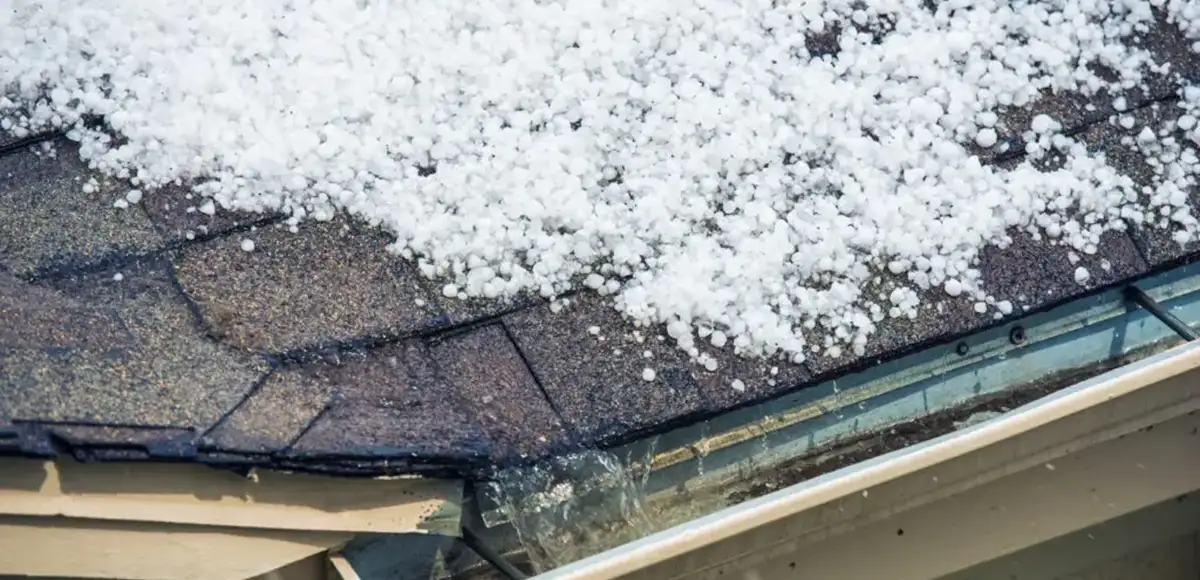
Hail can bruise shingles, dent metal, crack tile, and loosen roof components, sometimes without an immediate leak. The Roof Guys provides hail damage roof repair services to help you confirm what happened, document damage clearly, and choose the right next step (repair or replacement) based on your roof’s condition.
If you’re searching for hail damage roof repair services, start with a free inspection or request a roof estimate.
How We Handle Hail Damage Roof Repair
Hail damage is rarely just one “spot.” It can affect the roof system, surface materials plus the details that keep water out. Our goal is to replace uncertainty with a clear plan you can act on.
- Documented roof inspection: We perform detailed roof inspections focused on hail-sensitive zones, ridges, hips, valleys, flashing, vents, skylights, and other penetrations. This matters because many hail-related failures start at transitions (where different materials meet) instead of the open “field” of the roof.
- Leak-risk evaluation (even if you’re not leaking today): Hail can create functional vulnerabilities (bruising, fractures, loosened seals, punctures) that don’t drip right away but can fail during the next heavy rain. If you’re noticing stains, damp insulation, or musty odors, targeted leak detection helps locate the true entry point so repairs address the cause, not the symptom.
- Repair vs. replacement guidance: We’ll explain whether targeted roof repair can restore reliable water-shedding performance, or whether roof replacement is the smarter long-term move when impacts are widespread across slopes and details.
- Clear next steps + scope: If work is recommended, we provide a straightforward plan and pricing path through a roof estimate, so you’re not left guessing about timeline, priority, or what’s included.
If hail came with wind or other storm impacts, our storm damage services page covers next steps for broader severe-weather damage.








Signs of Hail Damage on Different Roof Types
Asphalt shingles can show both visible and “hidden” damage. Common signs include:
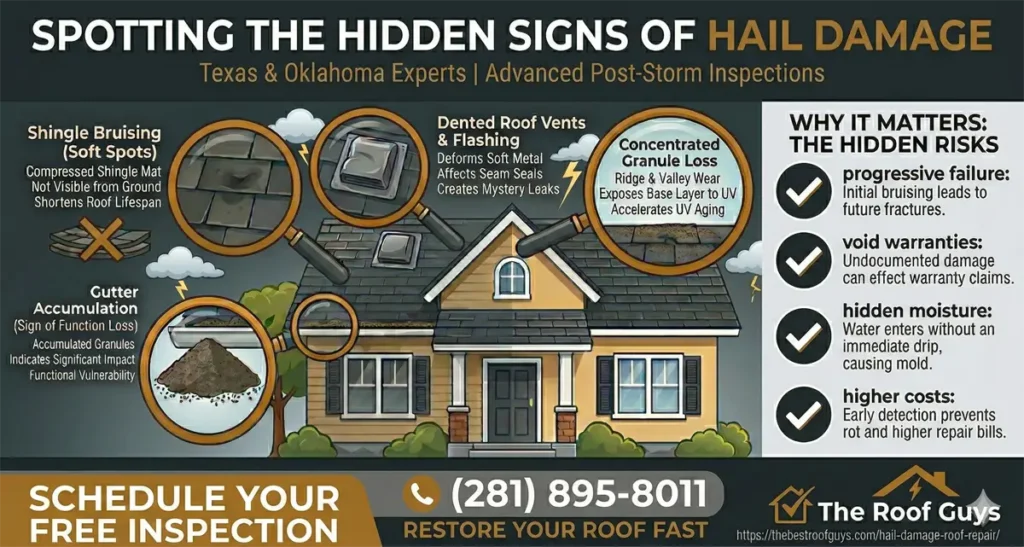
- Granule loss or scuffing: Granules protect shingles from UV exposure and weathering. Concentrated granule loss can accelerate aging and reduce the roof’s ability to shed water over time, especially around ridges and valleys where water flow is heavier. If you’re considering options after a storm, see asphalt shingle roofing and brands & certifications.
- Bruising (soft spots): Hail can compress the shingle mat and create “bruises” that aren’t obvious from the ground. These bruises can weaken the shingle and shorten its service life, which is why a close roof inspection matters.
- Cracks or fractures: Visible cracking can become a direct pathway for moisture intrusion during heavy rain especially when paired with wind-driven storms that push water upward and sideways.
Hail may dent metal panels, ridge caps, and flashings. Even if dents look cosmetic, it’s important to confirm the roof is still watertight at details.
- Seams and fasteners: Deformation can affect how seams lock and how fasteners sit, which can change long-term watertightness.
- Accessories and flashings: Boots, vents, and flashing edges may take impacts that create small gaps, common sources of “mystery leaks.”
If you have metal roofing, see metal roofing for related system considerations.
Tile, slate, and similar materials can crack or chip from impacts.
- Broken pieces in gutters/ground: This can indicate impact damage occurred (even if the cracked tile isn’t easy to see from the street).
- Cracked tiles at ridges/hips/valleys: These are high-risk zones where water is managed and redirected, damage here often needs priority attention to prevent intrusion.
On membrane and low-slope roofs, hail can damage waterproofing in ways that are harder to spot.
- Membranes and coatings: Punctures, splits, or weakened areas may leak later, especially around drains where water can pond.
- Drainage and flashing transitions: If hail or debris affects drainage, water can back up, raising leak risk at seams and transitions.
If you’re managing a low-slope system, review flat roof systems and commercial materials like TPO roofing or EPDM roofing.
How Big Does Hail Have to Be to Damage a Roof?
Hail size matters, but so do roof age, material type, slope, and where hail hits (edges, ridges, valleys, and accessories). For storm context, the National Weather Service (NWS) defines a thunderstorm as “severe” when it produces hail 1 inch in diameter or larger and/or wind gusts 58 mph or greater.
If you’re comparing storm reports, it helps to know that the NWS previously used 0.75 inch as the hail threshold and raised it to 1 inch in 2010 to reduce overly frequent warnings.
To translate “golf ball” or “baseball” hail into measurements, use the NWS hail chart. For quick reference, it lists a golf ball = 1.75 inches and baseball = 2.75 inches (diameter).
One important nuance: hail size is often estimated after the fact, and there isn’t a universal “on-the-roof” measurement standard, so a professional inspection and documentation are key when you’re deciding what to fix and how urgently.
Is Small Hail Still a Problem?
Yes, depending on roof age, material properties, and impact conditions. Hail can damage roofs in ways that are not always obvious from the ground, which is why impact testing and standards matter for understanding performance.
- IBHS testing context: The Insurance Institute for Business & Home Safety (IBHS) tests commercially available asphalt shingles using 1.5-inch and 2.0-inch laboratory-manufactured hailstones under its hail impact protocol.
- Impact-resistance ratings (UL 2218): UL 2218 impact resistance is expressed as Class 1–4, tied to steel ball diameters from 1.25″ up to 2.0″ with Class 4 representing the highest level in that system. (Central States)
If you’re concerned about “smaller hail” but want to be sure your roof didn’t take functional damage, start with a close roof inspection.
Insurance-Friendly Documentation Checklist After Hail
Good documentation supports faster decisions and cleaner communication—especially if you’re organizing repairs or filing a claim. This checklist table shows what to capture and why, using consumer guidance like NAIC storm claim tips.
What to document | Why it matters | Best next step |
Storm date/time + hail size reports | Helps tie roof conditions to the event; gives context for severity | Save notes + schedule a roof inspection |
Ground-level exterior photos | Captures missing shingles, dented vents, damaged flashing | Book a free inspection |
Interior photos (stains, drips) | Shows intrusion and urgency | Start leak detection |
Receipts for mitigation (if needed) | Creates a clean record for repair planning | If leaking/exposed, request emergency tarping |
Written scope/estimate | Clarifies what work is being recommended | Request a roof estimate |
What to Expect From Our Hail Damage Roof Repair Process
We keep the process simple and transparent, so you know what’s happening and why, especially when you’re comparing “best hail damage roof repair services” and trying to avoid guesswork.
Step 1: Safety-first inspection
We assess site conditions and safely inspect the roof system, focusing on hail-sensitive areas like ridges, valleys, flashing, vents, and penetrations. When needed, we also check related exterior clues (like dented vents, impacted flashing, or granule buildup) to understand how and where hail hit the structure.
Step 2: Photo documentation + clear findings
We document what we find with photos and plain-language notes, so you can clearly see:
- Where impacts are concentrated (often one slope is worse than another)
- Whether damage looks isolated vs. widespread
- Which issues increase leak risk now vs. later
This documentation also helps you stay organized if you’re collecting repair records.
Step 3: Leak detection when the source isn’t obvious
Some hail-related leaks appear later or only under heavy rain. If the entry point isn’t clear, leak detection helps confirm the true pathway so the fix is durable, not just a temporary patch.
Step 4: Repair plan or replacement guidance
We’ll explain whether repairs can restore reliable performance, or whether replacement is a better durability decision due to widespread impacts, compromised components, or higher future leak risk. From there, we guide you toward roof repair or roof replacement with a clear roof estimate.
Why Choose The Roof Guys
When hail damage is involved, you need clarity, documentation, and a plan that holds up, not guesswork.
- System-focused inspections: Detailed roof inspections that look beyond shingles to flashing, vents, and transitions.
- Clear next steps: Straightforward guidance for roof repair vs. roof replacement.
- Storm damage expertise: Experienced in identifying hidden hail impacts, granule loss, soft metal dents, and structural vulnerabilities other contractors often miss.
- Insurance claim support: Thorough documentation and on-site assistance to help streamline your hail damage insurance claim.
- Proof you can review: Browse the project gallery and read testimonials.
Areas We Serve
Licensed Commercial & Residential Roofing Contractor
The Roof Guys – quality materials, expert service, and lasting protection guaranteed.
Get Fast, Reliable Hail Damage Roof Repair Today
Don’t let hail damage turn into costly leaks, structural issues, or denied insurance claims. The Roof Guys provide thorough storm damage inspections, detailed documentation, and expert hail damage roof repair designed to fully restore your roofing system. Whether you need targeted shingle replacement or a complete roof restoration, our team delivers clear recommendations and quality workmanship you can trust.
Call now at (281) 895-8011 to schedule your free hail damage inspection and get the protection your home deserves.
What Our Clients Are Saying
We believe the best proof of our service comes directly from the homeowners, businesses, and property managers we proudly serve.
The Roof Guys
Business Hours
Monday: Open 24 hours
Tuesday: Open 24 hours
Wednesday: Open 24 hours
Thursday: Open 24 hours
Friday: Open 24 hours
Saturday: Open 24 hours
Sunday: Open 24 hours
Frequently Asked Questions
Costs vary based on roofing material, roof size and pitch, and how much of the surface was impacted. Texas and Oklahoma hailstorms often cause uneven or slope-specific damage. A professional inspection provides accurate pricing with a detailed written estimate.
Yes, if damage is limited to certain sections of the roof. However, hail combined with high winds in cities like Houston or Oklahoma City may impact flashing, vents, and underlayment. An inspection determines whether repair or full replacement is the better long-term solution.
If hail damage affects water protection, repairs are absolutely worth it. Texas heat and Oklahoma wind-driven rain can quickly worsen cracked or bruised shingles. Addressing damage early helps prevent leaks, decking rot, and higher repair costs.
Most policies in Texas and Oklahoma cover hail damage, depending on deductibles and coverage terms. Claims are stronger with clear photos, inspection reports, and storm documentation. Working with an experienced contractor like The Roof Guys helps streamline the process.
Hail damage usually appears as localized impact marks, bruising, or granule loss in specific patterns. Normal aging tends to look more uniform across the roof surface. A professional inspection confirms whether the damage is functional or cosmetic.
If you notice ceiling stains, dripping, or musty odors after a storm, leak detection is recommended. Hailstorms in both states are often followed by heavy rain and strong winds. Identifying the true entry point prevents ongoing interior damage.
How Can We Help?



Our Roofing Services
Why Choose The Roof Guys
When hail damage is involved, you need clarity, documentation, and a plan that holds up, not guesswork.
- System-focused inspections: Detailed roof inspections that look beyond shingles to flashing, vents, and transitions.
- Clear next steps: Straightforward guidance for roof repair vs. roof replacement.
- Storm damage expertise: Experienced in identifying hidden hail impacts, granule loss, soft metal dents, and structural vulnerabilities other contractors often miss.
- Insurance claim support: Thorough documentation and on-site assistance to help streamline your hail damage insurance claim.
- Proof you can review: Browse the project gallery and read testimonials.
The Roof Guys
Business Hours
Monday: Open 24 hours
Tuesday: Open 24 hours
Wednesday: Open 24 hours
Thursday: Open 24 hours
Friday: Open 24 hours
Saturday: Open 24 hours
Sunday: Open 24 hours

Get Started
Have questions about your roof? Ready to start your next roofing project? Whether you’re dealing with storm damage, a leaky roof, or planning a complete roof replacement, our team is here to help.
How Can We Help?