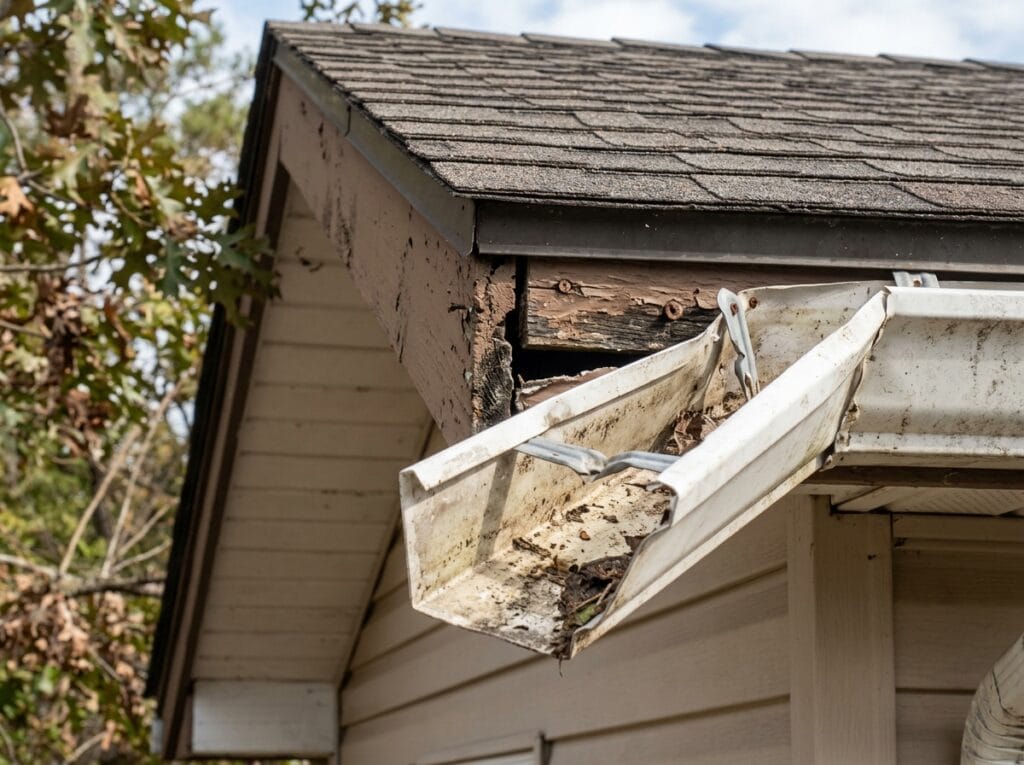
When Gutters Pull Away, Your Whole Home Pays the Price
Learning how to fix gutters pulling away from house is essential for protecting your home’s structural integrity. When you need professional roofing and gutter solutions, understanding the mechanics of gutter failure is the first step toward a permanent fix. Gutters typically detach due to excessive weight, rotted fascia boards, or improper fastener spacing. To resolve this, you must replace old spikes with heavy-duty hidden hangers screwed directly into the rafter tails. This repair ensures that rainwater is correctly diverted away from your foundation, preventing costly erosion and basement leaks.
Here is a quick overview of the fix:
- Inspect the fascia board for rot or soft wood
- Clear all debris from the gutter channel
- Remove old spikes or failed fasteners
- Install hidden hangers every 24 inches into solid wood
- Adjust the gutter pitch to slope 1/4 inch per 10 feet toward the downspout
- Test with a garden hose and seal any leaks
For Texas and Oklahoma homeowners dealing with storm season, a separating gutter is not a cosmetic issue — it is a structural warning sign. When gutters detach from the fascia, rainwater no longer routes away from your home. Instead, it spills behind the gutter, soaking the wood, eroding the soil around your foundation, and setting the stage for rot, mold, and basement leaks.
The good news? Most cases of gutter separation are fixable without a full replacement. You just need to know what caused it and how to reattach it correctly. Our expert roofing team at The Roof Guys has seen this problem hundreds of times across Greater Houston and beyond — and in most cases, the right fasteners and a properly pitched gutter are all it takes to get things back on track.
I’m Cash Walker, part of the leadership team at The Roof Guys, where we bring over 30 years of roofing and gutter experience to homeowners across Texas and Oklahoma. Understanding how to fix gutters pulling away from house is something our crew handles regularly, especially after the kind of high-wind and heavy-rain storms that are common in this region. Let’s walk you through exactly what to do.
Why Gutters Pull Away from the House
Gutters don’t just decide to leave the house on a whim. Usually, there is a physical force pulling them down or a structural failure behind them. In our experience working from Conroe to Tulsa, the most common culprit is excessive weight. When gutters fill with leaves, pine needles, and shingle grit, they become incredibly heavy. Add a sudden Texas downpour to a clogged channel, and you have hundreds of pounds of water straining against a few metal spikes.
Another major factor is gutter installation mistakes made by previous contractors or DIYers. If the fasteners were spaced too far apart—beyond the recommended 24 to 36 inches—the system simply lacks the structural integrity to stay put. Over time, the constant expansion and contraction of the metal during our hot summers and cold winters can cause spikes to “creep” out of the wood.

Common Signs of Gutter Detachment
You don’t always need a ladder to tell something is wrong. Keep an eye out for these red flags:
- Visible Gaps: If you can see daylight between the back of the gutter and the fascia board, the separation has already begun.
- Water Stains: Look for “tiger stripes” or dark streaks on the front of your gutters or the siding directly behind them. This indicates water is overflowing the back.
- Foundation Erosion: If you notice trenches in your mulch or dirt directly below the roofline, your gutters are failing to channel water to the downspouts.
- Sagging Sections: A gutter that looks like a “smile” instead of a straight line is a sign that the hangers have lost their grip.
The Role of Texas and Oklahoma Weather
Our local climate is particularly tough on drainage systems. In places like Oklahoma City or Katy, we deal with high-wind events that can catch a loose gutter like a sail, physically wrenching it from the fascia. Furthermore, the freeze-thaw cycles we experience can cause ice dams. When water freezes inside a gutter, it expands, putting immense pressure on the fasteners and often pulling them straight out of the wood.
Essential Tools and Materials for Gutter Reattachment
Before you start learning how to fix gutters pulling away from house, you need the right gear. Using the wrong hardware is the fastest way to ensure you’ll be back on that ladder in six months.
| Feature | Gutter Spikes (Old School) | Hidden Hangers (Modern Standard) |
|---|---|---|
| Grip Strength | Low – relies on friction | High – threads into the wood |
| Visibility | Visible nail heads on the gutter face | Completely invisible from the ground |
| Durability | Prone to “creeping” out over time | Stays secure during temperature swings |
| Ease of Install | Requires a hammer (can dent gutter) | Requires a drill (cleaner install) |
Safety Precautions for Working at Heights
Safety isn’t just a suggestion; it’s a requirement. Ladder falls are a leading cause of home-improvement injuries. Always ensure your ladder is on stable, level ground. We recommend the “four-to-one” rule: for every four feet of height, the base of the ladder should be one foot away from the wall. Always maintain three points of contact (two hands and one foot, or two feet and one hand) and never overreach. If you can’t reach a spot comfortably, move the ladder.
Choosing the Best Fasteners for Long-Term Fixes
We always recommend heavy-duty hidden hangers with built-in screws. Look for fasteners made of galvanized steel or high-grade aluminum to prevent rust. In our humid Gulf Coast service areas like Pasadena and Houston, corrosion resistance is non-negotiable. Stainless steel screws are an even better upgrade if you want a “forever” fix.
How to Fix Gutters Pulling Away from House: A Step-by-Step Guide
If your fascia board is solid and the gutter isn’t bent into a pretzel, you can likely handle this repair yourself. If the damage is widespread, it might be time to look into professional gutter repair services to ensure the structural integrity of your roofline.
Step 1: The Great Clean-Out You cannot fix a gutter that is full of muck. Use a gutter scoop or a small garden trowel to remove all debris. Flush the system with a hose to ensure the downspouts are clear. This removes the weight and allows you to see the actual mounting points.
Step 2: Remove Failed Hardware If you have old spikes that have pulled out, don’t just hammer them back into the same hole. The wood fibers inside that hole are already stripped and won’t hold. Use a pry bar to carefully remove the old spikes or screws.
Step 3: The Fascia Check This is the most critical step. Before reattaching anything, you must ensure the wood behind the gutter is healthy.
Inspecting and Repairing the Fascia Board
Take a flat-head screwdriver and poke the fascia board where the gutter was pulling away. If the screwdriver sinks into the wood like it’s butter, you have wood rot. Fastening a gutter to rotted wood is like trying to nail a shelf to a sponge—it won’t hold.
- Minor Rot: If the rot is very localized, you might be able to use a wood hardener or filler.
- Major Rot: If the board is soft across a long section, it must be replaced. In some cases, we install “sister boards” (a new piece of lumber reinforced behind the old one), but usually, a full fascia replacement is the safest bet for long-term stability.
Installing New Fasteners to Fix Gutters Pulling Away from House
Once you’ve confirmed the wood is solid, it’s time to install your hidden hangers.
- Placement: Space your hangers every 24 inches. In areas prone to heavy snow or extreme rain (like our Oklahoma service regions), spacing them every 18 inches provides extra insurance.
- Alignment: Hook the front of the hidden hanger under the front lip of the gutter, then snap the back over the rear edge.
- Driving the Screw: Use a cordless drill to drive the long screw through the back of the gutter and deep into the fascia. Ideally, the screw should hit a rafter tail (the ends of the roof framing) for maximum strength.
- Avoid Old Holes: Always offset your new hangers by at least an inch or two from the old, failed holes.
Ensuring Proper Gutter Slope and Pitch
A gutter can be tightly attached to the house and still be a failure if it isn’t pitched correctly. If the water doesn’t move toward the downspouts, it pools. Standing water is heavy, leads to mosquito breeding, and will eventually cause your new fasteners to fail.
For flawless gutter installation, you must follow the “1/4-inch rule.”
Testing the Repair for Proper Drainage
Once your hangers are in, grab your garden hose. Run water into the end of the gutter furthest from the downspout. Watch the flow. The water should move steadily and completely empty out. If you see “puddling” in the middle of a run, that section is too low and needs to be raised by adjusting the hangers.
Adjusting Hangers for Optimal Water Flow
To get the pitch perfect, many pros use a string line. Anchor a string at the high point and the low point (the downspout) to create a visual guide for the 1/4-inch slope. You can then adjust the height of your hidden hangers to follow this line. If you are working alone, a long spirit level can also help ensure you have a consistent downward tilt.
When to Replace Instead of Repairing
Sometimes, knowing how to fix gutters pulling away from house leads to the realization that the system is beyond saving.
- Extensive Corrosion: If your steel gutters are rusted through or your aluminum gutters have large cracks, patches are only a temporary fix.
- Widespread Rot: If the fascia is rotted along the entire length of the house, the gutters usually have to come down anyway to fix the wood. This is the perfect time to upgrade to seamless gutter installation services.
- System Age: Most gutters have a lifespan of about 20 years. If yours are approaching two decades, the metal becomes brittle and fasteners won’t hold as well.
Long-Term Maintenance to Prevent Gutters Pulling Away from House
Prevention is significantly cheaper than repair. We recommend a bi-annual cleaning schedule—once in the spring and once in the late fall. If your property in The Woodlands or Spring has heavy tree cover, you may need to clean them quarterly.
- Gutter Guards: Installing high-quality micro-mesh guards can virtually eliminate the debris weight that causes gutters to pull away in the first place.
- Tree Trimming: Keep branches at least 6 to 10 feet away from your roofline to reduce the amount of organic matter landing in your system.
Risks of Ignoring Loose Gutters
If you ignore a gutter that is pulling away, you are inviting expensive damage. Water spilling over the back of the gutter will rot your soffits and siding. Even worse, it can pool at the base of your home, leading to foundation cracks and basement flooding. In Oklahoma and North Texas, where expansive clay soils are common, keeping water away from the foundation is the single most important thing you can do for your home’s longevity.
Frequently Asked Questions about Gutter Repair
How much does it cost to fix gutters pulling away?
A simple DIY fix with hidden hangers might cost you $50 in materials and a Saturday afternoon. Professional repairs typically range from $200 to $600 depending on the length of the gutter and whether the fascia board needs replacement. Compared to a $15,000 foundation repair, it is a bargain.
Can I use the same holes for new gutter screws?
No. Never reuse the same holes. The wood inside is likely stripped or damp. Always move your new fasteners at least two inches to either side of the original hole to ensure the screw bites into fresh, solid wood.
How often should I check my gutter attachments?
We recommend a visual inspection from the ground after every major storm. Once a year, get on a ladder (or hire a pro) to physically check the tightness of the hangers.
Conclusion
At The Roof Guys, we take pride in being a family-owned business serving our neighbors in Houston, Katy, Tulsa, and beyond. We know that a house is more than just a building—it’s your biggest investment. Whether you are tackling a DIY project to learn how to fix gutters pulling away from house or you need an expert team to handle a full system overhaul, we are here to help.
We offer an industry-leading 10-year warranty and ultra-fast turnaround times because we know that when your gutters are failing, every rain cloud is a threat. Don’t let a small gap turn into a massive repair bill. Learn more about our professional gutter solutions and see how we can secure your home against the elements.
For a professional assessment or a free estimate, call us today at (281) 895-8011. We’ll bring the ladders, the expertise, and the peace of mind you deserve.