
Roof Inspections Services by The Roof Guys
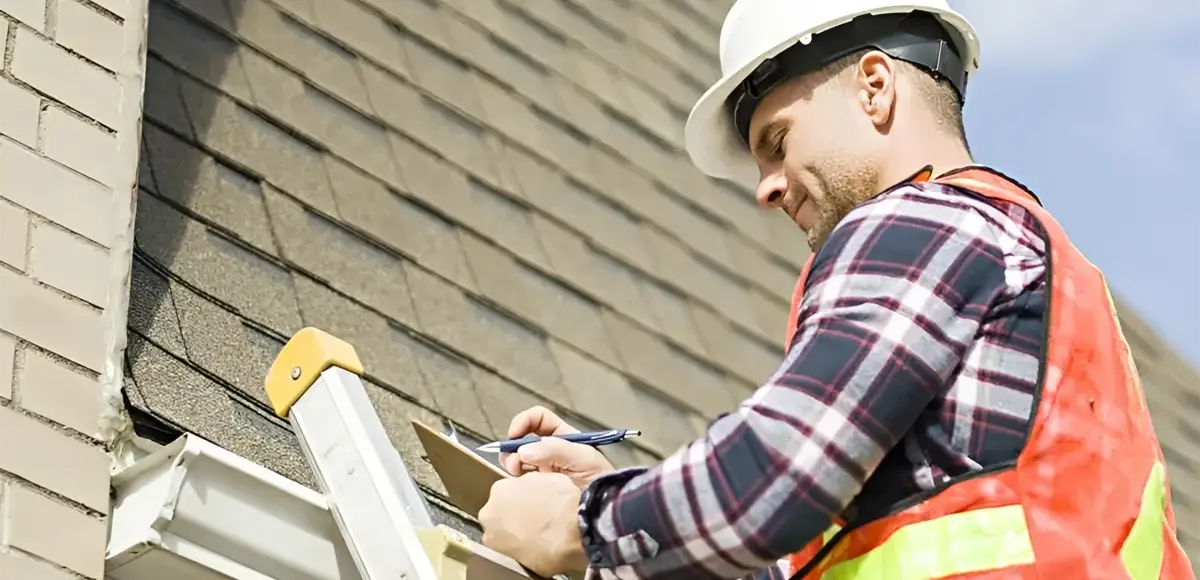
If you’ve been searching for a reliable roofer to take a closer look at your roof, a professional inspection is the smartest first step. The Roof Guys provide roof inspections services for homeowners and property managers who want clear answers, honest recommendations, and a practical plan, whether you’re dealing with a leak, storm concerns, or routine upkeep.
Book fast online with a free inspection request or learn what’s included in a roof inspection.
Why a Professional Roof Inspection Matters
A roof can look “fine” from the ground while hidden issues grow worse over time. A professional inspection reduces guesswork by identifying the most common leak and wear points—before they become expensive repairs.
Home insurance claim data shows that property issues are not rare, about 1 in 18 insured homes has a claim each year, and about 1 in 36 has a wind or hail property damage claim. According to the Insurance Information Institute, wind and hail damage consistently rank among the most common and costly property insurance claims in the United States.
When you combine that risk with everyday aging from sun, heat, and seasonal weather, routine inspections become a simple way to protect your home and budget.
Here’s what a roof inspection helps you do (and why each item matters):
- Catch small problems early — Minor issues like loose flashing or exposed fasteners can lead to bigger leaks if left alone.
- Confirm storm damage — Wind and hail damage isn’t always obvious from the yard, but it can compromise water-shedding performance.
- Document roof condition — Photos and notes are useful for maintenance planning, real estate decisions, and claim conversations.
- Plan next steps confidently — You’ll know whether the roof needs monitoring, a repair, or a replacement plan.
If you’re also troubleshooting water flow around the home, inspections pair well with checking related systems like gutters and siding since drainage and exterior penetrations often connect to moisture issues.







Roof Types We Inspect
Inspections focus on surface wear, lifted tabs, fasteners, flashing details, and granule loss.
We look for fastener back-out, seal washer condition, panel movement, and transition details.
We check seams, terminations, penetrations, ponding areas, and drainage routes.
How Often Should a Roof Be Inspected?
Most property owners benefit from a predictable schedule, plus “as-needed” inspections after major weather.
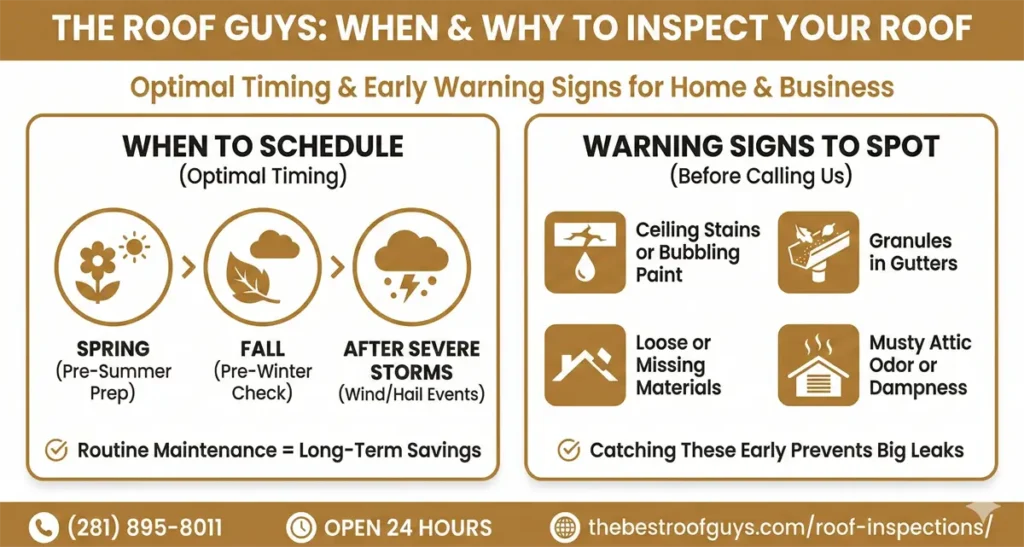
- Twice-yearly checkups (spring + fall) — The National Roofing Contractors Association recommends inspecting roof systems at least twice per year, preferably in spring and fall, as a foundation of preventative maintenance.
- After severe storms — In the U.S., the National Weather Service considers storms “severe” when they produce hail of 1 inch or larger or winds of 58 mph or greater, both of which can damage roofing materials and edges.
If you think your area has experienced those conditions recently, start with storm damage help and follow up with a full roof inspection.
Roof Inspection Checklist by Roof Type (What We Look For & Why)
Different roof systems fail in different ways, so the inspection should match the material, not a one-size-fits-all list. This table shows the main inspection focus areas by roof type and the issues they help prevent.
Roof type | Inspection focus | Common issues we look for | Related page |
Asphalt shingles | Surface wear, tabs, granules, flashing | Missing/lifted shingles, granule loss, failed seal points | |
Metal roofing | Fasteners, seal washers, panel movement | Fastener back-out, seal failure, transition leaks | |
TPO (low-slope) | Seams, penetrations, drainage | Seam separation, flashing failures, ponding clues | |
EPDM (low-slope) | Membrane condition, seams, terminations | Punctures, seam failure, edge termination issues | |
Flat roof systems | Drainage + details at edges and penetrations | Ponding risk, clogged drains, flashing defects |
If you want to go deeper on ongoing upkeep between professional visits, see roof maintenance and practical roofing tips.
Our Roof Inspection Process
We keep the process simple, transparent, and easy to follow.
1) Schedule your inspection
Choose a time that works for you. The Roof Guys are open 24 hours for calls and urgent needs. Use our contact page or submit a free inspection request.
2) On-site inspection and documentation
We inspect key roof areas, check common failure points, and document conditions that may need attention now versus later.
3) Findings review and recommendations
We walk you through what we found in plain language, then outline practical next steps—prioritized by urgency and impact.
4) Estimate (if work is needed)
If repairs or replacement are recommended, we can provide a clear roofing estimate so you can plan confidently.
Why Choose The Roof Guys
When you need clear answers, it helps to work with a team that makes the process easy:
- Straightforward findings — Clear notes and (when possible) photos you can understand.
- Priority-based guidance — A practical plan that helps you tackle the most important items first.
- 24-hour availability — Support for urgent situations and fast scheduling.
- One team for next steps — Inspections, repairs, storm services, and replacement options in one place.
See examples of completed work in the project gallery and read feedback in testimonials.
Areas We Serve
Licensed Commercial & Residential Roofing Contractor
The Roof Guys – quality materials, expert service, and lasting protection guaranteed.
When to Schedule a Roof Inspection
Roof inspections are most valuable when timing matters—especially right after risk events or when the roof is aging.
After severe weather
Wind, hail, and heavy rain can create damage that isn’t obvious from the ground. Remember: storms meet “severe” criteria at 1-inch hail or 58+ mph winds, which is why post-storm inspections are so common.
Start here: storm damage services. If you need immediate protection, see emergency tarping.
When you notice warning signs
The sooner you confirm a problem, the easier it usually is to contain. Here are the signs and what they typically indicate:
- Ceiling stains or bubbling paint — Often suggests active moisture intrusion or a previous leak path.
- Drips after rain — May point to a flashing failure or a compromised roof transition.
- Granules in gutters — Can indicate shingle wear and aging.
- Musty attic odor — Can signal trapped moisture and ventilation issues.
- Loose or missing materials — Often follow wind events and can lead to rapid water entry.
If you suspect an active leak, targeted leak detection helps pinpoint the source faster.
Before buying or selling a property
A roof inspection can reduce surprises during negotiations and clarify whether the roof needs a repair plan or replacement budget.
As routine prevention
NRCA’s guidance supports scheduled inspections as a foundation of maintenance—at least twice per year is a widely used benchmark for proactive planning.
A residential roof inspection focuses on the systems that protect the home envelope—roof covering, flashing details, ventilation signals, and water shedding. Because residential roofs typically have multiple penetrations (vents, pipes, chimneys) and complex transitions (valleys, dormers, walls), a detail-first inspection matters.
What a residential inspection prioritizes
Here are the areas we pay special attention to on homes, plus what the findings usually mean:
- Shingles and starter edges — We look for lifted edges, missing tabs, or sealing issues that can allow wind-driven rain under the roof covering.
- Flashing at penetrations — Pipe boots and vent flashing are frequent leak origins; even small separations can become active leaks during storms.
- Roof-to-wall intersections — These details matter around chimneys, dormers, and sidewalls where step flashing and counterflashing must work together.
- Attic/ventilation indicators — Heat and moisture buildup can affect roof performance over time; we look for staining, damp insulation, or condensation signals when accessible.
- Gutter lines and drip edge — Poor drainage can push water back under the edge, increasing fascia/soffit and deck risks.
What you’ll typically leave with
Residential inspections should be simple to act on. You’ll typically get:
- A roof condition summary (what’s OK, what needs attention)
- Clear “next step” recommendations (repair, monitor, or plan replacement)
- A path forward if you need work such as clearly scoped roof repair or planning a roof replacement
If you want to understand what replacement can look like, you can also explore roof installation and residential roofing.
Commercial roofs often have different priorities than residential roofs—especially on low-slope systems where seams, drainage, and rooftop equipment details play a big role. A commercial inspection is designed to reduce downtime risk, protect inventory/equipment, and support budget planning.
What a commercial inspection prioritizes
Commercial roof inspections typically focus on performance details that directly affect water tightness and long-term durability:
- Seams and membrane condition — On systems like TPO/EPDM, seam integrity is critical; we check for separation, wear, and vulnerable edges.
- Drainage and ponding risk — Low-slope roofs are designed to drain; we check scuppers, drains, and slope transitions. (As a rule of thumb, water that remains for ~48 hours can signal pondering concerns depending on the system.)
- Rooftop penetrations and curbs — HVAC units and other equipment create multiple penetrations and terminations that must be sealed and maintained.
- Edge metal and parapet conditions — Edges are high-stress points in wind and storms; we check terminations and transition details.
- Traffic paths — We look for wear in areas where maintenance crews regularly walk and where protection (like walk pads) may be beneficial.
Why commercial inspections are often scheduled more than once per year
Many facility managers schedule inspections on a recurring basis (often twice per year and after major storms) to stay ahead of seam wear, drainage issues, and rooftop equipment penetrations. This approach helps reduce emergency repairs and supports longer-term capital planning.
What Happens After the Inspection?
A good inspection leads to a clear decision tree. We typically categorize findings so you know what to do first.
- Monitor (low risk) — Minor wear or cosmetic issues that don’t currently threaten water-tightness.
- Repair (moderate risk) — Localized problems like flashing gaps, small punctures, or lifted sections that can worsen.
- Plan replacement (high risk) — Widespread aging, repeated leak zones, or system-level issues that make repairs less cost-effective long-term.
Residential and Commercial Properties Welcome
We provide roof inspections for both homes and commercial properties, adjusting the inspection approach to the roof system and building needs.
- For homes: residential roofing
- For businesses: commercial roofing
What Our Clients Are Saying
We believe the best proof of our service comes directly from the homeowners, businesses, and property managers we proudly serve.
Get a Professional Roof Inspection Before Small Problems Become Expensive Repairs
Your roof protects everything underneath it, your family, employees, inventory, and investment. Whether you need a Residential Roof Inspection after a storm or a detailed Commercial Roof Inspection for insurance or maintenance planning, our certified team delivers accurate assessments and honest recommendations.
Ready for clear answers about your roof? Call The Roof Guys at (281) 895-8011 or book online with a free inspection request. We’re open 24 hours and here when you need us.
The Roof Guys
Business Hours
Monday: Open 24 hours
Tuesday: Open 24 hours
Wednesday: Open 24 hours
Thursday: Open 24 hours
Friday: Open 24 hours
Saturday: Open 24 hours
Sunday: Open 24 hours
Frequently Asked Questions
Most property owners benefit from scheduled inspections plus checks after major storms. Many follow a twice-yearly rhythm (spring and fall) along with post-storm inspections when wind or hail may have impacted the roof.
A roof inspection focuses on roof condition and identifying issues. A roofing estimate is pricing for recommended work. If your inspection reveals needed repairs or replacement, we can provide a roofing estimate afterward.
Yes. Post-storm inspections can identify damage that isn’t visible from the ground, document findings, and outline next steps—especially if you’re unsure whether repairs are needed. See storm damage services.
Timing depends on roof size, roof type, accessibility, and what we find. When you schedule your roof inspection, we’ll set expectations based on your property.
When possible, yes. We document key findings so you can clearly see areas of concern and understand recommended next steps.
If an issue is found, we’ll explain your options and recommend next steps such as leak detection and roof repair based on the condition observed.
Yes. If immediate protection is needed to prevent additional water intrusion, we may recommend emergency tarping and direct you to emergency roofing for next steps.
Yes. We inspect both residential and commercial properties, adjusting the inspection approach to the roof system and building needs.
How Can We Help?



Our Roofing Services
Why Choose The Roof Guys
When you need clear answers, it helps to work with a team that makes the process easy:
- Straightforward findings — Clear notes and (when possible) photos you can understand.
- Priority-based guidance — A practical plan that helps you tackle the most important items first.
- 24-hour availability — Support for urgent situations and fast scheduling.
- One team for next steps — Inspections, repairs, storm services, and replacement options in one place.
See examples of completed work in the project gallery and read feedback in testimonials.
The Roof Guys
Business Hours
Monday: Open 24 hours
Tuesday: Open 24 hours
Wednesday: Open 24 hours
Thursday: Open 24 hours
Friday: Open 24 hours
Saturday: Open 24 hours
Sunday: Open 24 hours

Get Started
Have questions about your roof? Ready to start your next roofing project? Whether you’re dealing with storm damage, a leaky roof, or planning a complete roof replacement, our team is here to help.
How Can We Help?