Average Siding Replacement Costs in 2026: Pricing Benchmarks
The national average to re-side a house ranges from $6,000 to $20,000, with most homeowners spending approximately $12,000 for a comprehensive upgrade. On a per-square-foot basis, installed house siding costs range between $3.50 and $25.00 depending directly on your selected material, wall condition, and regional labor rates.
Across Texas and Oklahoma, siding replacement projects reflect varying labor and logistical dynamics compared to national metrics. Labor generally represents 40% to 55% of the total project invoice. Professional siding installers earn median trade wages of $24 to $28 per hour, translating to billable contractor rates of $40 to $75 per hour once insurance, equipment allowances, and operating overhead are factored in.
Homeowners evaluating bids can reference these 2026 Siding Replacement Cost Benchmarks to understand standard industry pricing before committing to a contract:
| Siding Material | Material Cost / Sq. Ft. | Installed Cost / Sq. Ft. | Typical Total Cost (2,000 Sq. Ft. Home) | Expected Lifespan |
|---|---|---|---|---|
| Builder-Grade Vinyl | $1.50 – $3.50 | $3.50 – $9.00 | $7,000 – $18,000 | 20 – 40 Years |
| Insulated Vinyl | $3.00 – $6.00 | $7.00 – $14.00 | $14,000 – $28,000 | 25 – 40 Years |
| Fiber Cement (James Hardie) | $3.50 – $7.00 | $8.00 – $16.00 | $16,000 – $32,000 | 30 – 50 Years |
| Engineered Wood (LP SmartSide) | $2.50 – $5.50 | $4.50 – $14.00 | $9,000 – $28,000 | 20 – 30 Years |
| Cedar Shakes / Wood | $4.00 – $8.00 | $9.00 – $16.00 | $18,000 – $32,000 | 15 – 40 Years |
| Manufactured Stone Veneer | $6.00 – $12.00 | $15.00 – $30.00 | $30,000 – $60,000 | 50 – 100+ Years |
How Material Selection Drives Your Total Cost for Siding Replacement
Material choice serves as the single largest baseline variable determining your project invoice. Standard vinyl remains the entry-level benchmark due to its lightweight profile and quick fastening mechanisms.
For property owners demanding superior fire defense, storm resistance, and dimensional stability, a fiber cement siding investment provides unmatched durability against regional weather extremes. While James Hardie fiber cement costs 40% to 60% more than standard vinyl, its heavy composition prevents warping under high heat and resists insect intrusion.
For broader context across cladding varieties, detailed Siding Cost Comparison Data shows that engineered wood delivers an authentic timber aesthetic with zinc borate treatments for rot resistance, while premium stone veneer represents a luxury architectural accent that significantly increases overall installation labor.
Average Cost for Siding Replacement by Home Size and Stories
Exterior wall surface area differs significantly from a home’s internal square footage. A standard 2,000-square-foot home typically features roughly 2,000 to 2,400 square feet of exterior wall area once window and door openings are deducted.
The vertical structure of your home drastically alters labor requirements:
- Single-Story Homes: Re-siding a single-story ranch (approx. 1,500 to 1,700 sq. ft. of wall area) costs $6,500 to $19,000 for standard vinyl and $14,500 to $27,500 for fiber cement.
- Two-Story Homes: Multilevel residences incur a 15% to 25% pricing surcharge. Setting up staging, ladders, and safety harness systems adds $300 to $1,500 in scaffolding labor.
- Three-Story or Complex Layouts: Multi-tier construction with steep gables, dormers, and multiple rooflines increases labor by 25% to 40% over baseline single-story rates.
Key Factors That Determine the Cost for Siding Replacement
Local labor supply, architectural geometry, and permit acquisition represent primary cost variables. Municipal permit fees in areas like Houston, Conroe, and The Woodlands generally range from $100 to $1,000 depending on total project valuation. Contractor waste factors—calculated at 10% to 15% for standard layouts and up to 20% for homes with complex architectural angles—must also be ordered to account for custom cutting and corner fitting.
Ignoring deteriorated siding allows water penetration to compound beneath the surface. Homeowners who recognize the hidden costs of delaying siding installation projects prevent minor exterior failures from escalating into structural framing rot.
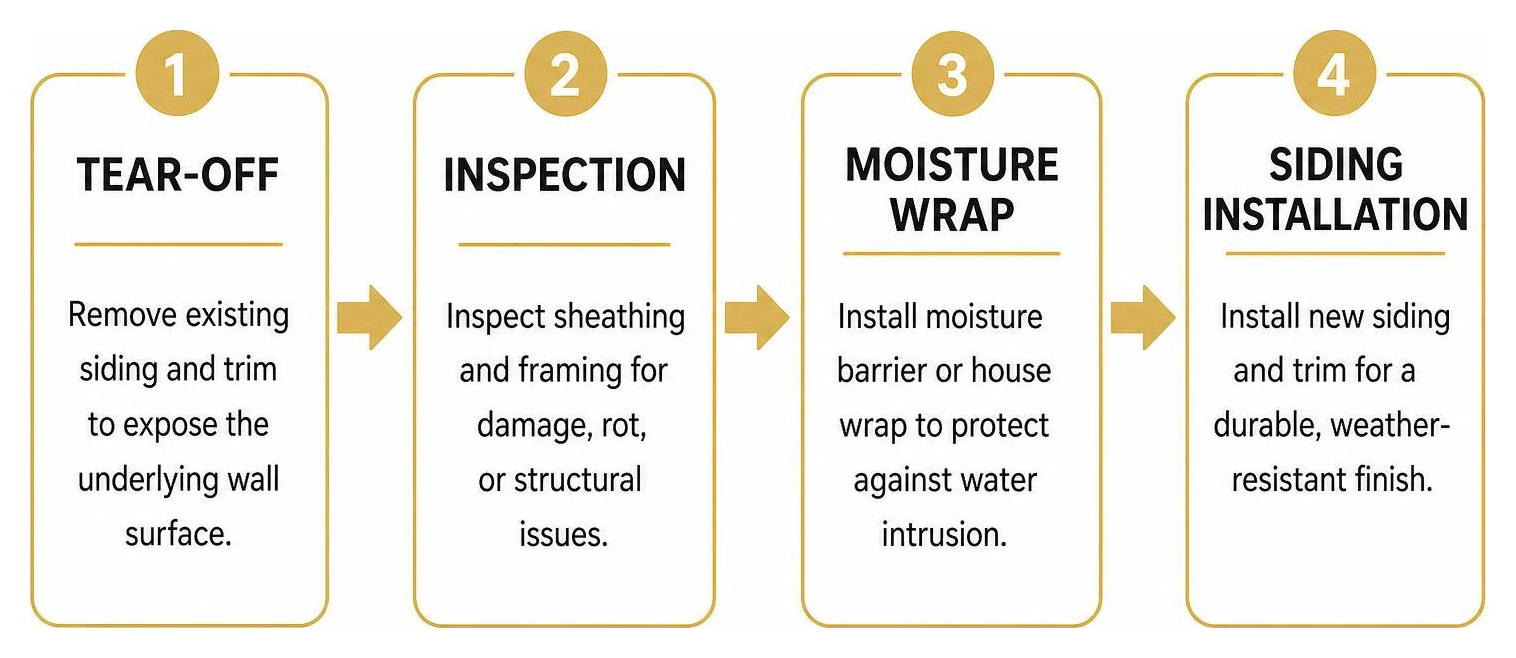
Tear-Off, Sheathing Repairs, and Hidden Structural Expenses
Removing old siding requires specialized labor and dedicated dumpster equipment:
- Vinyl / Aluminum Removal: Adds $0.50 to $1.25 per square foot ($1,000 to $2,500 on average).
- Wood / Fiber Cement Tear-Off: Adds $1.00 to $3.00 per square foot ($2,000 to $6,000) due to heavy weight and disposal fees.
- Sheathing Replacement: Deteriorated 4×8 OSB or plywood substrate panels cost $60 to $120 per sheet replaced, including labor and fasteners.
- Moisture Barrier & Flashing: Installing modern weather-resistive barriers like Tyvek costs $0.15 to $0.30 per square foot, while integrated aluminum flashing prevents window and door leaks.
Installing Over Existing Siding vs. Complete Tear-Off
Installing new vinyl over existing siding can reduce initial project bids by $1,500 to $3,000 by eliminating tear-off labor and dump fees. However, this method introduces severe risks:
- Hidden Rot: Overlaying conceals active moisture damage, fungal rot, and termite activity inside wall cavities.
- Warranty Forfeiture: Major manufacturers often restrict or void product warranties if the material is not fastened directly to code-approved, flat structural sheathing.
- Distorted Sightlines: Adding thickness causes window frames and door casings to look recessed, requiring custom exterior trim build-outs.
A complete tear-off is the only reliable way to evaluate substrate health, upgrade thermal barriers, and secure full manufacturer warranty protections.
Evaluating Long-Term Value: ROI, Lifespans, and Energy Savings
Replacing home siding delivers dual financial benefits: enhanced weather protection and substantial energy savings. Modern insulated siding profiles and advanced weather barriers significantly reduce thermal bridging through wall studs.
Upgrading the building envelope creates a direct link between siding installation and home energy efficiency, helping homeowners lower cooling and heating costs by 10% to 20% annually.
Return on Investment and Resale Value Metrics
According to industry data from the 2025 Cost vs. Value Report, exterior siding replacement consistently ranks among the highest-yielding home renovations:
- Fiber Cement Siding: Recoups 80% to 114% of its installation cost at resale.
- Vinyl Siding: Recoups 67% to 97% of project cost upon property appraisal.
New exterior cladding dramatically enhances curb appeal, eliminating buyer concerns over exterior maintenance and shortening total days on the market.
Material Durability and Maintenance Over Time
Each cladding product carries a unique operational lifespan and maintenance cycle:
- Standard Vinyl (20–40 years): Requires annual pressure washing; susceptible to cracking under heavy hail impacts.
- Fiber Cement (30–50+ years): Non-combustible, impervious to rot and wood-boring insects; factory finishes (such as ColorPlus) carry 15-year paint warranties.
- Engineered Wood (20–30 years): Highly impact-resistant; requires regular paint inspections and recaulking around joints every 7 to 10 years.
- Metal / Steel (40–60 years): Resists wildfire and hail punctures; finishes resist fading, though dents can occur under direct storm impacts.
How to Budget, Compare Contractor Quotes, and Save Money
When comparing bids, ensure every contractor provides an itemized proposal detailing material specifications, labor allocations, waste contingencies, and cleanup terms. Identifying reputable professionals and choosing the right house siding contractors protects your investment from ambiguous change orders.

Professional Installation vs. DIY Siding Projects
While single-panel vinyl repairs are suitable for experienced DIY enthusiasts, whole-house siding replacement requires specialized trade skills:
- Tools and Setup: Professional crews use pneumatic nailers, specialty snips, aluminum trim benders, and staging platforms costing thousands of dollars to rent or purchase.
- Expansion Fastening: Vinyl panels expand and contract significantly across changing seasons. Nailing vinyl too tightly causes unsightly buckling within months.
- Safety Hazards: Working on multi-story ladders while lifting heavy fiber cement planks introduces substantial injury risks.
- Warranty Safeguards: Professional installation ensures full compliance with local building codes and manufacturer warranty criteria.
Actionable Strategies to Reduce Siding Replacement Costs
Homeowners can implement proven methods to lower out-of-pocket siding expenses:
- Schedule in the Off-Season: Booking installations between November and February can yield 10% to 15% labor discounts when contractor schedules are less congested.
- Obtain 3 to 5 Itemized Quotes: Require every contractor to bid on identical materials and identical project scopes.
- Blend Materials Strategically: Use premium fiber cement or stone veneer on front-facing elevations to elevate curb appeal, and install cost-effective vinyl on sides and rear walls.
- Bundle Exterior Work: Combining siding replacement with gutter, soffit, or roof repairs eliminates redundant mobilization and scaffolding charges.
- Leverage Manufacturer Rebates: Check major cladding brand websites for seasonal manufacturer promotions and product rebates.
Frequently Asked Questions About Siding Replacement Costs
When is it better to replace siding rather than repair it?
If exterior damage affects more than 20% to 30% of your total wall area, full replacement is more cost-effective than repeated repairs. Key siding replacement indicators include spongy panels, extensive wood rot, deep buckling, active termite tunnels, and interior drywall water staining.
How long does a full home siding replacement take?
A full replacement on a 2,000-square-foot home typically takes 3 to 8 business days, depending on material selection and weather:
- Vinyl Installation: 3 to 5 working days with a 4-person crew.
- Fiber Cement or Engineered Wood: 5 to 8 working days due to increased material weight, precise cutting, and caulking steps.
Does new siding qualify for energy efficiency tax credits or insurance claims?
Yes, specific siding projects qualify for financial relief:
- Energy Credits: Installing insulated siding products meeting strict R-value standards may qualify for local utility rebates and federal credits under the Inflation Reduction Act.
- Storm Insurance Claims: If wind or hail damages your exterior cladding in storm-prone regions, homeowners insurance policies often cover full tear-off and replacement costs minus your policy deductible.
Conclusion
A complete exterior remodel protects your property against extreme weather, elevates architectural beauty, and provides an immediate boost to resale value. For reliable estimates, clear scopes of work, and unmatched workmanship, explore our dedicated siding services to protect your home for decades to come. Contact our team today to schedule your comprehensive on-site assessment.