
Roof Replacement Services
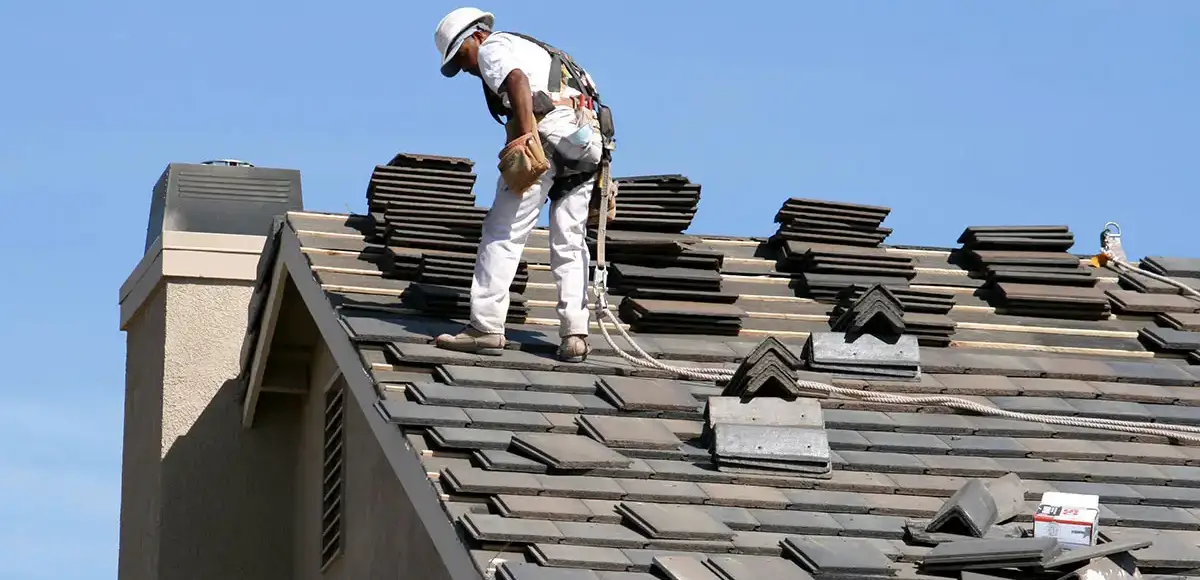
Comprehensive Roof Replacement Services for Your Home or Business
When it’s time for a new roof, you need roof replacement services you can rely on. At The Roof Guys, we help homeowners and business owners protect their properties with high-quality roof replacement solutions tailored to Texas weather and local building standards.
From aging shingles to severe storm damage, our experienced team evaluates your roof, explains your options in plain language, and recommends the right replacement approach for your home or commercial building. We focus on long-term performance, not quick fixes, so you can feel confident in your investment.
Roof systems must also meet local building codes and structural safety requirements. You can learn more about roofing and building safety standards from the International Code Council (ICC).
Our roof replacement services cover a wide range of property types:
- Single-family homes and townhomes
- Multi-family residences and rental properties
- Offices, retail buildings, and light commercial properties
- Churches and community buildings
Whether you’re planning ahead or dealing with unexpected damage, The Roof Guys is your local partner for a smoother, less stressful roof replacement experience.







Our Roof Replacement Process
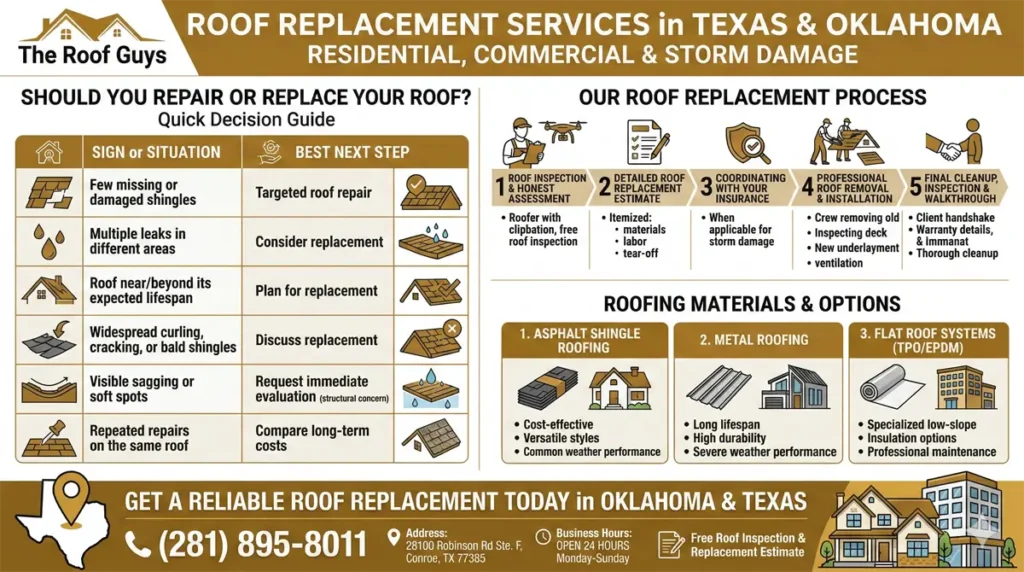
Every project begins with a thorough inspection of your existing roofing system, including shingles or panels, flashing, vents, and underlying structure where visible. We document what we find, discuss any concerns, and help you understand whether roof replacement is necessary now or in the near future.
You can request a free roof inspection to get started.
Next, we provide a written, itemized estimate so you can see exactly what’s included, from materials and labor to tear-off and disposal. We’ll discuss options for materials, styles, and upgrades, and answer your questions before any work begins.
When you’re ready to move forward, you can request a detailed roofing estimate and we’ll help you schedule your project at a time that works for your household or business.
If your roof replacement is related to storm damage, we can help you by:
- Providing documentation and photos of the damage
- Explaining roofing terms and scope of work
- Coordinating installation timing after your claim is approved
You’ll always stay in control of the claim process, and we’ll support you with the information you need to make informed decisions. You can learn more about our storm damage services if your roof has been affected by severe weather.
On installation day, our crew arrives on time, protects landscaping and exterior features where possible, and begins carefully removing your old roofing materials. We inspect the decking for damage and replace any compromised sections before installing your new roof system according to manufacturer specifications and local codes.
We focus on:
- Proper underlayment and flashing installation
- Straight, consistent shingle or panel lines
- Secure fastening for long-term durability
- Adequate ventilation to help extend roof life
Once installation is complete, we conduct a thorough cleanup of your property, including nails and debris. Then we perform a final quality inspection and walk you through the finished work, answering any last questions about care, maintenance, and warranty details.
Residential & Commercial Roof Replacement Services
The Roof Guys offers customized roof replacement services for both residential roofing and commercial roofing customers.
For homeowners, we focus on:
- Protecting your family and belongings from leaks
- Enhancing curb appeal and home value
- Recommending styles and colors that complement your property
For business and property owners, we understand the importance of minimizing downtime and protecting your assets. We plan your project to reduce disruptions to daily operations whenever possible.
Learn more about how we can help with:
- Residential roofing for homes, townhomes, and multi-family properties
- Commercial roofing solutions for offices, retail spaces, and more
Do You Need Roof Repair or Full Roof Replacement?
Not every roofing issue requires a full replacement, but sometimes, repairs only delay a bigger problem. We’ll help you decide what makes the most sense for your roof and budget.
Roof Repair vs Roof Replacement: Quick Decision Guide
A lot of homeowners aren’t sure whether they should patch a problem area or invest in a full roof replacement. Use this quick comparison table to better understand which option may make more sense for your situation.
Sign or Situation | What It Might Mean | Best Next Step |
A few missing or damaged shingles | Localized wear or minor storm damage | Ask about targeted roof repair options |
Multiple leaks in different areas | System-wide wear or aging materials | Consider a full roof inspection for replacement |
Roof is near or beyond its expected lifespan | Materials may be at the end of their performance window | Plan for replacement in the near future |
Widespread curling, cracking, or bald shingles | Advanced shingle wear and reduced weather protection | Discuss roof replacement with your contractor |
Visible sagging or soft spots in the roof deck | Potential structural concerns that can’t be solved with simple repairs | Request an immediate professional evaluation |
Repeated repairs on the same roof over a few years | Short-term fixes may be masking deeper roofing issues | Compare long-term costs of repair vs replacement |
If your roof issues are limited to a small area, we may recommend targeted roof repair instead of a full replacement. Our goal is always to provide the most cost-effective, long-term solution.
For a professional assessment, schedule a dedicated roof inspection with our team. If we determine that repairs are enough, we’ll explain why and provide options. If a full replacement is the smarter choice, we’ll walk you through the process so there are no surprises.
Why Choose The Roof Guys
Choosing a contractor is just as important as choosing your roofing material. Here’s why homeowners and business owners trust The Roof Guys for roof replacement services:
- Local experience you can count on – We understand the demands of Texas weather and how heat, humidity, wind, and storms affect your roof over time.
- Clear, honest communication – From your first call to final walkthrough, we explain your options in everyday language and keep you updated on scheduling and progress.
- Quality-focused workmanship – Our crews follow manufacturer specifications and local codes to help your new roof perform the way it should for years to come.
- Transparent estimates – You’ll receive a written, itemized estimate so you know exactly what’s included—no confusing jargon or surprise add-ons.
- Storm and emergency support – When severe weather hits, our storm damage services and emergency roofing team help you move from temporary fixes to a long-term solution.
- Proven results and happy customers – You can learn more about our story, browse our project gallery, and read customer reviews to see how we’ve helped other property owners.
If you’re comparing roofers and still have questions, check out our roofing FAQs or contact us for straightforward answers.
Areas We Serve
Licensed Commercial & Residential Roofing Contractor
The Roof Guys – quality materials, expert service, and lasting protection guaranteed.
Roofing Materials & Options
Choosing the right roofing material is just as important as choosing the right contractor. We’ll help you compare options based on your goals, budget, and the demands of our local climate.
Roofing Materials Comparison for Roof Replacement
Choosing the right roofing material can impact your home’s protection, curb appeal, and long-term costs. This table compares some of the most common roofing options we work with on replacement projects.
Roofing Material | Typical Use Cases | Key Advantages | Considerations |
Asphalt shingle roofing | Most single-family homes and many residential roofs | Versatile styles, widely available, designed for reliable weather performance | Lifespan depends on product line, installation, and maintenance |
Metal roofing | Homes, barns, shops, and light commercial buildings | Excellent durability, sleek appearance, strong performance in severe weather | Higher upfront cost than many shingles; installation matters |
Flat roof systems (TPO/EPDM) | Commercial roofs, low-slope sections, some modern homes | Designed for low-slope applications, can be paired with insulation options | Requires proper design, drainage, and professional maintenance |
Roof coating systems | Certain existing flat or low-slope roofs | Can help extend service life of some roofs when appropriate | Not a replacement for all systems; depends on roof condition |
You can also review roofing material guidance from the U.S. Department of Energy on cool roofs and energy-efficient roofing systems.
What to Expect During Your Roof Replacement
We know that having your roof replaced is a big project. Our team is committed to clear communication and respect for your property every step of the way.
Here’s what you can expect when you choose The Roof Guys for roof replacement services:
- Clear scheduling and timelines – We’ll provide an estimated start date and typical duration based on the size and complexity of your roof.
- Protection of your property – We take care to protect landscaping and exterior features where possible while work is underway.
- Professional, courteous crews – Our installers are trained to work efficiently and safely on your property.
- Noise and access planning – We’ll let you know when noise will be at its highest and discuss important access areas like driveways or parking lots.
- Thorough cleanup – At the end of the project, we clean up and remove debris so you’re left with a finished roof, not a mess.
Most residential roof replacement projects for average-sized homes are completed in a relatively short time frame, though scheduling, weather, and roof complexity can affect the exact timeline.
What Our Clients Are Saying
We believe the best proof of our service comes directly from the homeowners, businesses, and property managers we proudly serve.
Emergency & Storm-Related Roof Replacement
Severe storms can damage your roof without warning. When that happens, you need a responsive roofing team that understands storm-related issues and can help you move from temporary fixes to a permanent solution.
We’re here to help when:
- High winds tear off shingles or damage roofing materials
- Hail impacts compromise the integrity of your roof
- Debris from storms damages sections of your roof
- Prior emergency repairs need to be upgraded to a full replacement
In many of these situations, emergency roofing and storm damage services play a critical role in preventing further damage before replacement can be completed.
You can learn more about our dedicated storm damage services and emergency tarping if your roof has been affected by severe weather. We’ll help you understand whether a full replacement is necessary and provide the documentation you may need to work with your insurance company.
Get a Reliable Roof Replacement in Oklahoma & Texas Today
If your roof is aging, leaking, or severely damaged by storms, replacing it now can protect your home from costly structural issues and future repairs. Our experienced roofing contractors provide professional roof replacement services, including asphalt shingle roof replacement, storm-damaged roof replacement, and complete residential roofing system installation across Oklahoma and Texas. We inspect your roof, explain your options, and install durable roofing systems designed to withstand regional weather conditions.
Call The Roof Guys today at (281) 895-8011 to schedule a free roof inspection and get your roof replacement estimate.
The Roof Guys
Business Hours
Monday: Open 24 hours
Tuesday: Open 24 hours
Wednesday: Open 24 hours
Thursday: Open 24 hours
Friday: Open 24 hours
Saturday: Open 24 hours
Sunday: Open 24 hours
Frequently Asked Questions
If your roof has multiple leaks, widespread shingle damage, or is over 20 years old, replacement may be more cost-effective than repeated repairs. A professional roof inspection can confirm the best option.
Most residential roof replacements in Texas and Oklahoma can be completed within 1–3 days, depending on roof size, complexity, material type, and weather conditions. Larger homes or complex roof systems may take longer, but your roofing contractor will provide a timeline before work begins.
Many homeowners insurance policies in Texas and Oklahoma help cover roof replacement for storm-related damage such as hail or wind damage, if properly documented. Our team can provide inspection reports, photos, and a detailed scope of work to support your insurance claim, though final coverage decisions are made by your insurance provider.
Popular options include asphalt shingles and metal roofing, both designed to withstand the heat, wind, and storms common in Texas and Oklahoma. Asphalt shingles are cost-effective and widely used, while metal roofs offer long-term durability and strong wind resistance.
The lifespan of a new roof depends on the material and installation quality. Many asphalt shingle roofs last 20–30 years, while metal roofing systems can last 40–70 years when properly installed and maintained.
Roof replacements typically include manufacturer warranties on roofing materials and workmanship warranties from the roofing contractor. The exact coverage depends on the roofing system selected and the installation details.
Yes. We provide roof replacement services for residential homes, commercial buildings, rental properties, and small businesses across Texas and Oklahoma, tailoring the scope of work to each property type.
Common signs include missing shingles, visible hail damage, granule loss, repeated leaks, or sagging roof areas after severe storms. If these issues affect multiple areas of the roof, a full replacement may be the safest long-term solution.
Yes. A professional roof inspection is the best first step. Our team can evaluate your roof’s condition, explain whether repairs or replacement are recommended, and provide a free roof replacement estimate so you can make an informed decision.
Roof replacement costs vary based on roof size, materials, and damage. Many asphalt shingle roof replacements typically range from about $6,000 to $15,000+ for average homes. Final pricing depends on factors like roof complexity, ventilation upgrades, and the type of roofing material selected.
Yes. Modern roofing systems with proper ventilation and reflective materials can help improve energy efficiency and reduce heat buildup in Texas and Oklahoma homes. This can help maintain more stable indoor temperatures and potentially reduce cooling costs during hot summers.
How Can We Help?



Our Roofing Services
Why Choose The Roof Guys
Choosing a contractor is just as important as choosing your roofing material. Here’s why homeowners and business owners trust The Roof Guys for roof replacement services:
- Local experience you can count on – We understand the demands of Texas weather and how heat, humidity, wind, and storms affect your roof over time.
- Clear, honest communication – From your first call to final walkthrough, we explain your options in everyday language and keep you updated on scheduling and progress.
- Quality-focused workmanship – Our crews follow manufacturer specifications and local codes to help your new roof perform the way it should for years to come.
- Transparent estimates – You’ll receive a written, itemized estimate so you know exactly what’s included—no confusing jargon or surprise add-ons.
- Storm and emergency support – When severe weather hits, our storm damage services and emergency roofing team help you move from temporary fixes to a long-term solution.
- Proven results and happy customers – You can learn more about our story, browse our project gallery, and read customer reviews to see how we’ve helped other property owners.
If you’re comparing roofers and still have questions, check out our roofing FAQs or contact us for straightforward answers.
The Roof Guys
Business Hours
Monday: Open 24 hours
Tuesday: Open 24 hours
Wednesday: Open 24 hours
Thursday: Open 24 hours
Friday: Open 24 hours
Saturday: Open 24 hours
Sunday: Open 24 hours

Get Started
Have questions about your roof? Ready to start your next roofing project? Whether you’re dealing with storm damage, a leaky roof, or planning a complete roof replacement, our team is here to help.
How Can We Help?