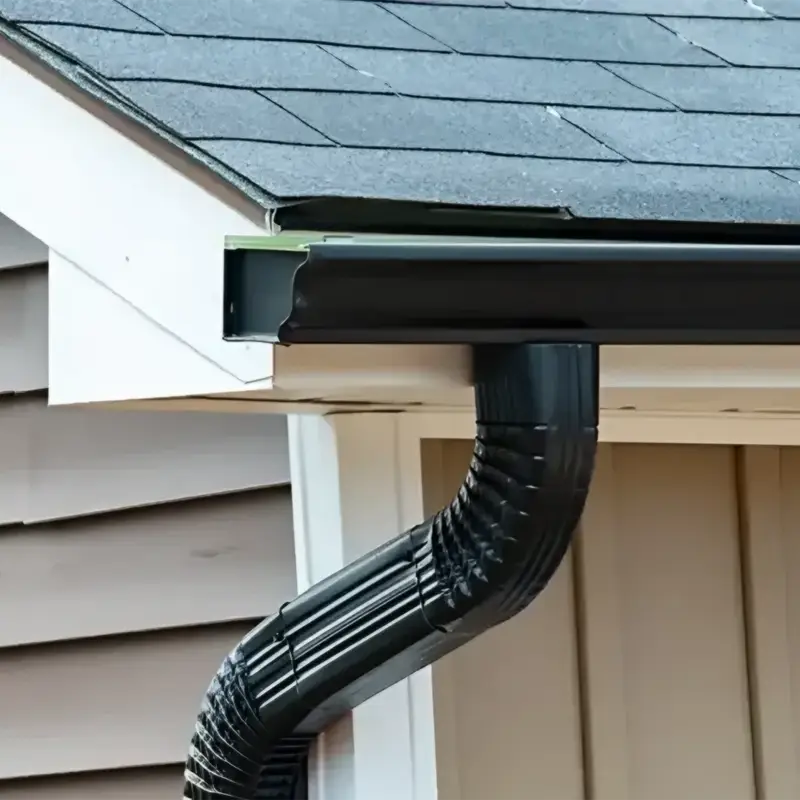
Why House Gutter Systems Matter in Texas and Oklahoma
House gutter systems collect rainwater from the roof and move it safely away from the siding, foundation, and landscaping. For homes exposed to Texas and Oklahoma downpours, wind, and hail, a properly sized system usually means durable gutters, secure hangers, correctly placed downspouts, and a clear path for water to drain away from the house.
An inch of rain can shed nearly 1,900 gallons of water from an average home roof. That volume can quickly erode soil, flood low areas, and put water where it does not belong if gutters overflow, sag, or clog. The Roof Guys helps homeowners assess roof drainage as part of protecting the full exterior after severe weather.
This guide compares gutter styles, materials, sizes, guards, and installation options so you can choose a system that fits your roofline, budget, and local storm conditions.
I’m Cash Walker, part of the leadership team at The Roof Guys in Greater Houston, where our team brings more than 30 years of roofing experience to exterior protection and house gutter systems. Next, let’s look at the gutter profiles that shape both drainage performance and curb appeal.
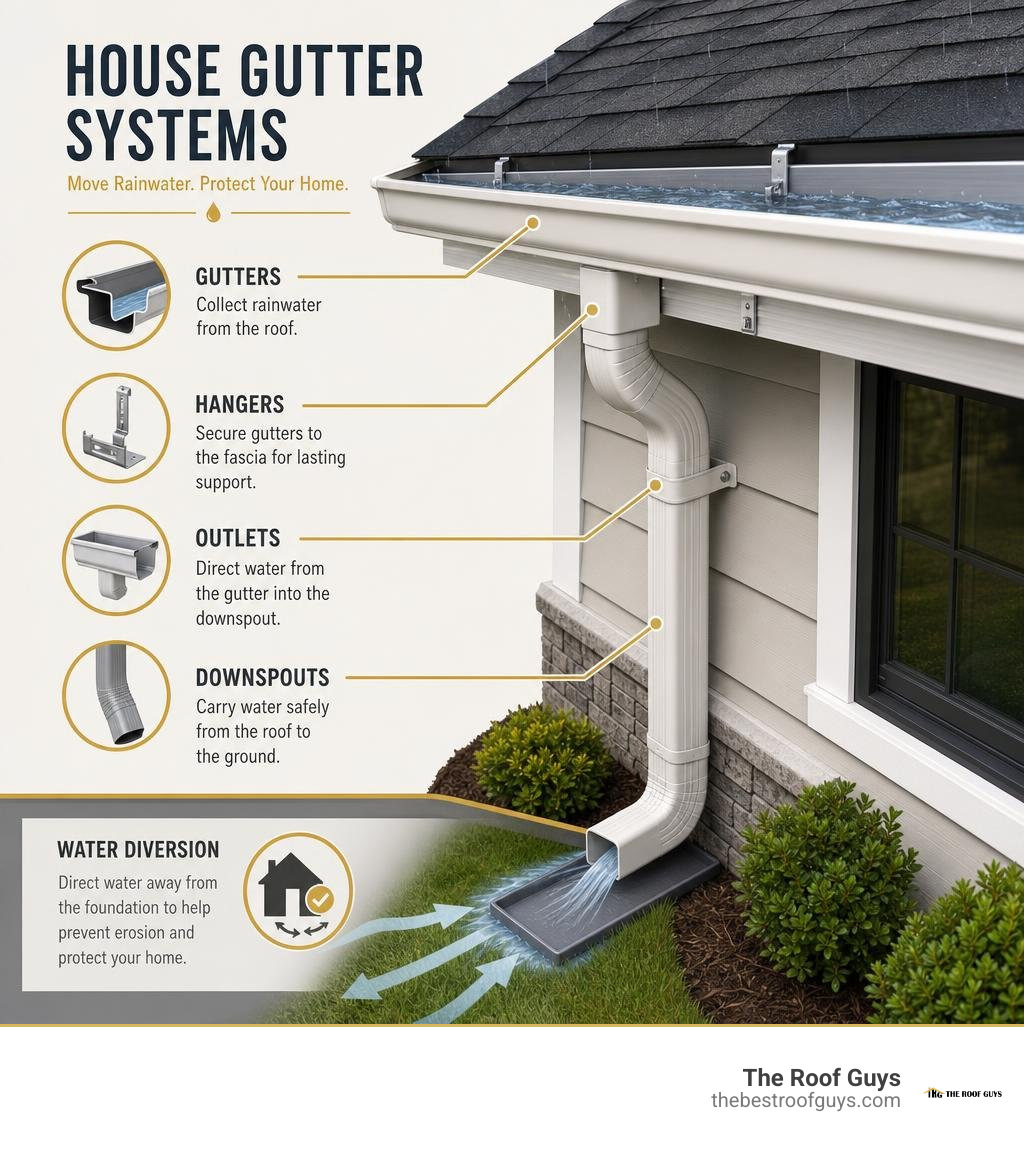
Explore more about house gutter systems:
Understanding Gutter Profiles and Architectural Styles
Gutter profiles dictate how much water your channels can transport and how naturally the troughs blend into your roofline. The cross-sectional geometry controls water velocity, debris accumulation, and resistance to overflowing during sudden downpours. Selecting the right profile ensures structural drainage without compromising home aesthetics.
Comparing Modern House Gutter Systems: Profiles and Architectural Fit
K-style gutters remain the most popular choice for modern residential architecture across Texas and Oklahoma. Their flat-back design mounts directly flush against a vertical fascia board, while the front mimics the look of interior crown molding. A standard K-style profile holds more than double the water capacity of a traditional half-round trough of identical nominal width.
Half-round gutters feature a smooth, semi-circular shape that makes them ideal for historic restorations, rustic styles, and European-style architecture. Because half-round systems lack interior angular corners, they resist sediment buildup and allow water to wash through smoothly. However, water moves faster through their rounded bottom, requiring larger profiles to match K-style carrying capacities.
Box gutters and custom fascia profiles serve specialized architectural applications. Box gutters feature wide, rectangular designs built directly into commercial roof structures or large residential overhangs to manage high-volume runoff. Modern square gutter systems allow a 135 mm profile to match the hydraulic capacity of a 150 mm half-round gutter, delivering clean lines that conceal fasteners. Fascia gutters serve as both the finished fascia board and the drainage trough, creating an integrated look for modern homes.
| Gutter Profile | Relative Water Capacity | Debris Resistance | Architectural Style Compatibility |
|---|---|---|---|
| K-Style | Very High | Moderate (creases trap grit) | Contemporary, Traditional Suburban, Modern Craftsman |
| Half-Round | Moderate | High (smooth interior contour) | Historic, Spanish Colonial, Tuscan, Custom High-End |
| Box Gutter | Maximum | Moderate | Modern Flat-Roof, Commercial, High-Slope Valleys |
| Square PVC/Fascia | High | High | Contemporary Minimalist, Modern Industrial |
Seamless vs. Sectional Gutter Configurations
Sectional gutters consist of pre-cut 10-foot or 16-foot segments joined together using corner miters, joiners, and sealant. While widely sold in home improvement centers for DIY projects, sectional systems introduce seams every several feet. Each seam creates a structural weak point where expanding thermal cycles degrade sealant, leading to drips, clogs, and wood rot along the eaves.
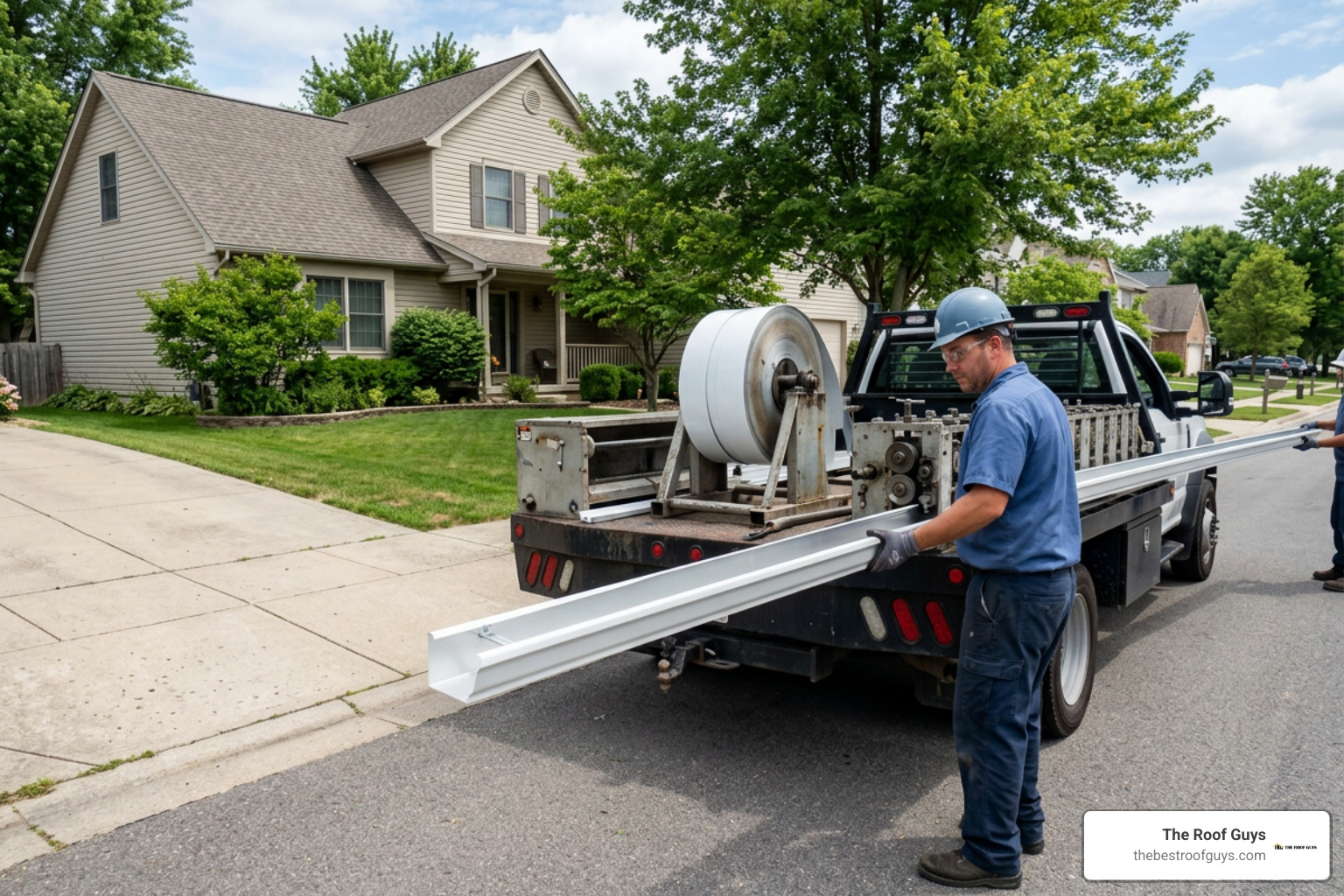
Choosing seamless gutters eliminates mid-run joints along the entire roofline. Professional installers extrude continuous metal runs on-site using portable roll-forming machines, measuring each length to the exact fraction of an inch. By eliminating seams along the horizontal spans, seamless systems reduce water friction, minimize debris catch points, and resist leaks over decades of thermal expansion.
Gutter Material Comparison: Durability, Lifespan, and Costs
Gutter materials directly establish structural longevity, load-bearing strength, and maintenance requirements. Choosing the correct metal or composite prevents galvanic corrosion, withstands falling tree limbs, and ensures your system handles extreme weather cycles.
Lightweight and Cost-Effective Options: Vinyl and Aluminum
Vinyl (PVC) gutter systems provide a lightweight, corrosion-proof choice at a lower price point. Vinyl gutters cost between $11.92 and $34.41 per linear foot installed. However, extreme heat cycles cause vinyl to expand and contract, which can warp brackets and crack plastic fittings over time.
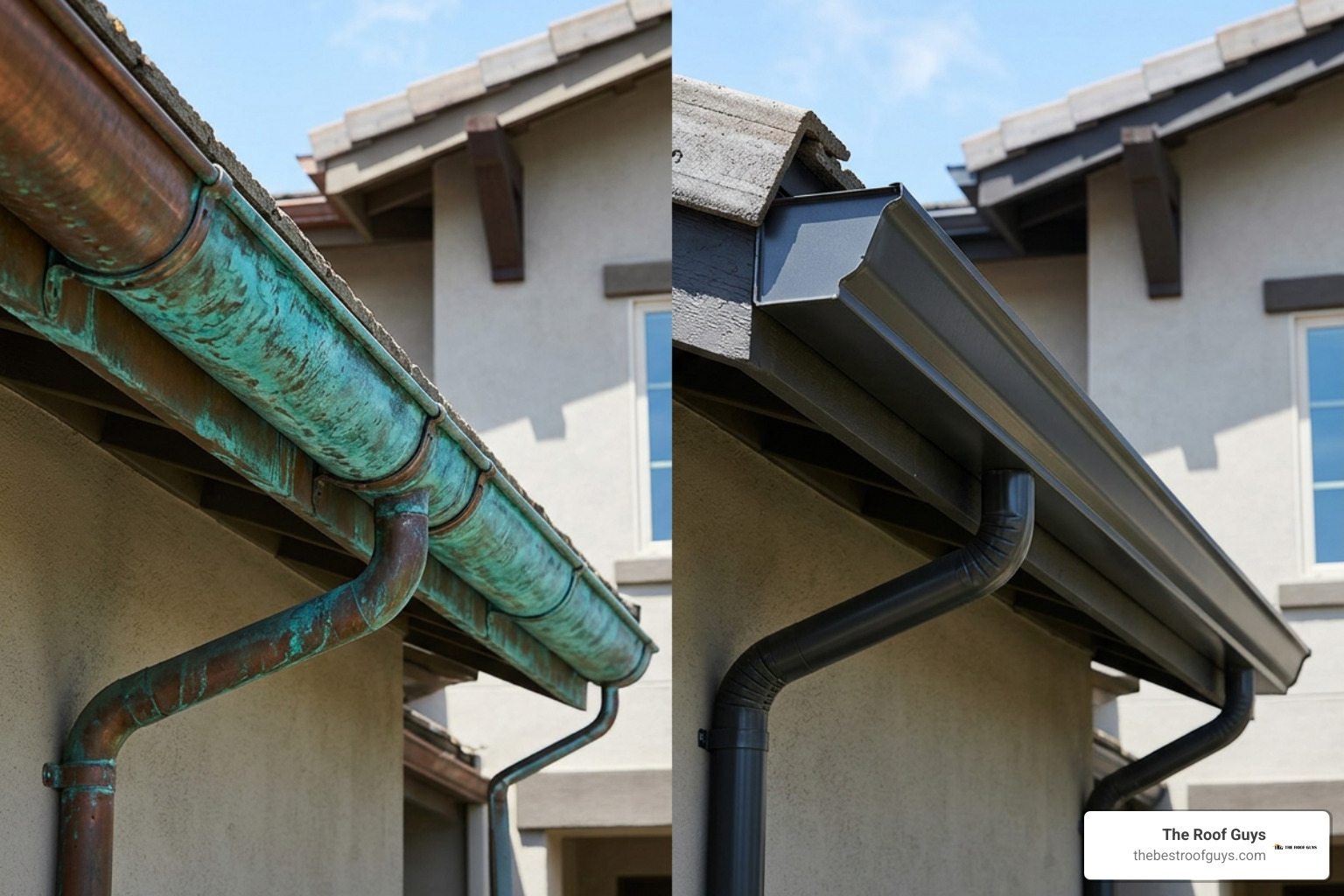
For most residential applications, aluminum gutter installation offers the ideal combination of affordability, strength, and corrosion resistance. Aluminum gutters cost between $13.17 and $34.52 per linear foot installed. Specifying high-grade aluminum with a minimum metal thickness of 0.032 inches prevents sagging under heavy storm runoff and provides decades of rust-free service across humid, coastal, and inland environments.
Heavy-Duty and Premium Metals: Steel, Copper, and Zinc
Heavy-duty metal gutters deliver superior structural performance against hail, high winds, and tree debris. Selecting the best materials to use for gutter installation depends heavily on regional weather challenges and roofing materials:
- Coated Steel: Galvanized or 26-gauge steel roof gutters cost between $16.78 and $37.17 per foot installed. High-performance steel gutters manufactured from Swedish GreenCoat RWS steel feature polymer-grain coatings with zinc applications of 0.90 oz/ft², earning up to 30-year warranties across C1–C4 atmospheric corrosivity environments. Steel is structurally ideal for metal roofing systems because it resists thermal deformation and handles heavy loads without buckling.
- Copper: Copper gutters cost between $29.85 and $51.52 per foot installed and last over 50 years with proper maintenance. Copper never rusts and develops a protective verdigris patina over time, making it an exceptional investment for historic and luxury homes.
- Zinc: Zinc gutters cost between $36.18 and $61.84 per foot installed. Like copper, zinc forms a self-healing patina layer that shields the substrate from atmospheric oxidation, providing maintenance-free protection for up to 80 years.
Sizing and Engineering House Gutter Systems for Storm Performance
Proper gutter engineering requires calculating water volume based on roof square footage, surface pitch, and maximum historical rainfall intensity. Undersized gutters overflow during severe downpours regardless of whether they are clear of debris.

Calculating Catchment Area and Downspout Requirements
Calculating drainage capacity begins by determining the actual roof catchment area. Standard building code provisions for roof drainage require sizing channels according to roof catchment calculations (multiplying gutter length by the distance from ridge to eave) adjusted by roof pitch factors.
Critical structural installation requirements include:
- Slope and Fall: Eave gutters must maintain a minimum fall of 1:500 (or roughly 1/4-inch slope per 10 linear feet) toward the downspout to prevent stagnant pooling and silt accumulation.
- Downspout Spacing: A single downpipe must serve no more than a 12-meter (approx. 40-foot) continuous length of gutter to prevent water buildup during heavy rain events.
- Hanger Intervals: Secure fascia brackets must be spaced at not more than 1.2 meters (roughly 32 inches for aluminum, or 24 inches in areas with heavy loading) along the entire gutter run.
- Overflow Relief Mechanisms: Systems should integrate front bead heights lower than the rear wall or continuous slotted fronts to vent excess water outward rather than backing up behind the fascia into interior walls.
High-Wind and Severe Weather Engineering Standards
High-wind zones require rugged drainage hardware that resists severe uplift forces. Commercial-grade wind-resistant drainage engineering standards tested under ANSI/SPRI GT-1 protocols can withstand wind speeds up to 160 MPH with 30-year performance ratings.
In addition to wind resistance, heavy-duty fascia board hangers can support static weights up to 165 lbs per bracket. This strength prevents system detachment under extreme water loads or debris accumulation, reinforcing total storm preparedness across your entire roofing system.
Essential Maintenance, Debris Protection, and Trouble Prevention
When gutters overflow or clog, standing water saturates perimeter foundation soils. This saturation triggers hydrostatic pressure against foundation footings, causing structural settlement, slab movement, and siding rot. Knowing how gutter installation prevents basement flooding and erosion helps homeowners protect their property value.
Maintaining House Gutter Systems to Prevent Clogs and Foundation Damage
Routine maintenance protects your eaves and foundation against water intrusion. Homeowners should schedule thorough gutter cleanings at least twice a year—once in late spring and again in late autumn. Follow these safe maintenance procedures:
- Use Proper Ladder Safety: Always equip extension ladders with a wide ladder standoff stabilizer resting against the roof decking rather than pressing against soft aluminum gutter edges.
- Clear Downspouts First: Start cleaning at the drop outlet to create an open exit pathway before clearing debris along horizontal channels.
- Flush the Channels: Wash gutters with a garden hose to verify positive drainage toward each downspout drop outlet and check that no water pools in low spots.
- Check Seams and Fasteners: Inspect end caps and miter joints for peeling sealant. Apply dedicated butyl-based gutter caulk from the inside of clean, dry channels to seal minor leaks.
- Prevent Winter Freezing: In colder areas, pairing clean gutters with self-regulating heat cables and adequate attic insulation prevents ice dams from backing up beneath roof shingles. Practicing seasonal gutter maintenance keeps water flowing smoothly throughout the year.
Gutter Guards, Leaf Screens, and Debris Filtration Options
Installing leaf guard gutters helps prevent clogs from leaves, oak tassels, and pine needles. Several filtration options offer distinct performance levels:
- Stainless Steel Micro-Mesh: Medical-grade 14-mesh screens block fine silt and pine needles while allowing high-volume rain to flow freely into the channel. These systems offer the highest protection against clogs.
- Reverse-Curve Surface Tension Guards: Curved metal hoods direct water around the nose into the trough via surface tension while shedding large leaves over the edge.
- Perforated Aluminum Screens: Economical drop-in panels stop broad hardwood leaves but require regular brush maintenance to prevent pine needles from lodging in the perforations.
- Foam and Bristle Inserts: Porous inserts fill the gutter cavity to block leaves, but organic silt and roof grit can build up inside the filter material over time.
DIY vs. Professional Installation: Cost, Labor, and Safety
Homeowners often weigh the upfront savings of a DIY install against the long-term durability of professional work. Understanding why professional gutter installation is crucial helps ensure your home’s foundation stays protected against heavy runoff.
Evaluating Sectional DIY Projects Against Custom Professional Extrusions
DIY gutter projects typically rely on retail sectional vinyl or aluminum kits assembled with slip joints and silicone sealant. While DIY materials cost less upfront, sectional channels create dozens of seam failure points that frequently leak under heavy downpours. In addition, positioning 20-foot ladders on uneven ground and calculating precise 1/4-inch per 10-foot slopes requires specialized tools and poses serious fall hazards.
Our residential gutter installation guide details how professional contractors solve these issues by extruding custom seamless gutters directly on-site. Professional crews use heavy-gauge aluminum or 26-gauge steel, secure internal hidden screw hangers directly into structural rafters, calibrate pitch with precision levels, and back the entire system with comprehensive workmanship warranties.
Frequently Asked Questions about House Gutter Systems
How long do different residential gutter materials typically last?
Vinyl gutters typically last 10 to 15 years before UV degradation and temperature shifts cause cracking. Aluminum systems deliver 20 to 30 years of reliable service. Heavy-duty 26-gauge steel systems with polymer coatings last 30 to 50 years, while copper and zinc gutters can exceed 50 to 80 years of service life.
What size gutters are best for areas with heavy rainfall?
Six-inch K-style gutters paired with 3×4-inch oversized downspouts are recommended for regions prone to intense rainfall and storms. A 6-inch gutter holds nearly 40% more water volume than a standard 5-inch channel, preventing overflowing during severe downpours.
Do gutter guards completely eliminate the need for cleaning?
No gutter guard system completely eliminates the need for periodic inspection. High-quality micro-mesh guards keep out leaves and large debris, but roof grit and pollen require an occasional quick rinse with a hose or light surface brushing to maintain peak drainage.
Conclusion
A well-engineered gutter system provides essential protection for your roof, fascia, siding, and foundation. By pairing durable materials like heavy-gauge seamless aluminum or coated steel with custom-pitch installation, you can protect your home against severe weather, foundation settlement, and soil erosion for decades to come.
When you need dependable, weather-tested drainage solutions tailored to your property, contact the professionals at The Roof Guys for expert gutter solutions to schedule your exterior drainage inspection and protect your home with reliable, high-performance gutter installations.