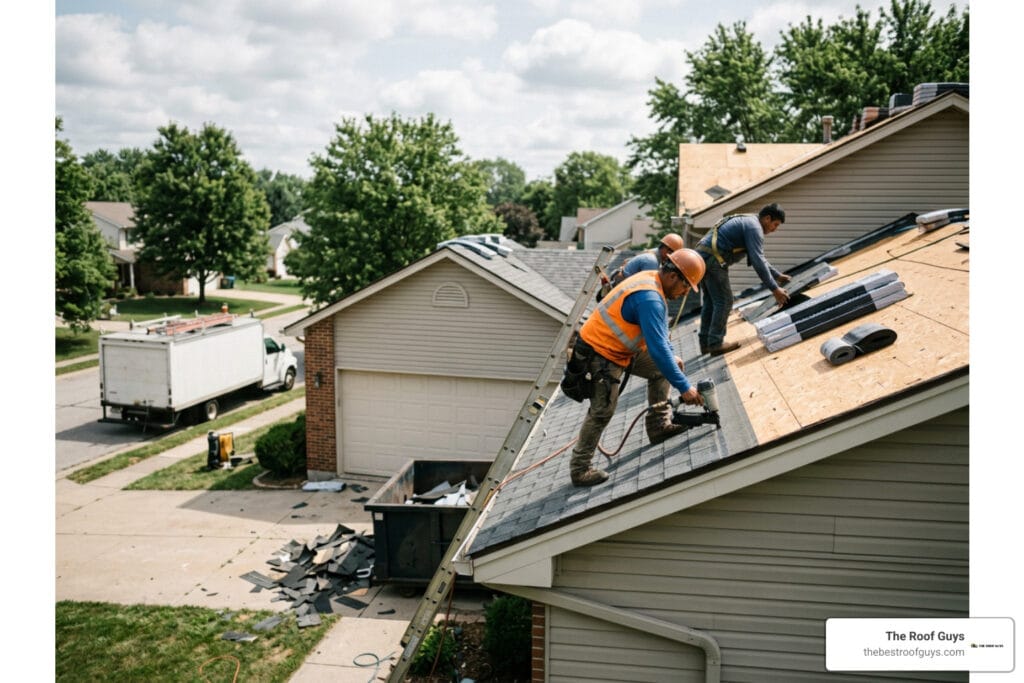
What to Know Before You Compare Roof Replacement Costs
A roof replacement is usually the right call when damage is widespread, leaks keep returning, shingles are failing across several areas, or an asphalt roof is near the end of its 20- to 25-year life. For a typical home in 2026, a full replacement commonly costs $6,000 to $30,000, with an architectural asphalt roof on a 2,000-square-foot house averaging about $11,000.
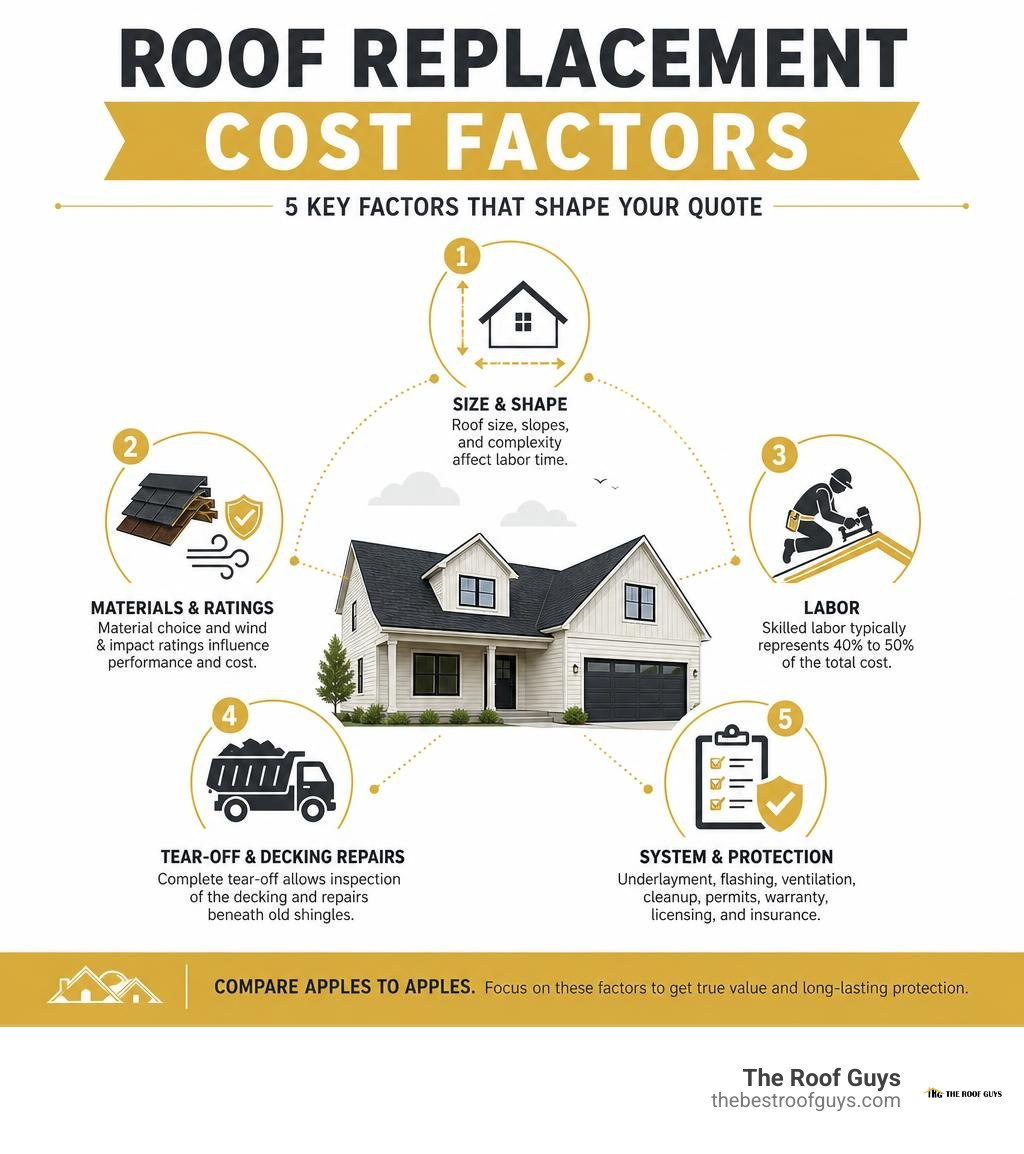
Before choosing a bid, compare the same core items:
- Roof size and shape – Steep slopes, valleys, dormers, and skylights raise labor time.
- Materials and ratings – In Texas and Oklahoma, wind and Class 4 impact ratings can matter as much as shingle color.
- Tear-off and decking repairs – A complete tear-off lets the crew find rot or damage beneath old shingles.
- System details – Quotes should state the underlayment, flashing, ventilation, cleanup, permits, and warranty.
- Contractor protection – Verify licensing where required, insurance, local experience, written scope, and workmanship coverage.
Labor often represents 40% to 50% of the project total, so the lowest estimate is not always the best value. Start with a detailed inspection and roof replacement guidance from The Roof Guys before deciding whether a repair can safely solve the problem.
I am Cash Walker, part of the leadership team at The Roof Guys, a Greater Houston roofing company with more than 30 years of industry experience. Our team focuses on close jobsite supervision, quality workmanship, and roof replacement solutions built for severe Gulf Coast weather.
Easy roof replacement glossary:
Repair vs. Full Teardown: Evaluating Roof Condition
Deciding whether to patch a leak or tear off the entire roof comes down to structural integrity, age, and long-term expenses. When an asphalt shingle roof surpasses 20 years of service, the underlying components degrade even if surface shingles appear intact from the lawn.
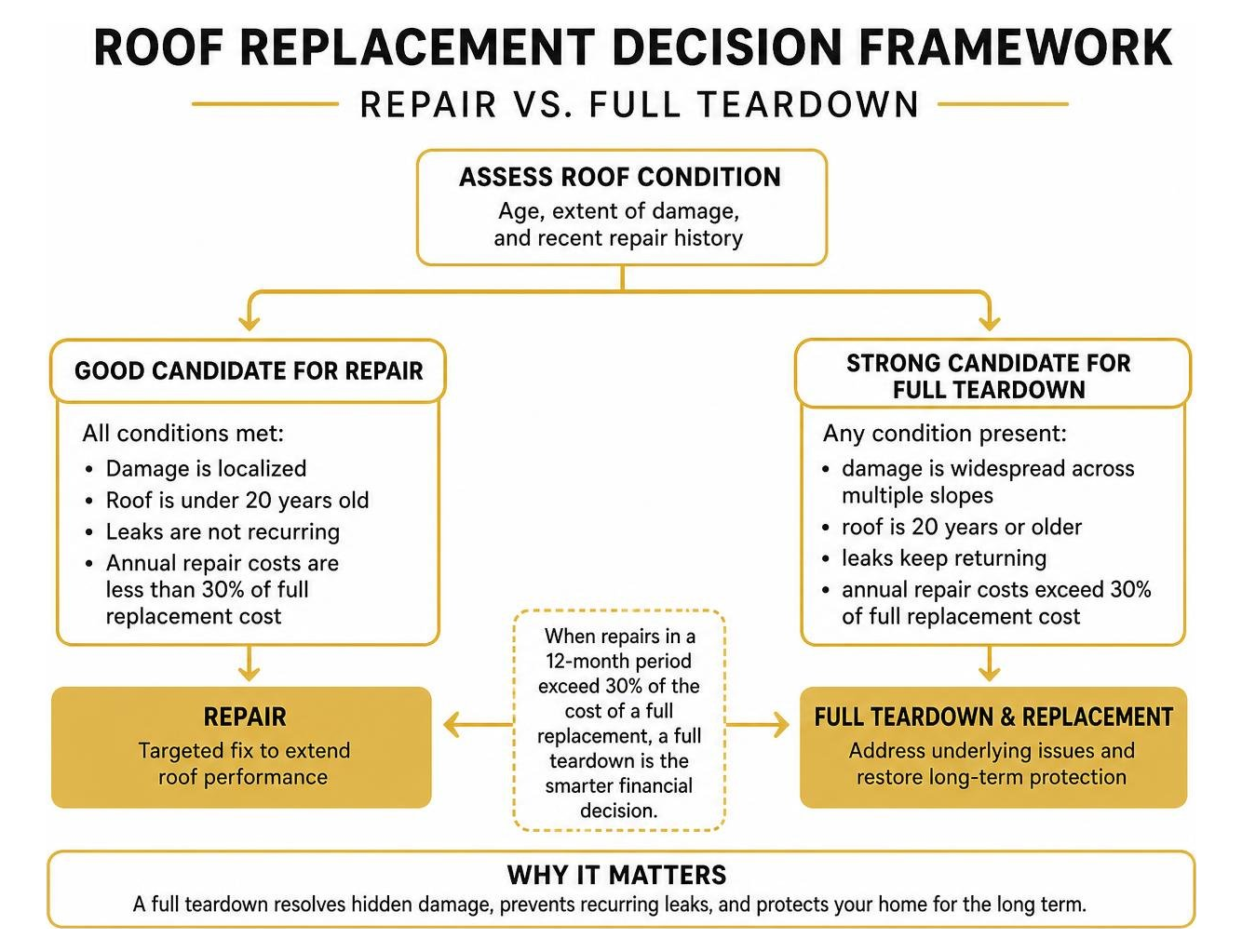
As a definitive rule of thumb, when cumulative repairs within a 12-month period exceed 30% of the cost of a complete replacement, full teardown is the smarter financial move. Spot repairs on an aging system create temporary fixes that leave the home vulnerable to recurring attic leaks, mold colonization, and wooden deck rot. Reviewing our checklist of signs you need roof replacement helps pinpoint subtle indicators—such as heavy granule accumulation in your gutters or minor attic decking discoloration—before small leaks turn into structural failures.
Critical Signs That Warrant a Roof Replacement
Visible damage across multiple slopes signals that the protective waterproofing layers have failed. Key structural indicators that require a complete rebuild include:
- Attic Daylight and Water Infiltration: Beams of sunlight penetrating attic rafters or localized water staining on ceilings point to compromised underlayment.
- Granule Loss and Bald Shingles: Bare fiberglass backing exposed by intense southern sun and hail abrasion accelerates shingle deterioration.
- Curled, Cupped, or Missing Tabs: Shingles lifting along edges break the adhesive seal, allowing wind-driven rain to push beneath the deck.
- Structural Sagging: Depressions or dips along roof valleys and rafter lines indicate rotted decking or compromised structural framing.
When evaluating roof replacement vs roof repair, systemic issues across 20% or more of the total roof surface warrant an immediate full system replacement to preserve interior drywall and foundation stability.
Tear-Off vs. Layover Shingle Installation
Installing a new layer of shingles over an old roof (a layover or overlay) saves $2,000 to $4,000 in upfront tear-off labor and dumpster fees, but it creates significant hidden costs.
Building codes limit residential rooftops to a maximum of two layers. Adding a second layer traps heat, accelerating shingle degradation while preventing our crews from inspecting the wooden decking underneath for soft spots and rot. Complete tear-offs ensure that modern synthetic barriers, leak barriers, and flashing are fastened directly to clean decking.
Primary Factors Driving Total Roof Replacement Cost in 2026
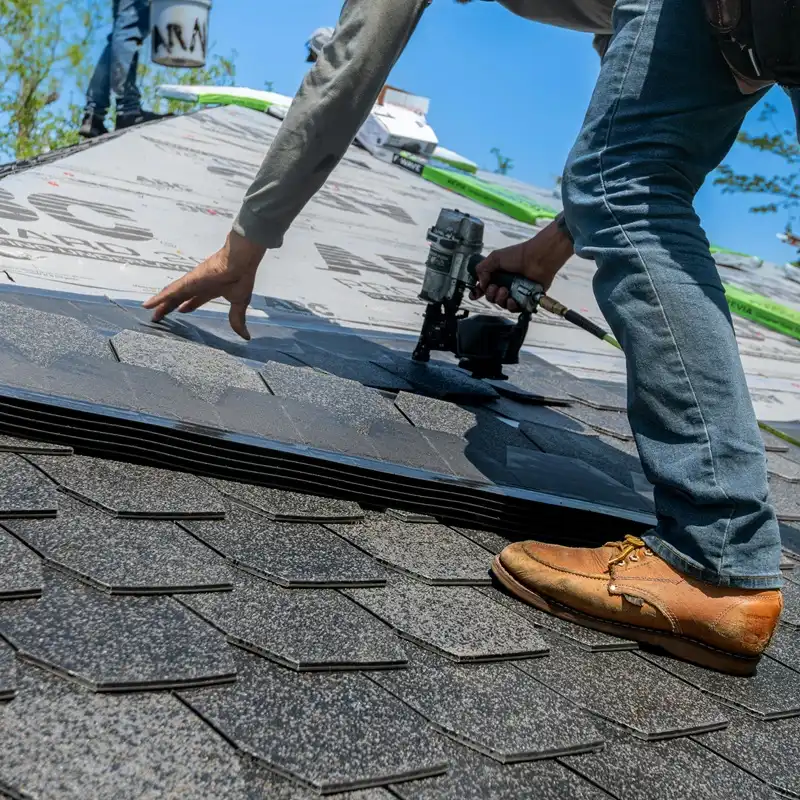
A full roof replacement costs $9,500 on average across the United States, with a typical range spanning from $5,800 to $46,000. In 2026, labor accounts for 40% to 50% of the total quote, materials account for 30% to 40%, and the remaining 10% to 20% covers disposal, dumpster fees, local municipal permits (which range up to $500), and code inspections.
Comprehensive pricing insights detailed in the Roof Replacement Pricing Guide 2026 highlight how market labor fluctuations drive regional price variances. Roofing labor runs between $40 and $90 per hour per worker. In Texas markets like Houston, Pasadena, Conroe, and The Woodlands, high-wind compliance requirements and specialized ventilation demands shape overall material and labor budgets.
How Architectural Complexity and Roof Pitch Affect Labor
Roofing contractors measure roofs in “squares,” where one square equals 100 square feet of roof surface. Because of slope angles and eaves, a 2,000-square-foot home footprint often requires 24 to 30 squares of roofing material.
Steep roof pitches exceeding 7:12 require specialized safety ropes, staging brackets, and slower installation tempos. According to data on Roof Pitch and Geometry Cost Factors, steep pitches add 20% to 50% in labor surcharges. Complex architecture with multiple intersecting roof planes, deep valleys ($500–$1,000 each), dormers ($1,000–$2,000 each), and skylight integration ($300–$600 each) increases flashing labor. Homeowners can estimate these geometric variances using a specialized roof replacement cost calculator before requesting on-site bids.
What a Comprehensive Roof Replacement Quote Includes
A professional, transparent quote details the total system build. Understanding the complete roof replacement process ensures you verify these mandatory line items:
- Complete Tear-Off & Waste Disposal: Removal of old layers, hauled away in dedicated dumpsters.
- Decking Replacement Allowance: Explicit per-sheet pricing ($75 to $100 per 4×8 sheet of OSB or CDX plywood) for rotted wood replacement.
- Secondary Water Barrier / Underlayment: Heavy-duty synthetic underlayment across all decking, plus self-adhering ice-and-water leak barriers in valleys and eaves.
- Metal Drip Edge: Corrosion-resistant perimeter flashing installed along eaves and rakes to guide water into gutters.
- Flashing Packages: New step and counter flashing around brick chimneys, sidewalls, and plumbing pipe boot vents.
- Attic Ventilation Components: Installation of continuous ridge vents and intake soffits to maintain balanced airflow.
- Cleanup and Magnetic Sweeps: Thorough clearing of landscaping and multiple magnetic sweeps of driveways and turf for stray fasteners.
Material Cost Comparison and Long-Term Value
Evaluating material selection requires looking beyond initial price tags to consider cost per year of service. Premium materials carry higher upfront costs but lower annual maintenance over their operating lifespan.
| Roofing Material | Cost Per Square (100 sq ft) | Average Lifespan | Annualized Cost per Year |
|---|---|---|---|
| 3-Tab Asphalt Shingles | $80 – $130 | 15 – 20 Years | $470 – $570 / yr |
| Architectural Shingles | $100 – $200 | 25 – 30 Years | $370 – $500 / yr |
| Standing-Seam Metal | $400 – $800 | 40 – 75 Years | $340 – $550 / yr |
| Clay / Concrete Tile | $300 – $1,100 | 40 – 50+ Years | $350 – $600 / yr |
| Natural Slate | $600 – $1,600 | 50 – 100+ Years | $280 – $680 / yr |
Reviewing options for choosing the right materials for your roof replacement project confirms that architectural asphalt shingles and standing-seam metal provide the best balance of weather performance and cost-per-year value for residential homes.
Roofing Durability Ratings: Wind, Fire, and Impact Standards
Modern roofing products undergo rigorous standardized testing to measure their ability to withstand severe storms:
- Wind Resistance (ASTM D 7158): Class D is rated up to 90 mph, Class G up to 120 mph, and Class H up to 150 mph. Class H ratings offer maximum defense against tropical wind gusts and severe thunderstorms.
- Fire Resistance (UL 790 / ASTM E 108): UL Class A represents the highest level of fire resistance, preventing fire penetration into the attic space.
- Impact Resistance (UL 2218 / FM 4473): Tests classify shingle toughness from Class 1 to Class 4 by dropping steel balls from elevated heights. Class 4 impact-resistant shingles withstand 2-inch hail impacts without cracking the underlying mat. Installing Class 4 rated shingles can earn homeowners discounts on their annual property insurance premiums.
Solar Panels, Regional Climates, and System Integration
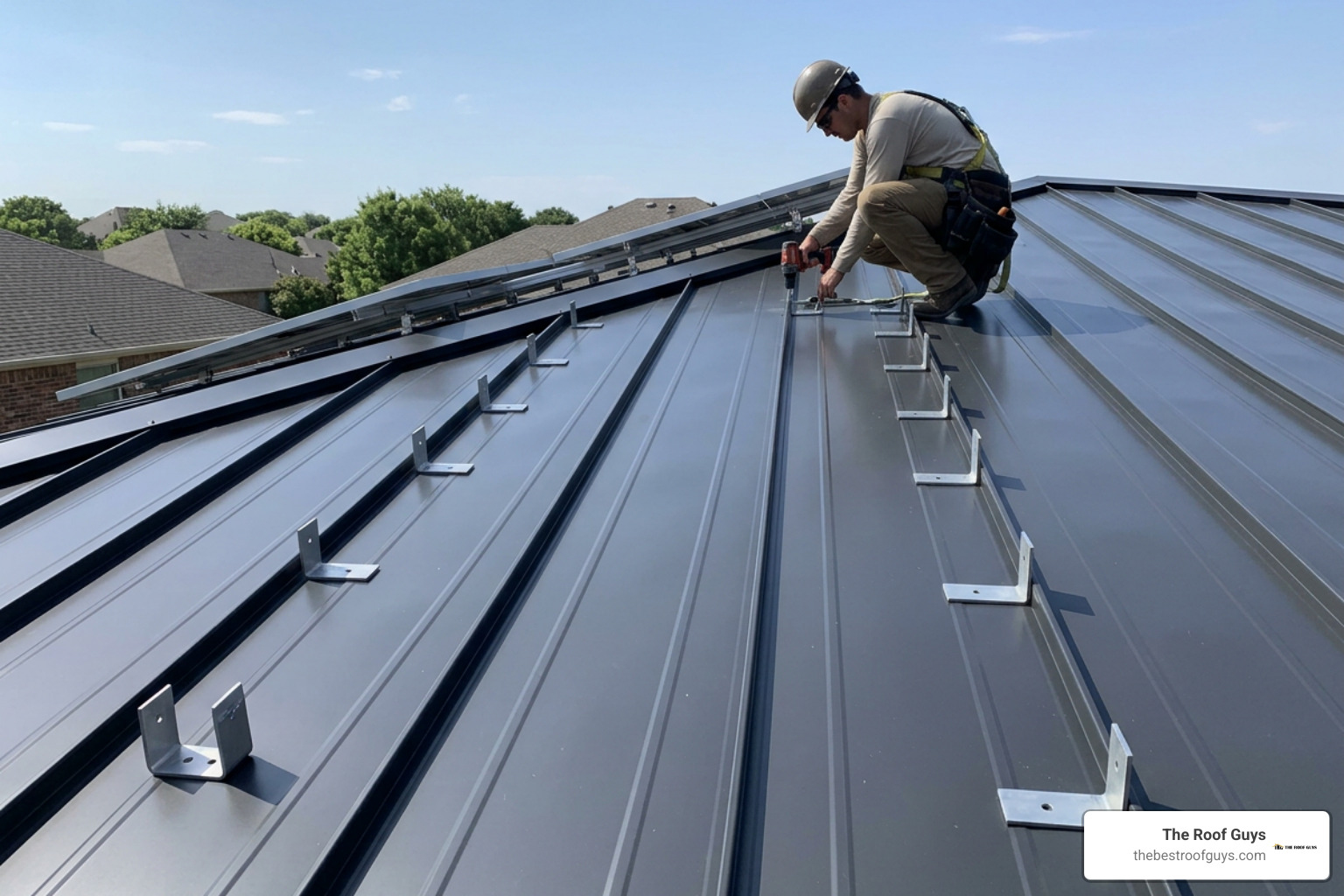
Integrating solar arrays requires specialized coordination during a roof overhaul. Solar panels cannot remain on the roof during a tear-off; the entire array must be detached, safely stored, and reinstalled after new shingles or metal panels are secured. Every solar bracket penetration must be flashed directly into the secondary water barrier to avoid concealed water leaks.
Regional climate factors dictate material performance. In warm, sunny regions, solar heat and high humidity quickly break down organic felt underlayment, making synthetic underlayment and UV-reflective cool shingles the preferred choice. Balanced attic ventilation—combining soffit intake vents with continuous ridge exhaust vents—lowers attic temperatures, reduces household air conditioning loads, and prevents premature shingle blistering.
Insurance Claims, Financing Options, and Contractor Vetting
Homeowners insurance policies cover sudden, accidental storm damage resulting from hail, windstorms, and falling trees, but exclude normal wear, age deterioration, and deferred maintenance. Hail damage creates subtle bruising and granule loss on shingle mats that can go unnoticed from the ground while breaking the fiberglass waterproofing core.
Understanding the difference between Actual Cash Value (ACV) and Replacement Cost Value (RCV) policies is crucial:
- Actual Cash Value (ACV): Pays the depreciated value of your aged roof at the time of loss, requiring the homeowner to cover depreciation out of pocket.
- Replacement Cost Value (RCV): Covers the full cost to replace the roof with materials of like kind and quality in 2026, disbursed in two stages (the initial ACV check followed by the recoverable depreciation payment once work is completed).
Never work with contractors who offer to waive or absorb your insurance deductible. In Texas, waiving insurance deductibles is illegal under Texas Insurance Code Chapter 707 and constitutes insurance fraud.
For projects not covered by insurance, payment options include Home Equity Lines of Credit (HELOCs), fixed-rate personal loans, and contractor financing plans with predictable monthly terms.
Questions to Ask Before Signing a Roofing Contract
Vetting your contractor thoroughly protects your investment and prevents unexpected liens. Key questions to ask include:
- Are you licensed and locally insured? Request proof of general liability insurance ($1,000,000 minimum) and full workers’ compensation coverage.
- Will you provide a signed lien waiver? A lien waiver ensures you are not held financially liable if the contractor fails to pay suppliers or subcontractors.
- What manufacturer certifications do you hold? Certified installers provide extended manufacturer warranties covering materials and non-prorated labor.
- What is your workmanship warranty? Material warranties do not cover installation errors. A solid 10-year contractor workmanship warranty provides essential protection against installation leaks.
Working through the advantages of working with local roofing contractors gives you access to physical business locations, established community reputations, and responsive warranty service.
Frequently Asked Questions About Modern Roofing
How long does a residential reroofing project take?
The physical tear-off and installation for a standard 2,000-square-foot home takes 1 to 3 working days with an experienced crew. Complex roofs with steep pitches, multiple valleys, skylights, or solar panel remounts take 3 to 5 days. From initial inspection, quote approval, permitting, and material delivery, the typical homeowner project timeline spans 2 to 4 weeks.
Does a new roof installation increase property value?
A new architectural asphalt shingle roof recovers roughly 60% to 70% of its initial cost in immediate resale value, while premium metal roofing recovers 70% to 85%. Installing a new roof enhances curb appeal, eliminates home inspection concerns for buyers, and can lower homeowner insurance premiums through updated wind-mitigation and impact ratings.
What is the difference between ACV and RCV insurance coverage?
Actual Cash Value (ACV) reimburses only the depreciated value of the roof based on its age, leaving homeowners to fund the remaining balance. Replacement Cost Value (RCV) pays the full current cost to replace the damaged roof with comparable new materials, minus your policy’s deductible.
Conclusion
A successful roof replacement requires selecting durable materials, verifying critical wind and impact ratings, and partnering with an established, insured contractor. Focusing on the annualized cost of ownership rather than solely the lowest bid ensures your home remains protected against severe weather for decades to come.
The Roof Guys brings over 30 years of hands-on expertise to residential installations throughout Houston, Pasadena, Conroe, and The Woodlands. Every full replacement we install includes a backed 10-year workmanship warranty, direct site supervision, and premium weatherproofing systems. Contact our team to schedule your comprehensive on-roof assessment today.