
Flat Roof Systems in Texas & Oklahoma
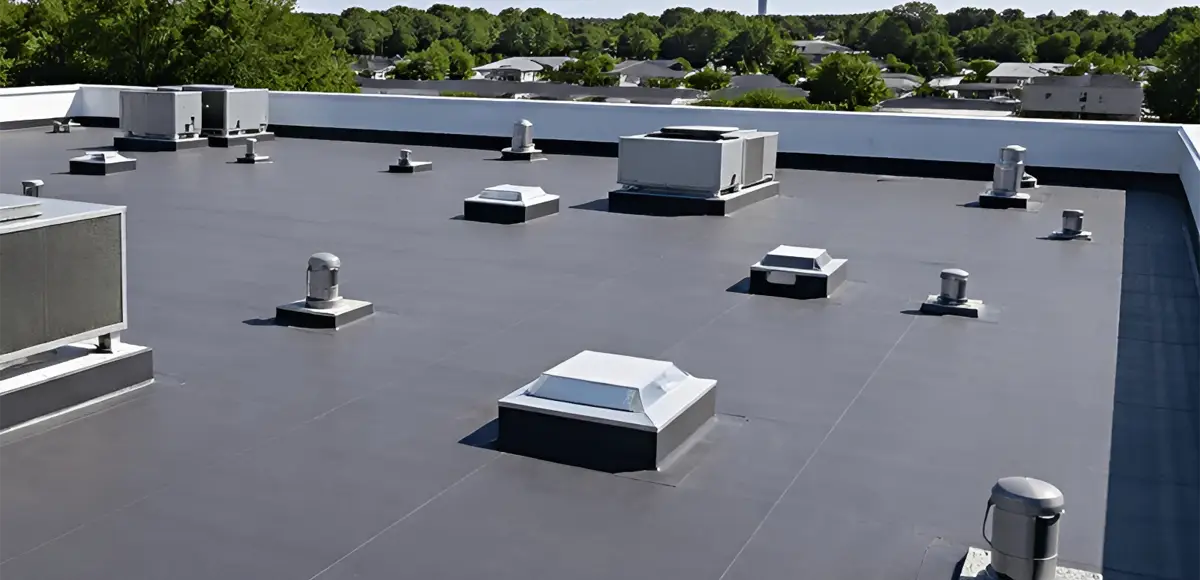
Commercial buildings across Texas and Oklahoma rely on durable, professionally installed flat roof systems to protect daily operations, employees, equipment, and valuable assets. From large warehouses and office complexes to retail centers and industrial facilities, flat roofing assemblies are the foundation of modern commercial construction throughout the region.
At The Roof Guys, we design, install, repair, and maintain flat roof systems engineered to withstand the demanding climate conditions across Texas and Oklahoma, including extreme heat, UV exposure, heavy rainfall, hailstorms, and strong winds.
According to industry data published by the National Roofing Contractors Association (NRCA), low-slope roofing systems account for the majority of commercial roof installations in North America, particularly for buildings with large square footage.
What Is a Commercial Flat Roof System?
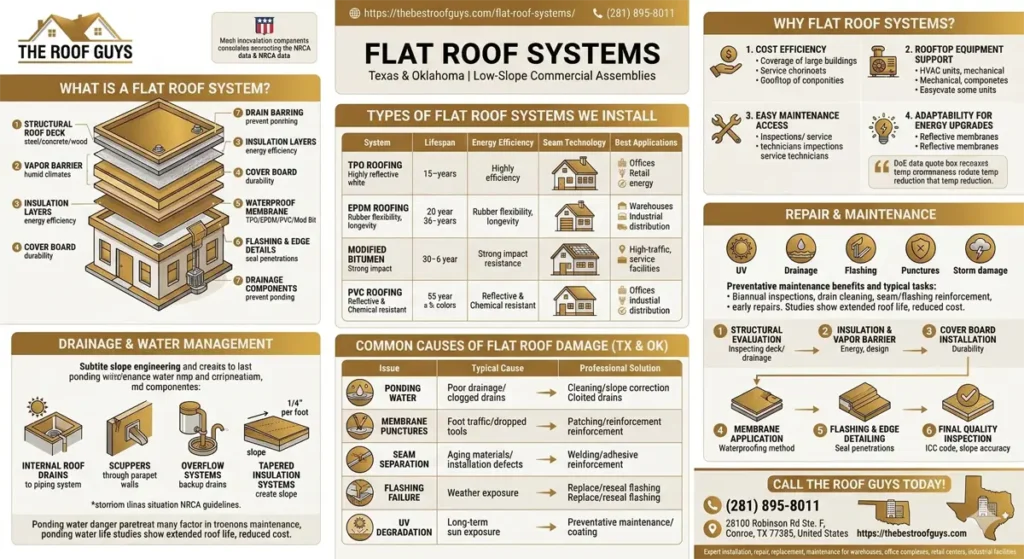
A flat roof system is much more than the outer roofing membrane. It is a layered assembly engineered to provide waterproofing, insulation, structural support, and drainage for commercial buildings. Each component works together to protect the building envelope and maintain interior climate stability.
A typical commercial flat roof system includes:
- Structural Roof Deck: The structural deck forms the base of the roofing assembly and supports all roofing materials above it. Decks are typically constructed from steel, concrete, or wood depending on the building design.
- Vapor Barrier (When Required): A vapor barrier helps control moisture movement between the building interior and the roofing system. In humid regions like Texas and Oklahoma, vapor control can play an important role in preventing condensation inside the roofing assembly.
- Insulation Layers: Insulation improves energy efficiency by reducing heat transfer through the roof. Proper insulation also helps maintain stable interior temperatures and can reduce cooling costs in hot climates.
- Cover Board: Cover boards add durability and protect the insulation layer from foot traffic, mechanical equipment servicing, and weather exposure.
- Waterproof Membrane: The membrane acts as the primary waterproof barrier. Common membrane options include TPO, EPDM, PVC, and modified bitumen systems.
- Flashing and Edge Details: Flashing seals roof penetrations such as vents, HVAC equipment, and skylights, preventing water intrusion at vulnerable areas.
- Drainage Components: Drainage systems, including drains, scuppers, and tapered insulation, direct water off the roof and prevent ponding.
Failure in any of these layers can compromise the entire roofing system.
In the climate conditions common across Texas and Oklahoma, where roofs are exposed to intense sunlight and heavy seasonal storms, proper system design and installation are essential for long-term durability.



Types of Flat Roof Systems We Install
TPO (Thermoplastic Polyolefin) roofing systems are one of the most widely installed commercial roofing membranes in the United States.
Key advantages include:
- reflective white surfaces that reduce solar heat absorption
- heat-welded seams for strong waterproof protection
- lightweight installation for large commercial roofs
- resistance to UV exposure and chemical contaminants
TPO roofing is commonly selected for office buildings, retail centers, and large commercial properties seeking energy-efficient roofing systems.
EPDM roofing systems use a synthetic rubber membrane known for flexibility and longevity.
EPDM roofs are often chosen for:
- warehouses
- industrial facilities
- distribution centers
- large commercial buildings
EPDM systems are particularly valued for their ability to remain flexible during extreme temperature changes, which helps prevent cracking or membrane fatigue. Properly maintained EPDM roofs frequently last 25–30 years.
Modified bitumen roofing systems use multiple layers of asphalt-based materials reinforced with fiberglass or polyester.
These systems are designed to provide:
- strong impact resistance
- durability in high-traffic areas
- multi-layer waterproof protection
- enhanced membrane thickness
Modified bitumen is often installed on commercial buildings where roof traffic is frequent, such as service facilities or buildings with extensive rooftop equipment.
The selection of a flat roof system depends on building use, insulation requirements, climate exposure, and long-term budget goals.
Why Flat Roof Systems Are Ideal for Texas & Oklahoma Commercial Properties
Flat and low-slope roof systems are widely used across Houston, Conroe, The Woodlands, Oklahoma City, and other commercial hubs because they offer practical advantages for large commercial structures.
- Cost Efficiency for Large Buildings: Commercial properties often span thousands of square feet. Flat roof systems allow for efficient coverage of large surface areas, making them cost-effective compared to steep-slope alternatives.
- Structural Support for Rooftop Equipment: HVAC units, mechanical systems, and ventilation equipment are typically installed on flat commercial roofs. Properly engineered systems distribute weight evenly and maintain structural integrity.
- Accessibility for Maintenance: Flat roof systems provide easier access for inspections and service technicians, reducing maintenance complexity.
- Adaptability for Energy Upgrades: Flat roofs can accommodate reflective membranes, insulation upgrades, and solar installations, improving long-term energy performance.
The U.S. Department of Energy reports that reflective roofing materials can reduce rooftop temperatures by up to 50–60°F compared to darker roofing systems, helping improve building energy efficiency.
Drainage & Water Management in Texas & Oklahoma Flat Roof Systems
Drainage design is one of the most critical performance factors for flat roof systems across Texas and Oklahoma, where severe thunderstorms and heavy rainfall are common. Although flat roofs appear level, they are engineered with subtle slopes, typically ¼ inch per foot, to direct water toward drainage points.
Key drainage components include:
- Internal Roof Drains: Internal drains direct water into the building’s drainage piping system and are commonly used on large commercial roofs.
- Scuppers: Scuppers allow water to exit through openings in parapet walls, providing additional drainage pathways.
- Overflow Systems: Overflow drains prevent structural damage if primary drainage systems become clogged.
- Tapered Insulation Systems: Tapered insulation creates gradual slopes that help guide water toward drains and prevent ponding.
Ponding water is one of the leading causes of membrane deterioration, seam failure, and structural stress in flat roofing systems. Industry guidelines from the National Roofing Contractors Association (NRCA) emphasize proper drainage design and regular maintenance for long-term performance.
Common Causes of Flat Roof Damage in Texas & Oklahoma
Commercial roofs across Texas and Oklahoma are exposed to extreme heat, hailstorms, and severe thunderstorms. Understanding common roofing problems helps building owners identify issues early and schedule timely repairs.
Roofing Issue | Typical Cause | Professional Solution |
Ponding Water | Poor drainage or clogged drains | Drain cleaning and slope corrections |
Membrane Punctures | Foot traffic or dropped tools | Membrane patching and reinforcement |
Seam Separation | Aging materials or installation defects | Seam welding or adhesive reinforcement |
Flashing Failure | Weather exposure around roof penetrations | Replace or reseal flashing |
UV Degradation | Long-term sun exposure | Preventative maintenance and coating |
Comparison of Common Flat Roof Systems for Commercial Buildings
Different flat roofing systems provide different performance advantages depending on building use, climate exposure, and budget considerations. The table below compares the most common commercial flat roof systems installed across Texas and Oklahoma.
Roofing System | Typical Lifespan | Energy Efficiency | Seam Technology | Best Applications |
TPO Roofing | 20–30 years | Highly reflective | Heat-welded seams | Retail centers, offices, warehouses |
EPDM Roofing | 25–30 years | Moderate (black membrane) | Adhesive or taped seams | Industrial buildings and distribution centers |
Modified Bitumen | 20–25 years | Moderate | Torch or adhesive applied seams | High-traffic commercial roofs |
PVC Roofing | 20–30 years | Reflective and chemical resistant | Heat-welded seams | Restaurants and facilities with grease exhaust |
Our Flat Roof System Installation Process
Installing a commercial flat roof system requires precise coordination between structural design, insulation placement, and membrane installation.
- Structural Evaluation: Every project begins with a detailed roof inspection to evaluate deck condition, insulation needs, and drainage layout. This step ensures the new roofing system is properly engineered for the building.
- Insulation & Vapor Barrier Placement: Insulation improves energy efficiency and supports membrane performance. Vapor barriers may be installed depending on building design.
- Cover Board Installation: Cover boards increase durability and protect insulation layers from mechanical damage, foot traffic, and weather exposure.
- Membrane Application: The selected membrane is installed using manufacturer-approved techniques to ensure waterproofing performance.
- Flashing & Edge Detailing: Critical areas such as roof penetrations, edges, and drainage points are carefully sealed using flashing materials.These areas are often the most vulnerable to leaks if not properly installed.
- Final Quality Inspection: We verify seam integrity, slope accuracy, and code compliance according to standards set by the International Code Council (ICC).
Why Choose The Roof Guys
Businesses across Texas and Oklahoma trust The Roof Guys for professionally engineered flat roof systems designed to handle extreme heat, heavy rain, hailstorms, and strong winds. Our experienced commercial roofing team installs and maintains durable low-slope roofing systems that protect warehouses, office buildings, retail centers, and industrial facilities.
- Experienced Flat Roofing Specialists: Our team has extensive experience installing and servicing TPO, EPDM, modified bitumen, and other commercial flat roof systems. We evaluate each building’s structure, insulation needs, and drainage design to recommend the most effective roofing solution.
- Designed for Texas & Oklahoma Climate Conditions: Flat roof systems in this region must withstand intense UV exposure, high temperatures, humidity, and seasonal storms. We install roofing systems engineered to resist thermal expansion, ponding water, and storm-related damage.
- Complete Commercial Roofing Solutions: From roof inspections and preventative maintenance to repairs and full roof replacement, we provide comprehensive services to support every stage of your commercial roofing system’s lifecycle.
- Code-Compliant Installation Standards: Our installations follow manufacturer guidelines and industry standards to ensure proper membrane performance, drainage efficiency, and long-term durability.
- Clear Inspections & Transparent Estimates: We provide detailed roof evaluations and clear recommendations so property owners understand the condition of their roof and the best solutions for protecting their building.
View our completed roofing projects in our project gallery and read real customer feedback on our testimonials page and Google Business Profile.
Areas We Serve
Licensed Commercial & Residential Roofing Contractor
The Roof Guys – quality materials, expert service, and lasting protection guaranteed.
Flat Roof System Repair & Replacement
Over time, flat roof systems may require professional service due to weather exposure, aging materials, or structural changes. Common reasons for repair include:
- UV Degradation: Continuous sun exposure can gradually weaken roofing membranes over time.
- Drainage Issues: Blocked drains or poor slope design can cause ponding water, which accelerates membrane deterioration.
- Flashing Failure: Flashing around vents or rooftop equipment can deteriorate and allow water intrusion.
- Membrane Punctures: Foot traffic, tools, or mechanical servicing can puncture the membrane.
- Storm Damage: Texas and Oklahoma frequently experience hailstorms, high winds, and heavy rain, which can damage commercial roofs.
Our roof repair services address localized issues before they develop into larger structural problems. When a roofing system reaches the end of its service life, our roof replacement services restore complete waterproof protection.
For storm-related concerns, explore our:
- storm damage roofing services
- hail damage roof repair
- Hurricane damage roof repair
- wind damage roof repair
- emergency roofing
Preventative Maintenance for Flat Roof Systems
Preventative roof maintenance is essential for commercial roofs exposed to the extreme climate conditions of Texas and Oklahoma. Routine maintenance helps detect small problems early and significantly extends system lifespan.
Our maintenance programs typically include:
- Biannual Roof Inspections: Regular inspections help identify seam wear, flashing damage, or membrane issues before leaks develop.
- Drain Cleaning & Debris Removal: Keeping drainage systems clear prevents water buildup and structural stress.
- Seam & Flashing Reinforcement: Critical waterproofing areas are reinforced to maintain system integrity.
- Early-Stage Membrane Repairs: Minor damage can often be repaired quickly before it spreads.
Studies from commercial roofing industry groups show that routine maintenance can extend roof life by several years while reducing emergency repair costs.
What Our Clients Are Saying
We believe the best proof of our service comes directly from the homeowners, businesses, and property managers we proudly serve.
Get Reliable Flat Roof Systems for Your Commercial Property in Texas & Oklahoma
Protect your commercial building with a professionally engineered flat roof system designed for the demanding climate conditions across Texas and Oklahoma. The Roof Guys provide expert flat roof installation, repair, replacement, and maintenance for warehouses, office buildings, retail centers, and industrial facilities. Our experienced commercial roofing contractors install durable low-slope roofing systems such as TPO, EPDM, and modified bitumen built to withstand extreme heat, heavy rain, hailstorms, and strong winds while delivering long-term waterproof protection.
Call The Roof Guys today at (281) 895-8011 to schedule your free roof inspection and flat roofing estimate, and ensure your commercial property is protected with a high-performance roofing system built to last.
The Roof Guys
Business Hours
Monday: Open 24 hours
Tuesday: Open 24 hours
Wednesday: Open 24 hours
Thursday: Open 24 hours
Friday: Open 24 hours
Saturday: Open 24 hours
Sunday: Open 24 hours
Frequently Asked Questions
A flat roof system is a complete roofing assembly designed for low-slope commercial buildings. It includes the structural deck, insulation layers, vapor barriers, waterproof membrane (such as TPO, EPDM, or modified bitumen), flashing, and drainage components that work together to protect the building from water intrusion and weather exposure.
Most commercial flat roof systems last 20–30 years, depending on the roofing material, installation quality, and maintenance schedule. Regular inspections are especially important in Texas and Oklahoma due to high UV exposure, heat, and severe storm activity.
The best flat roofing system depends on your building’s structure and performance needs. Many commercial properties choose TPO roofing for energy efficiency, EPDM for durability and flexibility, or modified bitumen for impact resistance, especially in areas that experience heavy storms.
Flat roofs are widely used for commercial buildings because they are cost-efficient for large structures, easier to maintain, and provide space for rooftop equipment such as HVAC systems. They also allow for energy upgrades like reflective roofing membranes or solar panel installations.
Flat roofs are engineered with subtle slopes, typically about ¼ inch per foot, to direct water toward drains and scuppers. Proper drainage design helps prevent ponding water and protects the roofing system during heavy rain events common in the region.
Flat roof systems should be inspected at least twice per year and after severe storms. Regular inspections help identify issues like seam wear, flashing damage, drainage blockages, or membrane punctures before they lead to leaks.
Common issues include ponding water, seam separation, flashing deterioration, membrane punctures, and UV damage. Many of these problems can be prevented or corrected early with routine maintenance and professional roof inspections.
Yes. Many flat roof systems can be repaired if the damage is localized. Professional repairs may include membrane patching, seam reinforcement, flashing repair, or drainage corrections, which can extend the roof’s lifespan without requiring full replacement.
Commercial flat roof systems typically cost between $5 and $12+ per square foot, depending on the roofing material, insulation requirements, building size, and installation complexity. A professional roof inspection helps determine the most accurate estimate for your property.
How Can We Help?



Our Roofing Services
Why Choose The Roof Guys
Businesses across Texas and Oklahoma trust The Roof Guys for professionally engineered flat roof systems designed to handle extreme heat, heavy rain, hailstorms, and strong winds. Our experienced commercial roofing team installs and maintains durable low-slope roofing systems that protect warehouses, office buildings, retail centers, and industrial facilities.
- Experienced Flat Roofing Specialists: Our team has extensive experience installing and servicing TPO, EPDM, modified bitumen, and other commercial flat roof systems. We evaluate each building’s structure, insulation needs, and drainage design to recommend the most effective roofing solution.
- Designed for Texas & Oklahoma Climate Conditions: Flat roof systems in this region must withstand intense UV exposure, high temperatures, humidity, and seasonal storms. We install roofing systems engineered to resist thermal expansion, ponding water, and storm-related damage.
- Complete Commercial Roofing Solutions: From roof inspections and preventative maintenance to repairs and full roof replacement, we provide comprehensive services to support every stage of your commercial roofing system’s lifecycle.
- Code-Compliant Installation Standards: Our installations follow manufacturer guidelines and industry standards to ensure proper membrane performance, drainage efficiency, and long-term durability.
- Clear Inspections & Transparent Estimates: We provide detailed roof evaluations and clear recommendations so property owners understand the condition of their roof and the best solutions for protecting their building.
View our completed roofing projects in our project gallery and read real customer feedback on our testimonials page and Google Business Profile.
The Roof Guys
Business Hours
Monday: Open 24 hours
Tuesday: Open 24 hours
Wednesday: Open 24 hours
Thursday: Open 24 hours
Friday: Open 24 hours
Saturday: Open 24 hours
Sunday: Open 24 hours

Get Started
Have questions about your roof? Ready to start your next roofing project? Whether you’re dealing with storm damage, a leaky roof, or planning a complete roof replacement, our team is here to help.
How Can We Help?