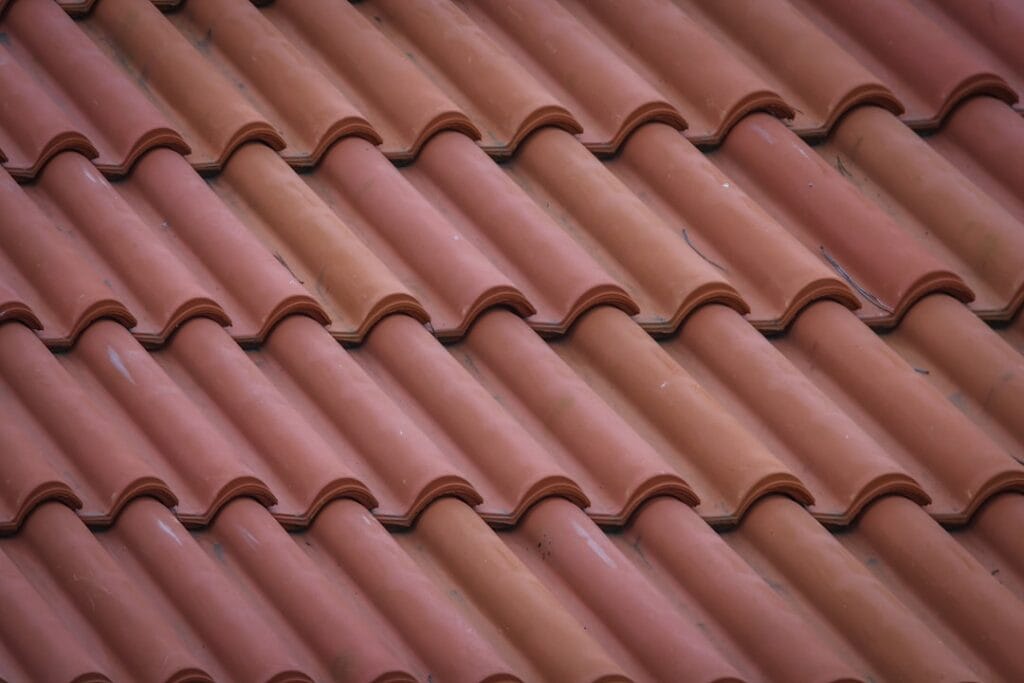
What You Need to Know About Clay Tile Roof Maintenance
Clay tile roof maintenance is the routine process of inspecting, cleaning, and repairing clay tiles — along with the underlayment, flashing, and gutters beneath them — to keep your roof watertight and structurally sound for decades. For homeowners seeking expert roofing services to preserve their investment, consistent care is non-negotiable.
Here is a quick overview of what proper maintenance involves:
| Task | Frequency |
|---|---|
| Visual inspection (ground level) | Twice a year + after storms |
| Debris and gutter clearing | Spring and fall |
| Professional inspection | Every 2-3 years |
| Professional soft-wash cleaning | Every 3-5 years |
| Cracked or slipped tile repair | As soon as damage is found |
Clay tile roofs can last 50 to 100 years with proper care — far longer than asphalt shingles (15-30 years) or concrete tile (30-50 years). But that lifespan only holds up if maintenance is consistent and done correctly.
The problem? Clay tiles are deceptively fragile. They can handle decades of sun, rain, and wind without fading or rotting. Yet a single misplaced step — or one storm season ignored — can crack tiles, breach the underlayment, and turn a minor fix into a costly repair.
That is especially true for homeowners in Texas and Oklahoma, where hail, high winds, and extreme heat cycles put tile roofs under serious stress. If your home has taken storm damage recently, getting a professional roof inspection is the fastest way to catch hidden damage before it becomes a leak.
I’m Cash Walker, a leadership team member at The Roof Guys with over 30 years of combined industry experience helping Greater Houston homeowners navigate clay tile roof maintenance and storm damage repairs. In this guide, I’ll walk you through everything you need to know — from safe cleaning methods to repair costs and regional weather challenges — so you can protect your investment for the long haul.
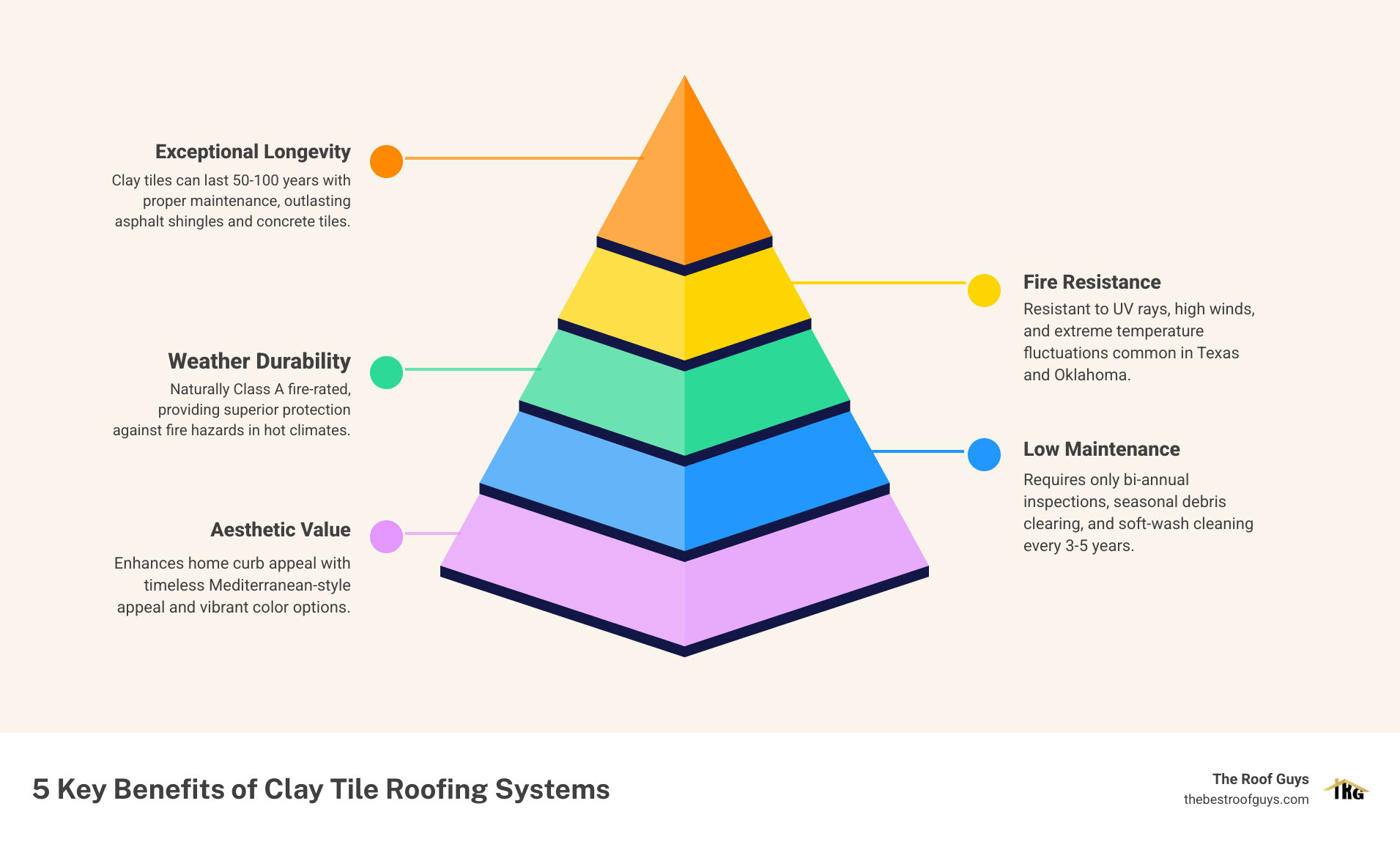
Simple clay tile roof maintenance word guide:
Why Clay Tile Roof Maintenance is Essential for Longevity

In roofing, clay is the undisputed heavyweight champion of longevity. While other materials are being stripped and replaced every 20 years, a clay tile roof is often just getting started. However, this 50-to-100-year lifespan is not guaranteed by the material alone; it is earned through consistent care.
Clay tiles are naturally non-combustible, boasting a Class A fire rating. They are also champions at protecting your home against wind and freeze/thaw cycles. But there is a catch: clay is incredibly brittle. Unlike metal or asphalt, which can flex under pressure, clay tiles will snap or crack if they are walked on incorrectly or struck by heavy debris.
Furthermore, clay tile systems are significantly heavier than standard roofing. This weight requires a sturdy structural foundation. If tiles become displaced or cracked, they can allow water to pool in areas not designed for weight, leading to structural strain. Following the TRIA maintenance protocol is the best way to ensure your roof remains a protective shield rather than a liability.
Understanding the Unique Vulnerabilities of Clay
While clay is tough against the sun, it has a few “Kryptonite” factors.
- Thermal Expansion: In the scorching Texas and Oklahoma summers, tiles expand. At night, they contract. This constant movement can cause hairline cracks over time.
- Freeze-Thaw Cycles: Clay is slightly porous. If water enters a small pore and freezes, it expands, which can cause the tile to chip or “spall.”
- Organic Growth: Moss and algae love the textured surface of clay. While they might look charming on a cottage in Europe, here they trap moisture against the tile, which can lead to premature deterioration.
The Role of Underlayment and Ventilation
If the clay tiles are the “armor” of your roof, the underlayment is the “skin.” Most people don’t realize that tile roofs are actually designed to let a little water pass through the gaps in the tiles. This water is then shed by the underlayment underneath.
As we discuss in our guide to cement and monier tile roof care, the underlayment often has a shorter lifespan than the tiles themselves. Proper ventilation is also key; it allows airflow to dry out the space between the tile and the deck, preventing condensation and rot.
Safe Cleaning and Maintenance Methods
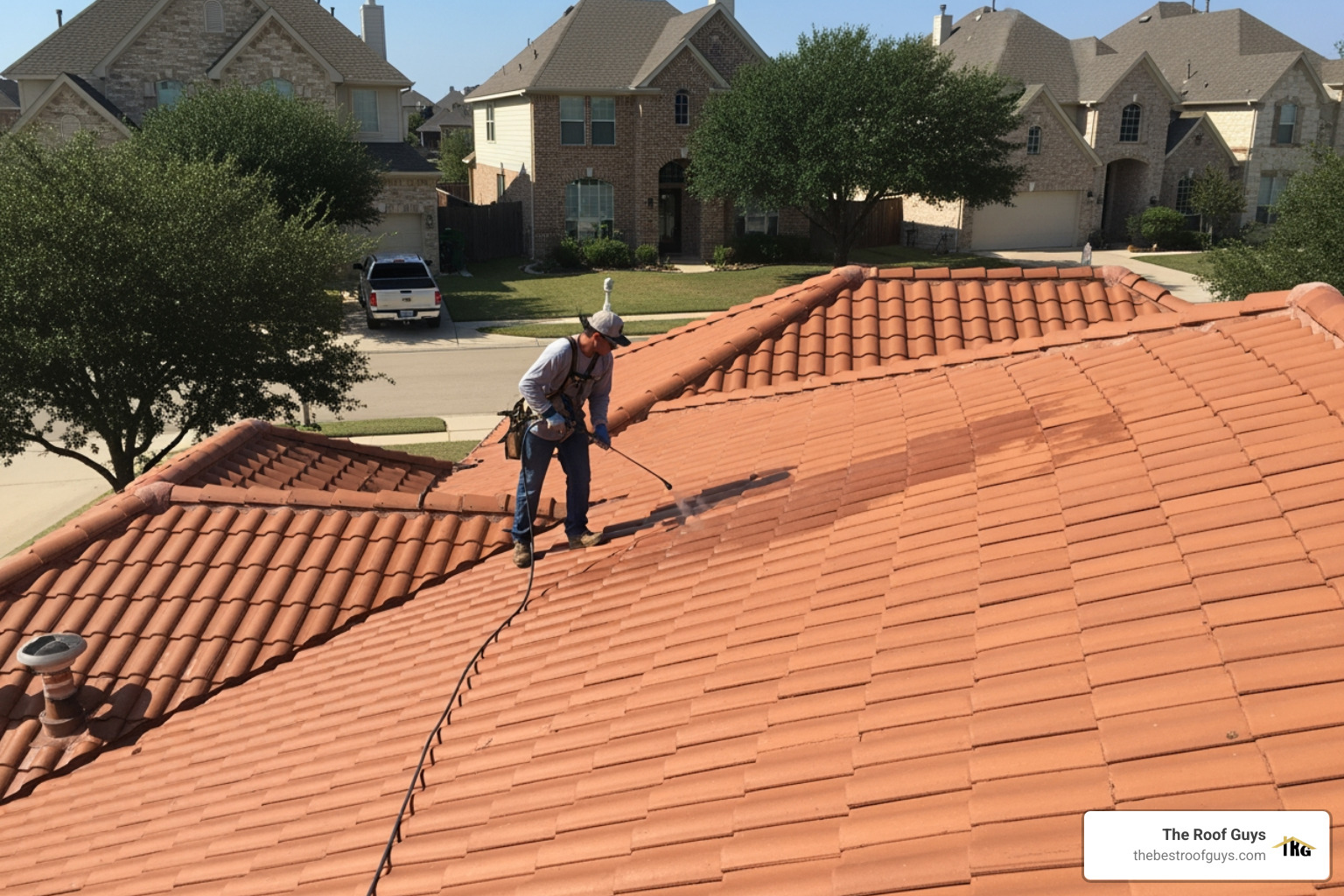
Cleaning a clay roof isn’t like power-washing a driveway. If you go up there with a high-pressure hose, you are going to have a very bad — and very expensive — day. The goal of clay tile roof maintenance is to remove debris and organic growth without disturbing the fragile tiles or the watertight seal of the underlayment.
According to experts at Huber & Associates, manual removal of large debris like branches and leaves should always be the first step. Clogged valleys are a major cause of leaks in tile roofs because they force water to “backup” under the tiles.
Safe Cleaning Techniques for Clay Tile Roof Maintenance
We always recommend “soft washing.” This method uses specialized, eco-friendly detergents to kill moss, algae, and lichen at the root.
- Low Pressure Only: Use a garden hose or a very low-pressure sprayer. High pressure can erode the surface of the clay and force water under the tiles into the attic.
- Eco-Friendly Solutions: Use cleaners designed for roofs to avoid damaging your landscaping or the tile’s natural color.
- Rinse Thoroughly: Start from the ridge (top) and work your way down to ensure all soap and loosened grime flow into the gutters.
For more on general upkeep, check out our comprehensive page on roof maintenance.
Walking on Tile Roofs: Dos and Don’ts
The #1 rule of tile roofs: Stay off the roof if you can. If you must walk on it, follow these safety and preservation tips found in our roofing tips maintenance guide:
- Foot Placement: Only step on the bottom three inches of the tile (the “headlap” area where the tile is supported by the one beneath it).
- Weight Distribution: Walk with your feet flat and horizontal to the slope. Never “toe-in” or put all your weight on your heels.
- Safety Gear: Professionals use specialized walk pads or ladders with stabilizers to prevent tile breakage.
Identifying Common Issues and Repair Costs
Identifying problems early is the difference between a $300 repair and a $30,000 replacement. Because clay tiles are interlocking, one “slipped” tile can create a domino effect, exposing large sections of the underlayment to UV rays and rain.
| Issue | Typical Sign | Risk Level |
|---|---|---|
| Cracked Tile | Visible split or missing corner | Medium – Leads to underlayment rot |
| Slipped Tile | Uneven rows; “gaps” in the pattern | High – Direct water entry |
| Efflorescence | White, chalky powder on tiles | Low – Natural mineral deposits |
| Rusted Flashing | Orange stains around chimneys | High – Immediate leak risk |
When to Repair vs. Replace
If your tiles are brittle and crumbling when touched, they may have reached the end of their functional life. However, if the tiles are sound but you have leaks, you might be a candidate for a “tile lift” or restoration. This involves removing the existing tiles, replacing the failed underlayment, and then re-installing the original tiles.
As we highlight in our expert tips for maintaining your roof, a restoration can save you 40-60% compared to a full replacement.
Estimated Costs for Clay Tile Services
While prices vary by location (like Houston vs. Oklahoma City), here are general industry averages:
- Professional Inspection: $150 – $400.
- Cleaning (Soft Wash): $0.50 – $1.00 per square foot.
- Minor Tile Replacement: $15 – $35 per tile (includes labor and material).
- Leak Repair: $500 – $1,500 depending on the complexity of the flashing.
For those in humid areas, Florida-based research suggests that professional cleaning every 3-5 years is non-negotiable to prevent heavy moss damage.
Regional Maintenance: Texas and Oklahoma Climate Challenges
In Texas and Oklahoma, our roofs have to be “tougher than a two-dollar steak.” We deal with some of the highest hail frequencies in the United States. While clay is durable, a 2-inch hailstone can shatter a standard tile instantly.
When we perform clay and concrete tile roofing services, we often recommend Class 4 impact-rated tiles. These are specially reinforced to handle the “punch” of Mid-West storms. Furthermore, UV stabilization is critical in our region to prevent the underlayment from becoming brittle under the relentless sun.
Storm Response and Post-Weather Inspections
After a major hail or wind event in places like The Woodlands or Oklahoma City, you need to look for “chattered” tiles–small pieces of clay in your gutters or on your lawn. This is a sign that tiles have broken.
If you suspect damage, immediate tarping is necessary to protect the underlayment. Unlike asphalt shingles, which might just lose a few granules, a broken tile is a hole in your home’s armor. For a deeper look at how we handle replacements after storms, see the ultimate how-to for shingle roof replacement, which covers the structural prep we use for all materials.
Seasonal Maintenance Schedule
- Spring: Clear out the winter debris. Check for any tiles that may have shifted during the rare Oklahoma “ice-quakes” or freeze cycles.
- Fall: Ensure gutters are clear before the autumn rains. Inspect flashing around the chimney to make sure sealants haven’t cracked in the summer heat.
- Quarterly (Coastal): If you are near the coast in the Houston area, check for salt spray buildup, which can accelerate the corrosion of metal flashing.
Frequently Asked Questions about Clay Tile Roof Maintenance
How often should I schedule professional clay tile roof maintenance?
We recommend a professional inspection every 2 to 3 years. However, you should do a ground-level visual check (using binoculars!) twice a year—once in the spring and once in the fall. If your roof is over 20 years old, moving to an annual professional inspection is a smart move to catch aging underlayment issues.
Can I perform clay tile roof maintenance myself?
You can certainly handle the ground-level stuff! Clearing your own gutters (carefully) and scanning for slipped tiles from the lawn is great. However, we strongly advise against homeowners walking on their own clay tile roofs. The risk of breaking tiles—and the risk of falling from a notoriously slippery surface—is too high. Plus, improper DIY “repairs” with the wrong sealants can actually trap moisture and void your warranty.
What are the key mistakes to avoid during clay tile roof maintenance?
- Pressure Washing: It destroys the tile surface and floods the underlayment.
- Walking on Tiles: This is the #1 cause of “man-made” roof leaks.
- Ignoring the Flashing: People focus on the tiles but forget that the metal around the chimney is usually what leaks first.
- Using Generic Sealants: Clay requires specific, flexible adhesives. Using “caulk” from a big-box store won’t last a single Texas summer.
Conclusion
At The Roof Guys, we understand that your clay tile roof is more than just a covering–it’s a major investment and a point of pride for your home. As a family-owned business serving Texas and Oklahoma, we specialize in the unique needs of these high-end roofing systems. Whether you need a post-storm inspection in The Woodlands or a full tile restoration in Tulsa, we bring an ultra-fast turnaround and a 10-year warranty to every job.
Don’t let a small crack turn into a major headache. Proper clay tile roof maintenance is the key to making sure your roof actually lasts that promised century.