
Commercial Roofing Services
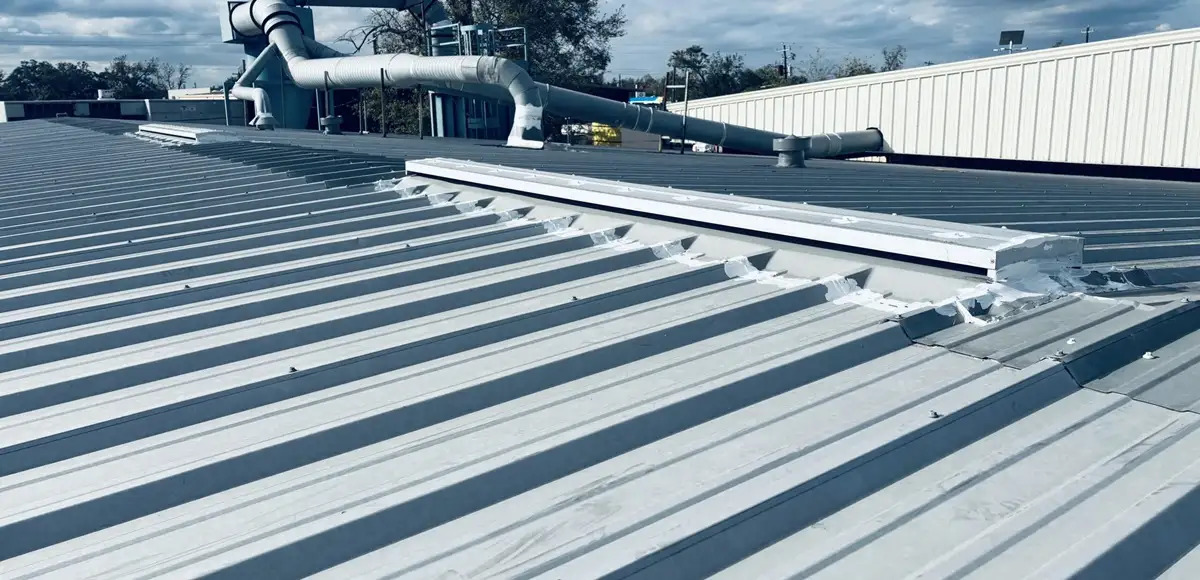
Your commercial roof protects your building, inventory, employees, and day-to-day operations. A professionally installed and maintained commercial roofing system reduces the risk of water intrusion, structural deterioration, and unexpected downtime that can disrupt your business.
At The Roof Guys, we provide comprehensive commercial roofing services throughout Texas and Oklahoma. From preventative maintenance to complete commercial roof replacement, our team delivers durable, code-compliant roofing systems engineered for long-term performance.




Full-Service Commercial Roofing Solutions in Texas & Oklahoma
Routine commercial roof inspections help identify issues such as membrane wear, seam separation, flashing damage, and drainage problems before leaks occur. In Texas and Oklahoma, where roofs face intense sun, hailstorms, and strong winds, regular inspections help protect offices, warehouses, retail buildings, and multi-family properties from costly water damage.
Prompt commercial roof repair addresses punctures, membrane shrinkage, flashing failures, and storm-related damage. Businesses across Texas and Oklahoma rely on fast, durable repairs to maintain waterproofing performance and avoid operational disruptions caused by leaks or structural damage.
Most commercial roofing systems last 20–30 years, depending on material type and maintenance history. Commercial roof replacement restores full waterproofing protection and structural integrity, especially for buildings exposed to Texas heat, Oklahoma storms, hail, and heavy rain.
For new commercial construction, proper roof installation is critical to long-term building performance. Our team installs commercial roofing systems with the correct insulation layers, vapor barriers, drainage design, and membrane systems to ensure buildings across Texas and Oklahoma climates remain energy-efficient and weather-resistant from day one.
TPO Roofing Systems
TPO roofing is one of the most widely installed single-ply commercial roofing membranes in the U.S. It is commonly used on commercial buildings across Texas and Oklahoma because of its energy efficiency, durability, and ability to handle large flat or low-slope roof structures.
Why TPO Roofing Is a Leading Commercial Choice
- Reflective Energy Performance: TPO membranes are typically white or light-colored, designed to reflect UV rays and solar heat. According to the U.S. Department of Energy, cool roof systems can significantly reduce rooftop surface temperatures and help lower cooling demands in warm climates like Texas and Oklahoma.
- Heat-Welded Seams: Seams are fused together using hot-air welding, forming a strong bond that enhances waterproofing reliability.
- Durability & Chemical Resistance: TPO performs well in environments exposed to pollutants, grease exhaust, and prolonged sun exposure.
- Lightweight & Efficient Installation: Compared to traditional built-up systems, TPO is lighter and often faster to install.
With proper maintenance, TPO roofs commonly deliver 20+ years of service life.
EPDM Roofing Systems
EPDM roofing systems are widely used on commercial buildings because they provide strong waterproofing and flexibility across large roof surfaces. In Texas and Oklahoma, EPDM membranes perform well against temperature fluctuations, intense sun exposure, and seasonal storms common across the region.
Advantages of EPDM Commercial Roofing
- Temperature Flexibility: EPDM maintains flexibility in extreme heat and cold, reducing cracking risks.
- Long Service Life: Properly maintained EPDM systems frequently last 25–30 years. The EPDM Roofing Association (ERA) notes that EPDM is one of the most sustainable and long-lasting materials available for low-slope commercial roofing.
- UV & Ozone Resistance: The membrane resists degradation from sun exposure.
- Cost-Effective Repairs: EPDM membranes can be patched and reinforced efficiently, extending system lifespan.
EPDM is often chosen for warehouses, industrial properties, and large commercial facilities.
Flat Roof Systems
Flat roof systems are widely used for commercial buildings such as warehouses, retail centers, office buildings, and industrial facilities across Texas and Oklahoma. These roofing systems are designed to cover large surface areas efficiently while supporting HVAC units, vents, and other rooftop equipment commonly found on commercial properties.
Critical Considerations for Flat Commercial Roofs
- Drainage & Water Management: Ponding water accelerates membrane deterioration and adds structural stress. Proper slope and drain placement are essential.
- Membrane & Flashing Integrity: Seam strength and flashing details directly affect waterproofing performance.
- Structural Support for Equipment: Flat roofs frequently support HVAC systems and mechanical units, requiring proper load distribution.
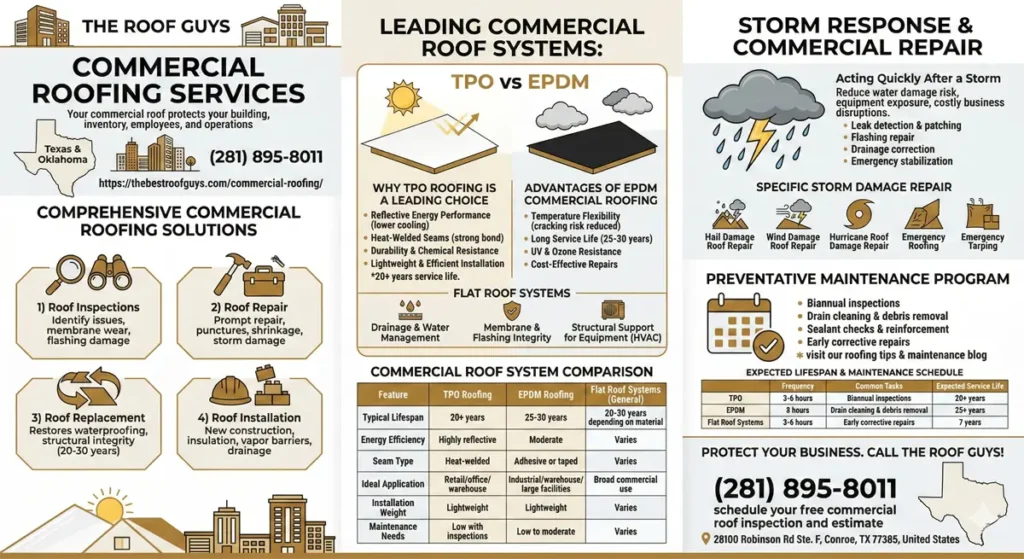
Commercial Roofing System Comparison: TPO vs. EPDM vs. Flat Roof Assemblies
Choosing the right commercial roofing system requires understanding lifespan, performance, cost considerations, and climate compatibility. The table below provides a side-by-side comparison of common commercial roofing systems used throughout Texas.
Feature | TPO Roofing | EPDM Roofing | Flat Roof Systems (General) |
Typical Lifespan | 20+ years | 25–30 years | 20–30 years depending on material |
Energy Efficiency | Highly reflective (white membrane) | Moderate (black membrane, reflective coatings available) | Varies by membrane type |
Seam Type | Heat-welded seams | Adhesive or taped seams | Varies by system |
UV Resistance | Excellent | Excellent | Varies |
Ideal Application | Retail, office, warehouse | Industrial, warehouse, large facilities | Broad commercial use |
Installation Weight | Lightweight | Lightweight | Varies |
Maintenance Needs | Low with inspections | Low to moderate | Varies by system |
Commercial Roof Repair & Storm Response
Severe weather across Texas and Oklahoma can cause significant commercial roof damage, including hail impacts, wind uplift, membrane punctures, and flashing failures. Acting quickly after a storm helps reduce the risk of interior water damage, equipment exposure, and costly business disruptions.
Our storm-related services include:
- Leak detection and membrane patching
- Flashing repair and reinforcement
- Drainage correction and debris removal
- Emergency stabilization measures to prevent water intrusion
If your commercial building has been impacted by severe weather, review our storm damage roofing services, including:
- Hail Damage Roof Repair – We repair hail-damaged commercial roofs to restore waterproofing and prevent further structural issues.
- Wind Damage Roof Repair – Our team fixes wind-lifted membranes, flashing damage, and other storm-related roof problems.
- Hurricane Roof Damage Repair – We assess and repair roofs impacted by hurricane-force winds and severe storm damage.
- Emergency Roofing – Fast-response roofing services to stabilize commercial roofs after storms.
- Emergency Tarping – Temporary tarping protects exposed roof areas until permanent repairs are completed.
Why Choose The Roof Guys
Commercial property owners need a roofing contractor that understands both technical roofing requirements and the operational needs of businesses. The Roof Guys combine industry expertise, organized project management, and clear communication to deliver dependable commercial roofing solutions across Texas and Oklahoma.
- Full-service commercial roofing – From inspections and repairs to full roof replacement, we handle every stage of the roofing lifecycle.
- Storm damage experience – Our team understands the impact of Texas heat, Oklahoma storms, hail, and high winds on commercial roofs.
- Code-compliant installation – All work follows local building codes and manufacturer installation standards.
- Transparent inspections and estimates – We provide clear roof assessments and written estimates so property owners understand the scope and costs.
- Minimal disruption to business operations – We schedule work strategically to reduce interruptions for employees, tenants, and customers.
You can view examples of our work in our project gallery and read real client experiences on our testimonials page and Google Business Profile to see how we’ve helped businesses protect their properties with professional commercial roofing services.
Areas We Serve
Licensed Commercial & Residential Roofing Contractor
The Roof Guys – quality materials, expert service, and lasting protection guaranteed.
Preventative Maintenance That Protects Your Investment
Routine maintenance is one of the most cost-effective strategies for commercial property owners. Proactive inspections and minor repairs help prevent major structural failures.
Our roof maintenance programs include:
- Biannual inspections
- Drain cleaning and debris removal
- Sealant checks and reinforcement
- Early-stage corrective repairs
For additional insights, visit our roofing tips & maintenance blog or browse our blog.
Expected Lifespan & Maintenance Schedule for Commercial Roofing Systems
Preventative maintenance plays a critical role in maximizing service life. The following table outlines recommended inspection frequency and maintenance considerations based on roofing type.
Roofing Type | Recommended Inspection Frequency | Common Maintenance Tasks | Expected Service Life |
TPO | Twice annually + after storms | Seam checks, drain cleaning, flashing inspection | 20+ years |
EPDM | Twice annually + after storms | Seam reinforcement, patching, debris removal | 25–30 years |
Flat Roof Systems | Twice annually | Drainage inspection, membrane review | 20–30 years |
Routine inspections significantly reduce the likelihood of emergency repairs and premature replacement.
What Our Clients Are Saying
We believe the best proof of our service comes directly from the homeowners, businesses, and property managers we proudly serve.
Protect Your Business with Expert Commercial Roofing in Texas & Oklahoma
Your commercial property needs a strong, reliable roof to protect employees, equipment, and operations from Texas heat, Oklahoma storms, hail, and high winds. The Roof Guys provide professional commercial roof inspections, roof repair, roof replacement, and new roof installation designed for long-term durability and performance. Whether you manage an office building, warehouse, retail center, or multi-family property, our experienced commercial roofing contractors deliver solutions tailored to your building’s needs.
Call The Roof Guys today at (281) 895-8011 to schedule your free commercial roof inspection and estimate.
The Roof Guys
Business Hours
Monday: Open 24 hours
Tuesday: Open 24 hours
Wednesday: Open 24 hours
Thursday: Open 24 hours
Friday: Open 24 hours
Saturday: Open 24 hours
Sunday: Open 24 hours
Frequently Asked Questions
Most commercial roofing systems last 20–30 years, depending on the material, installation quality, and maintenance. In Texas and Oklahoma, regular inspections are especially important because intense heat, hailstorms, and strong winds can affect roof lifespan.
Common commercial roofing systems include TPO, EPDM, modified bitumen, metal roofing, and other flat roof membranes. The Roof Guys help business owners choose the best system based on building design, drainage needs, and local weather conditions.
Commercial roofs should generally be inspected at least twice per year and after major storms. Regular inspections help identify membrane damage, flashing issues, and drainage problems before they cause leaks or interior damage.
Signs may include water stains on ceilings, standing water on flat roofs, membrane punctures, loose flashing, or damaged seams. Addressing these issues early can prevent larger structural problems and costly business interruptions.
Commercial roofing costs depend on roof size, materials, accessibility, and the extent of damage. Minor commercial roof repairs often range from $500 to $3,000, while larger repairs may cost $3,000 to $10,000+. Full commercial roof replacements typically range from $5 to $12+ per square foot, depending on the roofing system and project complexity.
Commercial roof leaks often result from aging membranes, flashing failures, punctures, clogged drainage systems, or storm damage. Regular maintenance and inspections help catch these problems before leaks develop.
Yes. Flat and low-slope roofing systems are commonly used for commercial buildings because they are cost-effective, accessible for maintenance, and capable of supporting rooftop equipment such as HVAC units.
Routine roof inspections, preventative maintenance, prompt repairs, and proper drainage management can significantly extend the life of a commercial roofing system.
How Can We Help?



Our Roofing Services
Why Choose The Roof Guys
Commercial property owners need a roofing contractor that understands both technical roofing requirements and the operational needs of businesses. The Roof Guys combine industry expertise, organized project management, and clear communication to deliver dependable commercial roofing solutions across Texas and Oklahoma.
- Full-service commercial roofing – From inspections and repairs to full roof replacement, we handle every stage of the roofing lifecycle.
- Storm damage experience – Our team understands the impact of Texas heat, Oklahoma storms, hail, and high winds on commercial roofs.
- Code-compliant installation – All work follows local building codes and manufacturer installation standards.
- Transparent inspections and estimates – We provide clear roof assessments and written estimates so property owners understand the scope and costs.
- Minimal disruption to business operations – We schedule work strategically to reduce interruptions for employees, tenants, and customers.
You can view examples of our work in our project gallery and read real client experiences on our testimonials page and Google Business Profile to see how we’ve helped businesses protect their properties with professional commercial roofing services.
The Roof Guys
Business Hours
Monday: Open 24 hours
Tuesday: Open 24 hours
Wednesday: Open 24 hours
Thursday: Open 24 hours
Friday: Open 24 hours
Saturday: Open 24 hours
Sunday: Open 24 hours

Get Started
Have questions about your roof? Ready to start your next roofing project? Whether you’re dealing with storm damage, a leaky roof, or planning a complete roof replacement, our team is here to help.
How Can We Help?